“Hey Plex”: Samsung’s Galaxy S26 Challenges Google with a Bold New AI Multi-Agent Universe
 Do Son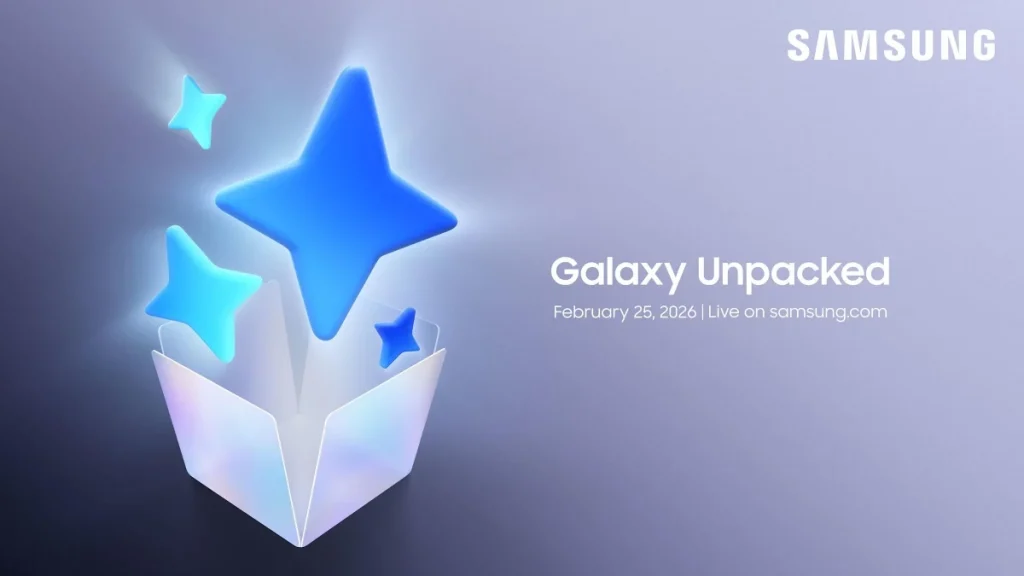
Lest Google’s Gemini monopolize the spotlight, Samsung has resolved to imbue its Galaxy AI framework with a sophisticated “Multi-agent” architecture. The imminent Galaxy S26 series is poised to witness the profound integration of Perplexity, the most celebrated AI-driven search engine of the current epoch.
In anticipation of the Galaxy Unpacked event—scheduled for the early hours of February 25th —official sources have unveiled a momentous software evolution. Future iterations of Galaxy AI will transcend their current singular form, burgeoning into an open ecosystem that sustains multiple AI agents. The inaugural premier partner in this venture is Perplexity, a service widely hailed as the preeminent challenger to Google’s search hegemony. According to Samsung’s proclamations, the Perplexity AI assistant will be embedded directly into the system layer of the Galaxy S26 series. Users may summon this utility via the dedicated invocation “Hey Plex” or through a physical shortcut key.
Crucially, this synthesis extends far beyond the mere pre-installation of a mobile application. Perplexity will achieve deep interoperability with core Samsung utilities, including Notes, Clock, Gallery, Reminders, and Calendar. Samsung has further intimated support for select third-party applications, the specific identities of which remain reserved for the formal unveiling. Won-Joon Choi, President and Head of R&D for Samsung’s Mobile eXperience Business, articulated in a statement that expanding Galaxy AI serves to provide users with unparalleled versatility: “Galaxy AI will function as a ‘conductor,’ harmonizing disparate forms of artificial intelligence into a singular, intuitive, and cohesive user experience.”
Samsung’s alliance with Perplexity is not without precedent, as the companies collaborated last year to integrate AI search into Samsung’s smart television lineup. This expansion into the mobile domain prompts significant intrigue regarding the interplay between Perplexity and Samsung’s own Bixby, which recently underwent a monumental transformation in the One UI 8.5 beta. Current indicators suggest a strategy of functional specialization: the revitalized Bixby will manage low-level hardware configurations and on-device execution, while Perplexity leverages its strength as a “verifiable AI” to focus on real-time web synthesis and complex inquiry resolution.
While the inclusion of Perplexity significantly augments the productivity of the Galaxy S26, the startup currently navigates a labyrinth of legal and ethical controversies. Perplexity’s model of utilizing web crawlers to distill information has provoked fierce opposition from content creators and publishers. The firm faces allegations of unauthorized scraping and copyright infringement, culminating in formal litigation initiated last September by Merriam-Webster and Encyclopædia Britannica. Consequently, as Samsung introduces this technology to hundreds of millions of Galaxy users, it must concurrently navigate these latent intellectual property risks.
The contemporary landscape of Android flagships typically sees AI dominance ceded to Google’s Gemini. Although Samsung maintains an intimate bond with Google, the firm is clearly averse to “placing all its eggs in one basket.” By positioning Galaxy AI as a central command hub, Samsung preserves Bixby’s hardware-level supremacy while enlisting elite third-party models like Perplexity to complete the tapestry of networked knowledge. A simple command of “Hey Plex” signifies more than just a shift toward precision and academic rigor in information retrieval; it represents a bold, strategic stride by Samsung to avoid total dependency on a singular tech titan. The global community now looks toward the February 26th presentation to witness the seamless transition between these two AI powerhouses in real-time.
Support Our Threat Intelligence
Find our tech and OS security coverage helpful? Support our work today and unlock a 100% ad-free reading experience!
 Buy Me a Coffee
