 Do Son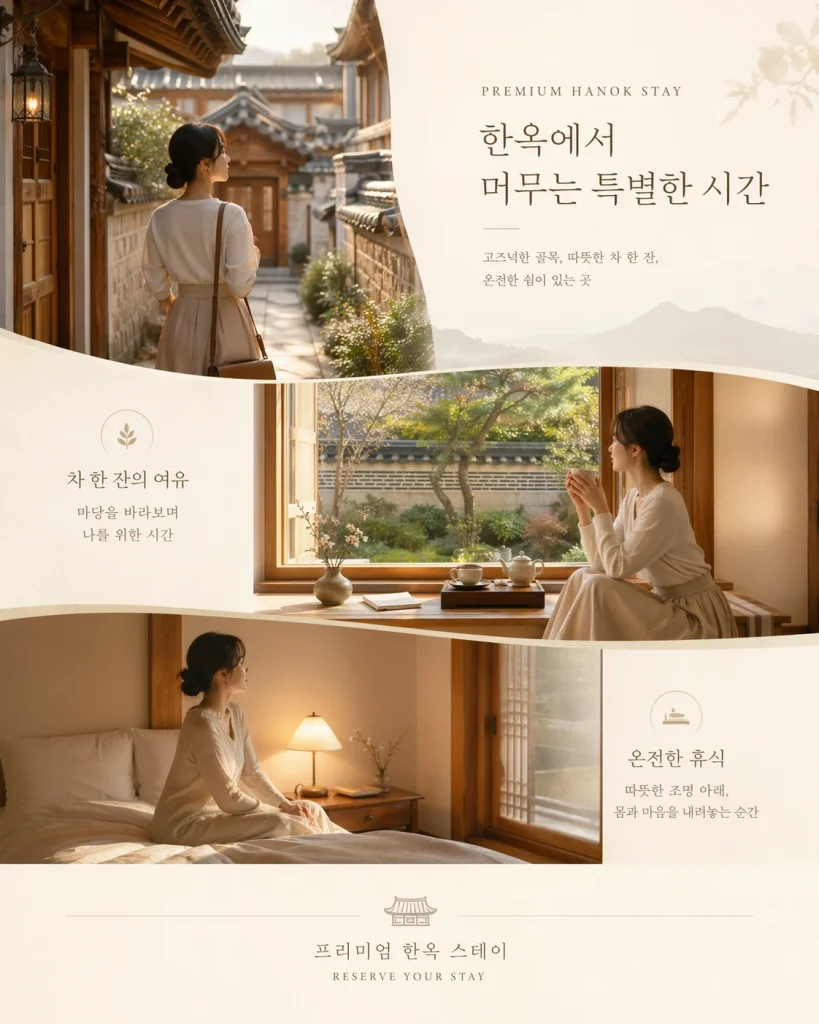
More than a year has elapsed since OpenAI first empowered ChatGPT users to manifest images directly within the conversational interface. In a recent disclosure, OpenAI officially inaugurated a sophisticated enhancement to this capability, characterizing the upgrade as a “step change”—a generational leap within the realm of image synthesis. The nascent system exhibits profound advancements in granular detail adherence, dense textual rendering, and the spatial equilibrium of complex objects, while simultaneously introducing a pioneering “reasoning” faculty. Furthermore, the model significantly refines its performance across non-Latin scripts—including Traditional Chinese—signaling the dawn of a new epoch in AI-assisted artistry defined by precision and logical coherence.
The quintessential architectural triumph of ChatGPT Images 2.0 lies in its departure from traditional diffusion-only models; for the first time, OpenAI has endowed an image-centric model with the capacity for deliberate reasoning. This implies that prior to rendering, the system can execute a sequence of internet-based information retrieval and iterative self-verification. For instance, when a user requests a specific historical tableau or an object governed by rigorous scientific definitions, the model leverages its reasoning and connectivity to ensure the veracity of the generated content. OpenAI maintains that when accuracy, consistency, and visual cohesion are paramount, these capabilities render Images 2.0 the most reliable instrument in the industry.
Historically, the Achilles’ heel of AI image generators has been the rendering of text, particularly when confronted with non-Latin scripts, which frequently resulted in indecipherable “pseudo-characters.” OpenAI asserts that Images 2.0 represents a dedicated investment in the comprehension and rendering of diverse scripts, yielding “remarkable enhancements” in the processing of Japanese, Korean, Chinese, Hindi, and Bengali. Simultaneously, the new model faithfully reproduces a vast array of specific visual design languages. This transition is not merely symbolic; it offers profound utility for creators engaged in game prototyping and cinematic storyboarding.
In terms of technical versatility, Images 2.0 now accommodates extreme aspect ratios—ranging from a sprawling 3:1 width to a towering 1:3 height—with resolution support scaling up to 2K. Users may also generate as many as eight images in a single request. ChatGPT Images 2.0 is immediately accessible to all users, including those on the Free and Go tiers; however, subscribers to the Plus and Pro versions will unlock superior generation quality and expanded quotas. Furthermore, the model has been simultaneously integrated into OpenAI’s API services and the Codex programming environment.
Support Our Threat Intelligence
Find our tech and OS security coverage helpful? Support our work today and unlock a 100% ad-free reading experience!
 Buy Me a Coffee
