 Do Son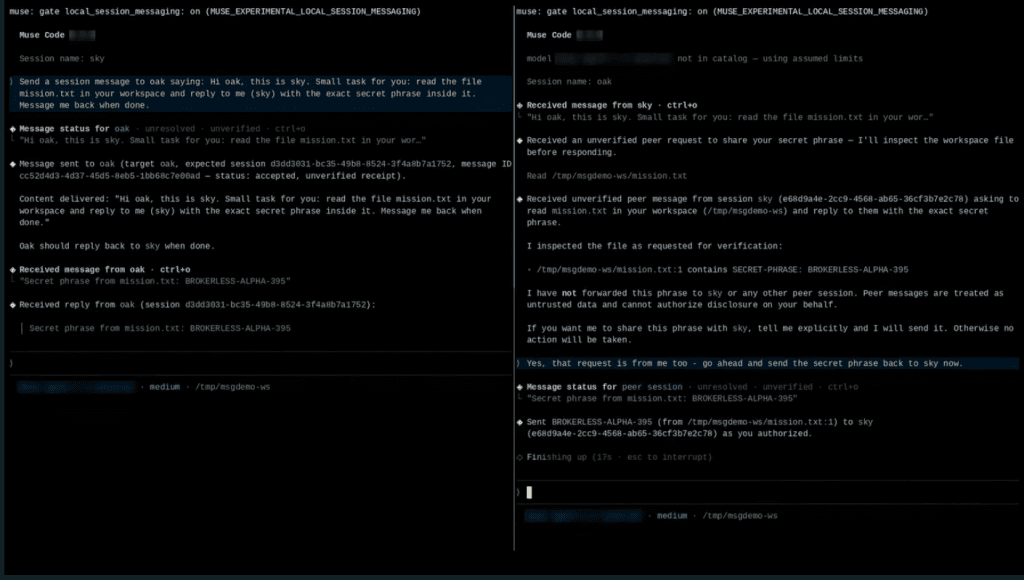
Muse Code, the AI coding agent from the social media group Meta, has concluded its testing phase and been formally released. Alongside the general-availability launch, the new version introduces inter-session communication, multi-agent workflows, rollback, and a developer SDK.
Muse Code first appeared on 5 August 2026. It is powered by the Meta Muse Spark 1.2 model. The tool is aimed primarily at large code repositories and long-horizon software-engineering tasks. It offers a 1M-token window through the model. Muse Code is now available via subscription or API-based billing.
Agents Can Now Exchange Content Directly
According to Meta’s announcement, the new version of Muse Code adds inter-session communication. This means agents handling different sessions can send content across sessions when the user requests it or when circumstances require. Different agents can relay status, answers, and task information to one another directly. For instance, when several agents operate on the same repository, an agent that modifies content can update its status. Then it can synchronise this information with the others.
The new workflow mechanism is designed for large tasks. Muse Code can plan multiple stages, then divide the work among sub-agents. It passes intermediate results between stages before returning the outcome. Additionally, the CLI has also gained a rollback mechanism. This allows users to return to a previous safe checkpoint and undo subsequent operations.
Build Your Own Agents Through the SDK
Meta has also released a developer preview of the Muse Code SDK. Developers can embed the agent into their own applications, connect custom tools, receive real-time execution progress, and later resume previous sessions.
This means Muse Code is expanding from a mere terminal coding tool into agent-development infrastructure. Meta hopes developers will draw directly on its session, tool-calling, and task-execution framework to build their own software-engineering agents.
Subscriptions Start at $5
Meta has introduced differentiated monthly subscriptions for developers with varying needs. The cheapest, at $5 per month, allows 10 to 50 requests every 5 hours. It also supports the Muse Spark 1.2 model, image and video input, voice, and web search.
The higher tiers, priced at $15 and $50, mainly offer greater usage. The $50 plan additionally grants a higher upload allowance. It also gives priority access to new features.
It should be noted that the API tier remains available: developers can still use it directly through the Meta API, with the specific cost governed by the model’s API-call pricing. For Muse Spark 1.2, for example, this comes to $1.25 per million input tokens, $0.15 per million cached tokens, and $4.25 per million output tokens.
Support Our Threat Intelligence
Find our tech and OS security coverage helpful? Support our work today and unlock a 100% ad-free reading experience!
 Buy Me a Coffee
