 Do Son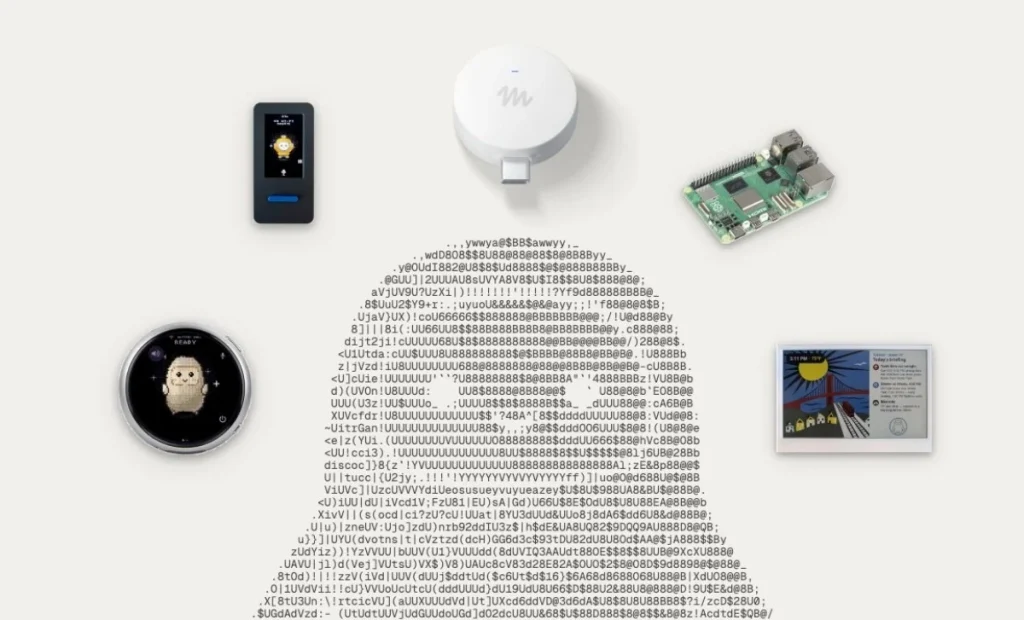
Meta Invites Makers to Build Muse Hardware
Last week at Connect, Meta unveiled the Muse Charm, a Tamagotchi-like AI device. Now the company clearly harbors bigger ambitions for AI agent hardware.
Nat Friedman, who leads product at Meta Superintelligence Labs, announced a new open-source project. It is called Muse Gadgets. It urges developers and makers worldwide to build their own hardware for the Muse AI.
Open ESP32 Firmware and a Linux SDK
Meta wants Muse to leave the frame of phones and smart glasses. Therefore, it has open-sourced the on-device ESP32 firmware on GitHub. It has also released a Linux SDK under the Apache 2.0 license.
Developers can now fold Muse’s agent abilities into many kinds of hardware. Meta even suggests a few playful ideas:
- A dedicated E Ink calendar display
- An HDMI stick that plugs into a TV
- A pocket accessory with a tiny touchscreen, much like the Muse Charm
To gather the maker community, Meta also opened a dedicated Discord channel. There, developers can swap tips on hardware tinkering.
Muse Home Link: The Official Demo
Alongside the open SDK, Meta built a hardware demo of its own. It is called the Muse Home Link.
This small receiver draws power over USB-C. It acts as a bridge between Muse and the home network. As a result, a remote Muse AI agent can talk to smart home devices that support HTTPS. Examples include smart TVs and connected speakers. The agent can also control them.
To promote the idea, Meta will give away 5,000 Muse Home Link units to Muse subscribers in the United States. The offer lasts while supplies last.
From Building Hardware to Licensing the Brain
In today’s AI industry, tech giants take very different roads in AI hardware. Apple ties AI deeply into its closed iPhone and Mac systems. Meta, by contrast, has chosen the opposite, decentralized path.
A Pure Intelligence Provider
Through Muse Gadgets, Meta tries to become a provider of pure intelligence infrastructure. A killer AI device that pleases everyone is very hard to build. The Rabbit R1 and the Humane AI Pin show that. So Meta simply outsources the work to hardware fans and third-party makers around the world.
What Meta Gains
This open-source approach offers two benefits. First, Meta can draw design ideas from community creativity for its next official hardware. A future Muse Charm update is one example. Second, it ensures that the Muse AI agent can spread at very low cost. It can reach corners of life that smartphones and wearables cannot.
Support Our Threat Intelligence
Find our tech and OS security coverage helpful? Support our work today and unlock a 100% ad-free reading experience!
 Buy Me a Coffee
