Passwords and SMS Are Dead: Microsoft Begins Sunsetting Text Message Verification for Consumer Accounts
 Do Son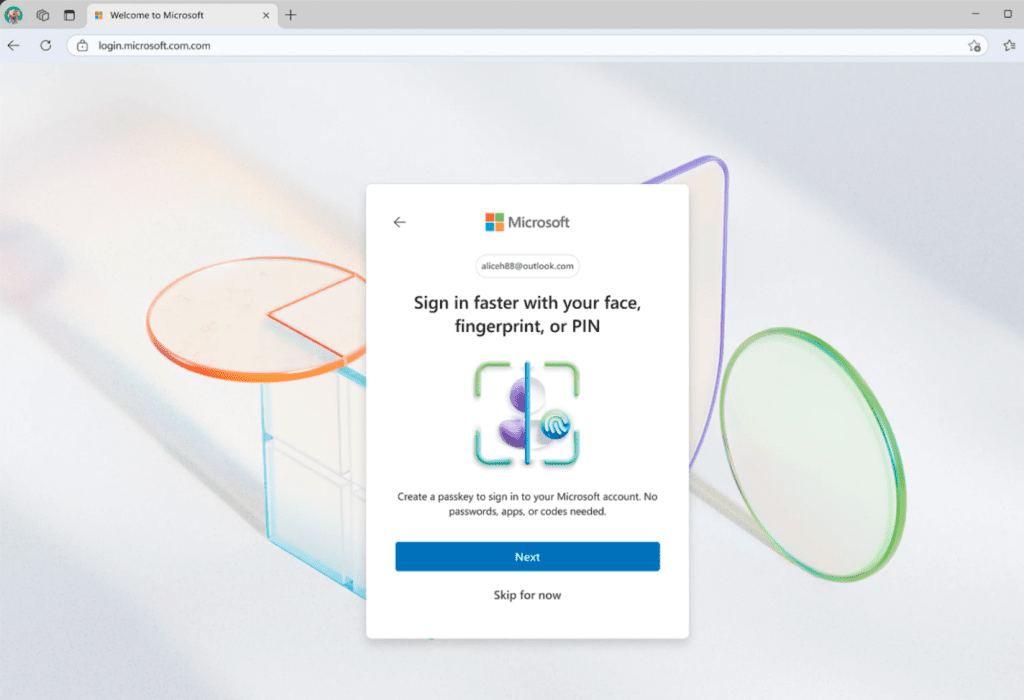
Microsoft has published comprehensive support documentation announcing the progressive deprecation of Short Message Service (SMS) verification codes for individual consumer accounts. Under this shifting paradigm, individuals executing authentication or recovery workflows requiring Multi-Factor Authentication (MFA) must exclusively deploy passkeys, biometric verification, or verified email one-time passwords (OTPs). Consequently, users are strongly implored to configure these alternative authentication modalities preemptively to preclude future administrative lockouts.
For the vast majority of account holders, the adoption of passkeys represents the most elegant and structurally robust authentication framework currently available. Users can seamlessly tether a passkey to Windows 11, iOS, or Android host environments; subsequent access routines merely mandate a localized facial recognition scan or fingerprint unlock to invoke the cryptographically secured credential, facilitating a near-instantaneous login sequence. This infrastructure empowers individuals to completely expunge traditional legacy passwords from their Microsoft identity profile, achieving an absolute passwordless state.
Microsoft posits that telephony-based SMS codes have evolved into a primary vector for modern credential harvesting and intercept fraud. One-time tokens routed via cellular carrier telecommunications networks remain highly susceptible to adversarial hijacking. Relying on SMS as a cornerstone of an identity verification strategy introduces substantial systemic risk, exposing accounts to targeted compromise—a security regression documented extensively over the preceding decade.
The methodologies yielding SMS intercept mastery are deeply varied, ranging from sophisticated network infiltration or malicious insider collusion at the cellular carrier layer to highly targeted SIM-swapping incursions. In a typical SIM-swap scenario, an interloper weaponizes forged identification telemetry to deceive carrier personnel into provisioning a clone SIM card, effectively routing all downstream verification traffic directly into the adversary’s terminal.
Microsoft maintains that migrating toward absolute passwordless architectures, passkey authentication, and secure, verified peripheral email distribution networks effectively neutralizes these evolving threat vectors while simultaneously engineering a more frictionless, streamlined user lifecycle. Consequently, the technology titan intends to comprehensively sunset the distribution of critical verification tokens via traditional cellular messaging structures.
The security guarantees native to passkeys vastly outclass both conventional alphanumeric strings and out-of-band tokens delivered via SMS or email. Because passkeys are inherently non-exportable, they actively resist traditional exfiltration techniques; furthermore, because each identity repository generates an independent, unique cryptographic key pair, the architecture remains entirely immune to credential-stuffing or password-reuse attacks. To ensure continuous access across heterogeneous hardware landscapes, account holders can register multiple distinct passkeys as redundant authentication variables.
Microsoft’s identity core features comprehensive, production-ready support for passkeys; when invoked within the Windows 11 environment, the architecture mandates secondary validation via a localized PIN, fingerprint, or facial matrix. Crucially, the underlying protocol enforces immutable origin-binding mechanics tied strictly to the legitimate domain; as a consequence, even the most visually deceptive phishing portal cannot harvest the local private key or subvert the cryptographic verification sequence.
Accordingly, users managing Microsoft accounts are strongly advised to navigate to their security configuration matrices to initialize passkey authentication. Those seeking an uncompromising security posture may choose to altogether revoke their master passwords, relying exclusively upon a distributed network of passkeys mapped across backup devices to safeguard their digital perimeter.
Support Our Threat Intelligence
Find our tech and OS security coverage helpful? Support our work today and unlock a 100% ad-free reading experience!
 Buy Me a Coffee
