Microsoft Edge Continues Aggressive Tactics to Block Chrome Downloads (Outside EU)
 Do Son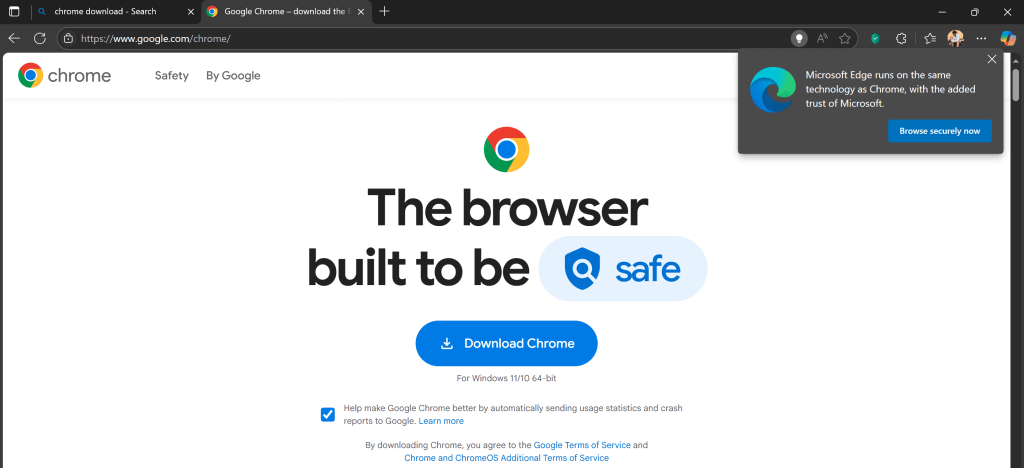
Since 2022, Microsoft has been attempting to interfere with users’ efforts to download and install the Google Chrome browser by exploiting a critical juncture: the necessity of using Microsoft Edge to access and initiate the download. This maneuver aims to dissuade users from switching to Chrome whenever possible.
Because Windows 11 comes pre-installed exclusively with Microsoft Edge, users seeking to install Chrome must first navigate to its official site using Edge—unless they resort to command-line installations. This prerequisite provides Microsoft with a strategic opportunity to influence user behavior.
Currently, Microsoft’s efforts to discourage Chrome installation manifest in several ways:
- When users search for “Google Chrome” using Microsoft Edge and Bing, a prominent banner ad appears, urging them not to proceed with the download.
- When navigating to the official Chrome website, Edge displays a security warning in the address bar, cautioning users against installing Chrome.
- On the Chrome download page itself, Edge injects promotional banners encouraging users to stick with Edge.
These tactics may indeed cause some users to reconsider switching browsers, thereby remaining within the Edge ecosystem. However, Microsoft itself appears to recognize potential compliance concerns with such promotional strategies. As a result, it has ceased these practices within the European Union.
The EU’s stringent digital market regulations, such as the Digital Markets Act, may have influenced this decision, although no official findings or legal proceedings have confirmed any violations on Microsoft’s part. Nonetheless, the company has proactively withdrawn these aggressive marketing tactics from the EU region.
Outside of the EU, however, users still encounter these promotional messages and barriers when attempting to install Chrome via Microsoft Edge, as most jurisdictions do not impose the same rigorous legal standards as those enforced in Europe.
Fearing regulatory repercussions, Microsoft has halted the injection of banner ads during Chrome downloads—but only within the EU. Elsewhere, users continue to face persistent deterrents embedded in Microsoft Edge aimed at preventing them from switching to Chrome.
Related Posts:
- Google exposes a Microsoft Edge browser flaw
- North Korea’s Lazarus Group: A Persistent Threat to the Defense Sector
- Google Chrome continues to be the #1 desktop browser in the world
- “Aggressive Inventory Zombies”: Unmasking a Massive Phishing and Pig-Butchering Network
- Microsoft Edge for Android: Extension Support Finally Arrives
Support Our Threat Intelligence
Find our tech and OS security coverage helpful? Support our work today and unlock a 100% ad-free reading experience!
 Buy Me a Coffee
