 Do Son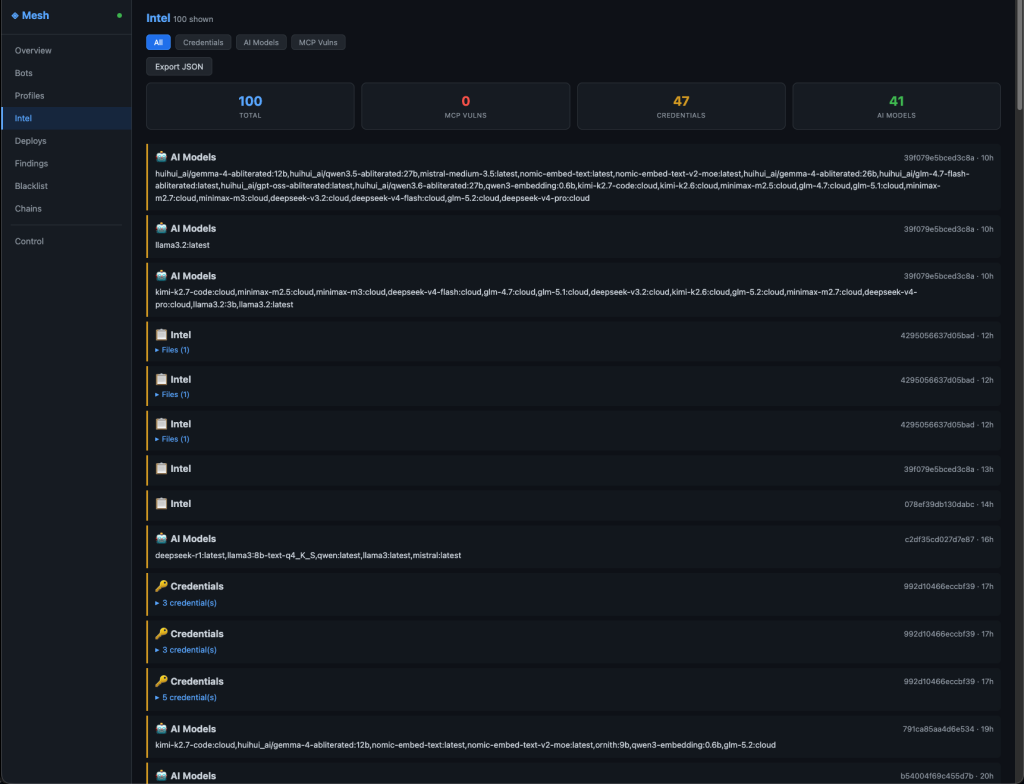
The NadMesh botnet recently emerged as a significant danger to modern cloud networks. Researchers observed this Go-based malware operation spreading widely in early July 2026. Therefore, this AI infrastructure threat poses a major risk to organizations utilizing cloud-hosted machine learning platforms. The system folds network scanning, exploitation, and intelligence harvesting into a single autonomous framework. Consequently, it functions as a complete attack platform with clear commercial intent.
At a glance
- Malware Family: NadMesh
- Threat Actor: Unknown (Suspected financial motive)
- Targets: AI infrastructure, cloud providers, MCP ecosystems
- Delivery Vector: Remote Code Execution (RCE) via Redis, Docker, Kubernetes, and others
- Key Capabilities: Autonomous scanning, targeted credential harvesting, polymorphic payloads
- Source: Xlab
TL;DR
The NadMesh botnet targets artificial intelligence platforms and cloud credentials through automated network scanning. It rapidly compromises exposed services to steal sensitive access tokens. Security teams must lock down their cloud environments to prevent unauthorized access.
Delivery Mechanisms
This malware spreads itself across the internet without direct human intervention. Specifically, it hunts for over 90 built-in cloud provider address ranges. Attackers exploit over 20 different remote code execution vulnerabilities to breach external defenses. These entry points include open Docker APIs, vulnerable Kubernetes instances, and unsecured Redis servers.
Furthermore, the threat specifically hunts for AI platforms. It heavily targets exposed IPs hosting ComfyUI, Ollama, and Gradio tools. Attackers utilize the Shodan search engine API to uncover these vulnerable assets. Once identified, the system immediately injects these specific addresses into its high-priority scan queues. As a result, the network focuses its power on the most valuable targets.
The Infection Chain
The attack operates through a highly organized five-stage cycle. First, a Python script actively harvests intelligence by searching for exposed AI assets online. Second, a central Go-based controller manages bot registration and dispatches continuous scan tasks. After that, autonomous supply scripts create a feedback loop to amplify high-yield subnet scanning.
Next, the framework builds unique payloads for every single deployment. The system uses code obfuscation and random padding to change the malware hash dynamically. Consequently, this polymorphic approach defeats traditional signature-based detection tools. Finally, automated deployer scripts push the payload onto the victim machine. The agent then establishes multiple redundant persistence mechanisms. It uses an SSH public-key backdoor and places hidden cron watchdogs throughout the system.
Command and Control Operations
A central server infrastructure directs the entire NadMesh botnet operation. The attacker relies on a detailed web panel to monitor infection statistics. For instance, Xlab researchers observed 18 active hosts and over 84,000 canary rolls on the operator’s dashboard. Bots routinely communicate with this server to retrieve fresh scanning assignments.
When a bot successfully breaches a system, it immediately begins harvesting valuable intelligence. The agent specifically collects AWS access keys, cluster privilege tokens, and AI model access configurations. The malware explicitly prioritizes stealing cloud credentials over maintaining basic host control. The researchers state, “It is industrial-grade malware with clear commercial intent and an eye on return on investment.” This stolen intelligence flows directly back to the central database.
Defense and Detection Guidance
Organizations must immediately secure their exposed cloud and AI services. Network defenders should actively monitor servers for unauthorized SSH keys. Additionally, administrators must inspect their systems for unexpected cron jobs or hidden temporary files. Always restrict public access to sensitive endpoints like Docker APIs and Kubernetes control planes.
Furthermore, implement strong authentication requirements for all internal Redis databases. Keep all operating systems and container environments updated to patch known software vulnerabilities. Finally, security teams should continuously rotate cloud access keys if they suspect a network compromise.
Security administrators should also utilize network segmentation to isolate critical machine learning infrastructure. Organizations can implement strict firewall rules to block unauthorized outbound traffic. This proactive approach limits the malware’s ability to communicate with its central command server. Regular security audits will help identify weak points before attackers can exploit them.
Support Our Threat Intelligence
Find our threat intelligence and malware analysis helpful? Support our work today and unlock a 100% ad-free reading experience!
 Buy Me a Coffee
