 Do Son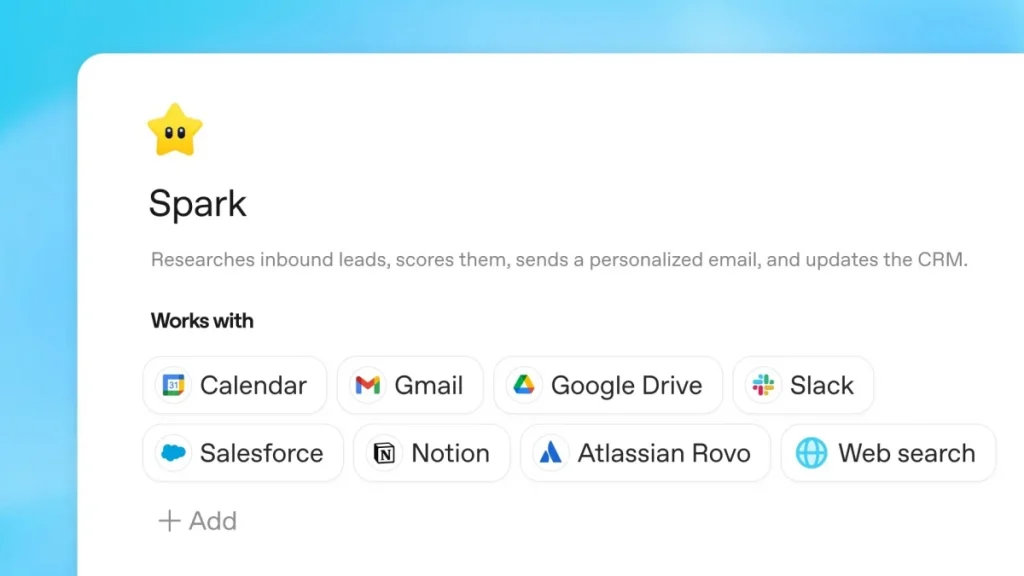
In the wake of Google and Microsoft unveiling their respective enterprise-grade AI agent platforms, OpenAI has decisively revealed its strategic countermeasure. The organization has officially inaugurated “Workspace Agents” within ChatGPT. Driven by the formidable Codex model, this sophisticated suite of features transcends the traditional constraints of “passive inquiry-response” interactions, empowering AI with independent cloud sandboxes, persistent memory, and the capacity to execute multi-tool orchestrations autonomously and incessantly.
With the advent of these “digital laborers”—capable of autonomously managing sales pipelines, IT audits, and analytical reporting—the era of custom assistants known as GPTs has entered its twilight. Since their inception in late 2023, GPTs democratized AI customization but remained, in essence, “sophisticated chat interfaces”; closing a session effectively reset the context and progress, precluding proactive task advancement.
Workspace Agents fundamentally rewrite this paradigm. By leveraging the foundational prowess of the Codex model, each agent is endowed with a dedicated cloud sandbox, facilitating the storage of documents, the execution of code, and the invocation of external APIs and applications. Critically, these agents possess “memory” and “scheduled tasking” capabilities. Even when employees have concluded their workday, these agents remain vigilant in the cloud, monitoring Slack channels or ingesting new requisitions. Through iterative human correction, these agents evolve, transmuting the “best practices” of a firm’s most seasoned veterans into standardized, team-wide workflows.
To demonstrate the disruptive potential of Workspace Agents, OpenAI has highlighted five internal use cases spanning diverse corporate departments:
- Spark (Lead Follow-up): Tailored for sales divisions, it autonomously conducts background research on prospective clients, scores them against established metrics, and—if deemed viable—drafts outreach via Gmail and populates Google Calendar reminders.
- Scout (Product Feedback Routing): A sentinel across Slack, customer support, and public forums, it categorizes fragmented user feedback, prioritizes it, and generates structured tickets in Linear, complete with comprehensive evidentiary trails.
- Slate (Software Review): Facilitates IT governance by automatically auditing software requests against corporate security policies and recommending subsequent procedural steps, thereby streamlining the approval hierarchy.
- Tally (Metric Reporting): A specialist in data synthesis capable of interpreting complex business metrics (such as ARR and MAU) within Google Sheets to calculate growth trends, generate visualizations, and compose executive summaries.
- Trove (Third-Party Risk Management): Supersedes the tedious due diligence of traditional consultancies by autonomously investigating vendor financial and reputational risks to produce exhaustive assessment reports in Google Docs.
Despite their potency, the barrier to constructing these agents is remarkably low. Users need only articulate their requirements in natural language—for instance, “Construct an agent for vendor due diligence”—and the AI assumes control of the assembly: delineating checklists, mounting necessary tools, and architecting behavioral instructions without a single line of code.
Regarding the paramount concerns of security and administrative oversight, managers can utilize Role-Based Access Control (RBAC) to calibrate permissions. For sensitive maneuvers, such as dispatching external correspondence or modifying critical spreadsheets, “human-in-the-loop” approval prompts can be mandated. The system also provides comprehensive log auditing and a Compliance API, ensuring all agent behaviors remain under rigorous corporate supervision.
Currently accessible to ChatGPT Business, Enterprise, Edu, and Teachers subscribers, OpenAI has adopted an aggressive pricing strategy: a cost-free experience is available until May 6, 2026, after which a credit-based system will be implemented, intended to entrench AI agents deep within corporate workflows during the promotional window.
As the second half of 2026 commences, the competitive topography of “Enterprise AI” is firmly established. Microsoft’s Copilot Agents enjoy the inherent advantage of being deeply embedded within the Microsoft 365 ecosystem, while Google’s Gemini Enterprise Agent Platform emphasizes a centralized control tower capable of orchestrating over 200 models with semantic unity.
OpenAI’s gambit against these infrastructure titans is direct: leveraging its 900 million weekly active users to drive adoption. Recognizing that the greatest “hidden cost” of system integration is employee training, OpenAI bets that since white-collar professionals are already habituated to working alongside ChatGPT, the Workspace Agents integrated into its sidebar will offer the solution with the lowest learning curve and the highest penetration. This marks a fundamental transition in the philosophy of labor—AI has evolved from “assisting work” to “executing work.” As these tireless, digital laborers begin to oversee reports and due diligence, the human architecture and management paradigms of modern enterprise will inevitably face a profound and unavoidable upheaval.
Support Our Threat Intelligence
Find our tech and OS security coverage helpful? Support our work today and unlock a 100% ad-free reading experience!
 Buy Me a Coffee
