 Do Son
Altman Confirms a Long-Running Rumor
Amid the fierce race over AI models and consumer hardware, OpenAI CEO Sam Altman has confirmed an industry rumor. OpenAI is indeed building its own humanoid robot.
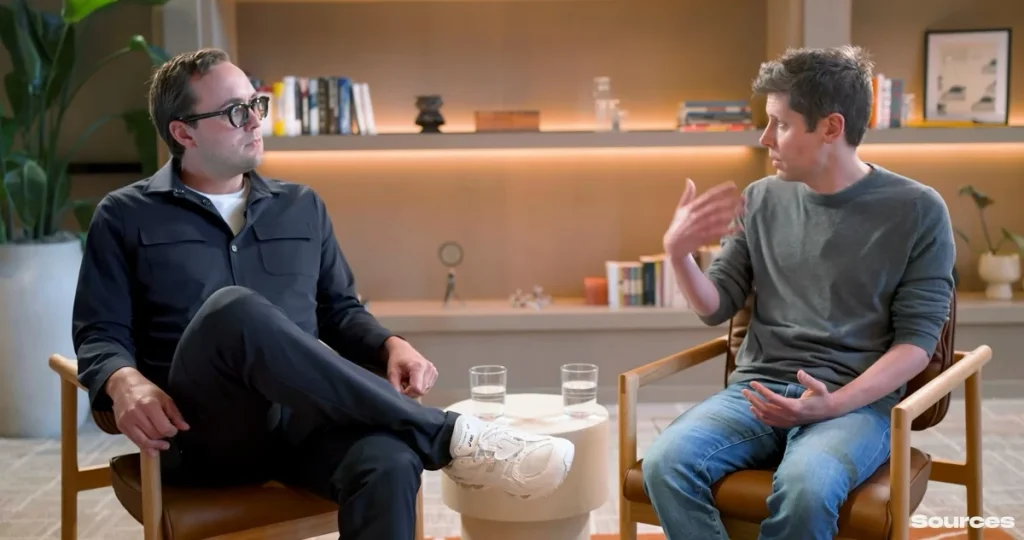
Altman spoke on the Sources podcast about why the company chose a human form. His logic is simple: the world is designed for people. Door handles, keyboards, and tools all fit the human body. Therefore, a robot that moves through human spaces should look similar.
When the host asked whether OpenAI would really build a robot itself, Altman answered in two words: “We will.”
The Brain Is the Real Challenge
Altman does not worry about how the robot looks. In his view, the design matters far less than getting right the brain that drives it. After all, two arms and two legs are easy to attach. Yet they mean little if the machine cannot use them.
Physical Feedback in the Real World
A useful robot brain must solve hard software and physics problems. Through cameras and sensors, it must read the scene, interpret commands, plan motion, and coordinate the whole body.
Take the simple act of lifting a mug. The robot must recognize the cup, find the handle, estimate the grip, and apply the right force. Otherwise, the coffee ends up on the floor.
The Gap Between Simulation and Reality
OpenAI has deep roots in robotics. Its early Dactyl project trained a robotic hand in simulation to handle physical objects and even solve a Rubik’s Cube.
That work also exposed a long-standing problem. A model can learn theory in software, but the laws of physics always have the final say.
A Demo in 2027, Streets Years Later
Altman told Fortune that he expects a “cool demo” in 2027. However, he believes it will take several more years before robots truly walk the streets.
OpenAI has not revealed what the demo will show. It has also kept quiet about the robot’s appearance and about when outsiders might see the hardware.
OpenAI Is Also Building the Body
Altman calls the brain the core problem. Even so, OpenAI does not treat hardware as an afterthought.
Its careers site lists 27 robotics roles. The company is recruiting experts in motion control, state estimation, actuator control, and whole-robot behavior. The postings describe custom electromechanical actuators that combine motors, transmissions, sensing, and thermal management. They also seek manufacturing and supply chain talent for future mass production.
A Crowded Field
OpenAI does not stand alone. Tesla has developed Optimus for years. Meanwhile, the IRON humanoid from China’s XPENG recently walked off its production line under its own power.
Both cases show that a clever software brain still has to drive complex motors and joints. That remains a hard fight.
Practical Goals for Now
For the moment, OpenAI keeps its aims modest:
- Short term: a general-purpose robot that helps skilled workers build infrastructure.
- Long term: a personal robot that handles a wider range of household chores.
The popular dream of a ChatGPT-powered robot that loads the dishwasher will not reach stores soon.
Privacy Questions Remain Open
OpenAI has published no details on price, subscriptions, launch date, or a privacy framework. That gap matters. A robot that roams a home with cameras and microphones makes privacy and security concerns very real.
Support Our Threat Intelligence
Find our tech and OS security coverage helpful? Support our work today and unlock a 100% ad-free reading experience!
 Buy Me a Coffee
