 Do Son

Discord is overhauling its popular communication software to deliver substantial performance gains. Specifically, the engineering team is rebuilding the Discord Rust desktop client from the ground up. This ambitious overhaul eliminates the legacy Electron application wrapper entirely. Furthermore, the new architecture integrates GPUI, a high-performance interface framework rendered directly on the graphics processor. Consequently, desktop users can anticipate dramatic reductions in memory utilization and background resource consumption.
Moving Away from Electron to Native GPUI
Historically, Discord relied on the Electron framework to package its desktop application across multiple operating systems. Although web technologies simplified multi-platform maintenance, Chromium components imposed persistent computational overhead. In contrast, Discord engineers have developed server infrastructure and audio systems in Rust since 2018. Therefore, transitioning the complete desktop codebase to Rust represents a natural technical evolution.
For user interface rendering, the new client adopts the open-source GPUI framework. Zed Industries originally engineered GPUI to power its lightning-fast code editor. According to the architectural update shared by Stanislav Vishnevskiy on X, visual styling remains identical. Meanwhile, embedded platform WebViews will render ancillary interactive features like YouTube sharing.
Drastic Memory Reductions and Mobile Parity
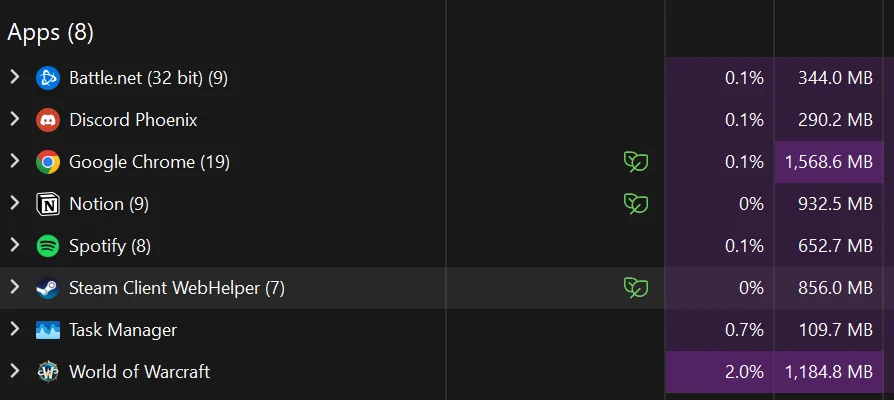
Heavy memory consumption has long frustrated Discord power users navigating extensive communities. Under heavy multitasking, legacy client instances frequently ballooned beyond several gigabytes of system memory. However, early benchmarks of the Rust implementation demonstrate a lean baseline footprint of roughly 290 megabytes. Although active voice streams will increase usage, baseline resource requirements drop substantially.
Unifying Cross-Platform Application Logic
Simultaneously, Discord is restructuring its mobile application strategy across iOS and Android devices. The company plans to phase out React Native while preserving native mobile interface elements. Instead, the mobile clients will share core business logic written directly in Rust. Ultimately, this unified foundation streamlines developer maintenance while accelerating responsive feature delivery across every platform.
Support Our Threat Intelligence
Find our tech and OS security coverage helpful? Support our work today and unlock a 100% ad-free reading experience!
 Buy Me a Coffee
