OpenAI Introduces “Take a Break” Reminders to ChatGPT, Refines Responses for High-Stakes Decisions
 Do Son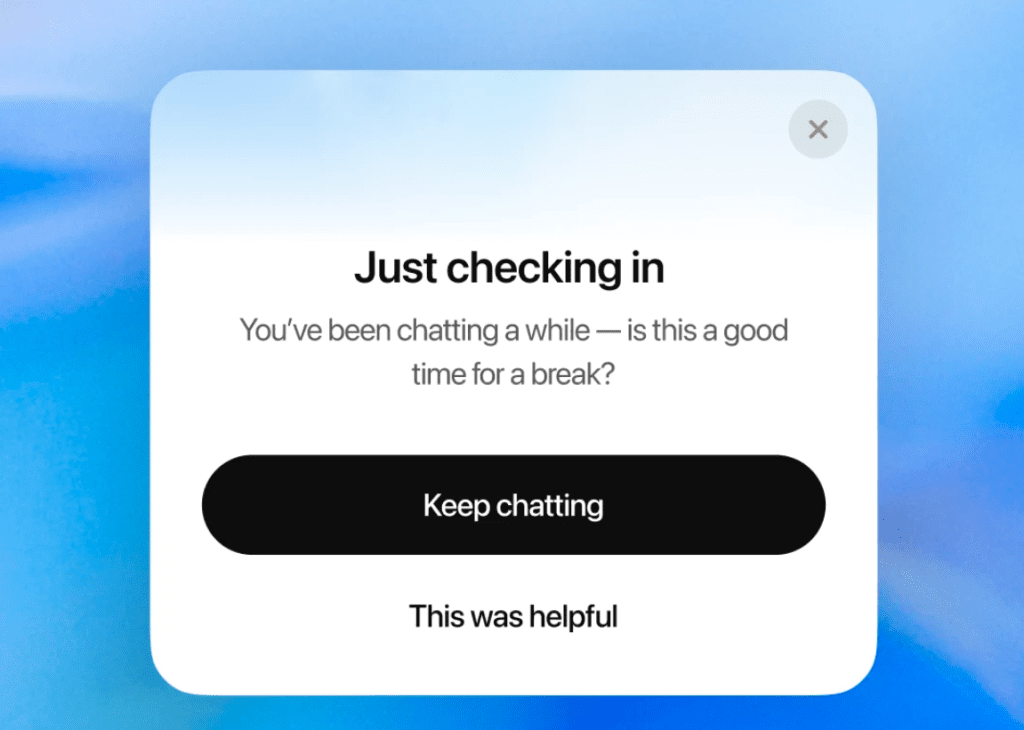
OpenAI has announced the introduction of a new feature in its ChatGPT service—an automatic reminder encouraging users to “take a break”—alongside a refined response strategy for handling highly personalized decisions, in an effort to reduce misinformation and prevent overreliance on AI.
This new functionality appears as a pop-up prompt when conversations become prolonged, offering gentle reminders such as: “You’ve been chatting for a while—might this be a good time to take a short break?” Users must acknowledge the prompt before continuing the interaction. This kind of design, reminiscent of prompts found on Nintendo’s Wii or Switch consoles warning players to pause after extended gameplay, now finds its way into AI-driven dialogue—underpinned by deeper concerns.
A New York Times report from June 2025 revealed that some users, after prolonged interactions with ChatGPT, developed unhealthy thought patterns, with a few even exhibiting suicidal ideation. Although many such instances were tied to pre-existing mental health conditions, the AI system’s responses to sensitive topics sometimes lacked appropriate safeguards, occasionally reinforcing users’ negative thoughts—raising serious ethical concerns.
In its official statement, OpenAI acknowledged that ChatGPT has, in certain contexts, responded inappropriately—particularly when users broach high-risk or intimate topics. In response, upcoming versions of ChatGPT will shift toward a more reflective approach, aimed at facilitating thought rather than dispensing definitive advice.
Practically speaking, this means the AI will now attempt to help users break down complex issues, pose clarifying questions, and present pros and cons—fostering more constructive dialogue while avoiding the pitfalls of overly directive suggestions that might be misinterpreted or emotionally burdensome.
In earlier updates, OpenAI experimented with making ChatGPT more “humanlike,” which occasionally led to backlash. An April update, for instance, made the AI appear overly cheerful and excessively solicitous, which many users found off-putting. As a result, portions of that update were rolled back. This latest move to introduce “rest reminders” and recalibrate how ChatGPT handles high-risk topics reflects OpenAI’s renewed commitment to striking a balance between warmth and restraint.
Furthermore, this update aligns closely with OpenAI’s ongoing efforts to promote ethical AI usage. As generative AI increasingly permeates domains such as education, mental health support, and personal life planning, the nature of human–AI interaction has evolved beyond simple information retrieval. AI systems now have the potential to influence cognition, decision-making, and emotional well-being in profound ways.
By implementing these changes, OpenAI tacitly acknowledges the psychological impact AI can have on users—and is taking steps at the system design level to address it. While this feature remains in its early stages, it remains to be seen whether OpenAI will expand its application or forge partnerships with mental health organizations. What is clear, however, is that as generative AI enhances efficiency and accessibility, it must also confront the emotional and psychological challenges it introduces.
Related Posts:
- Misinformation Campaigns Surge in the Philippines Amidst Geopolitical Tensions
- LightSpy Malware Strikes macOS: Your Mac Could be the Target
- Microsoft Introduces New Publish API to Enhance Security of Edge Extensions
Support Our Threat Intelligence
Find our tech and OS security coverage helpful? Support our work today and unlock a 100% ad-free reading experience!
 Buy Me a Coffee
