 Do Son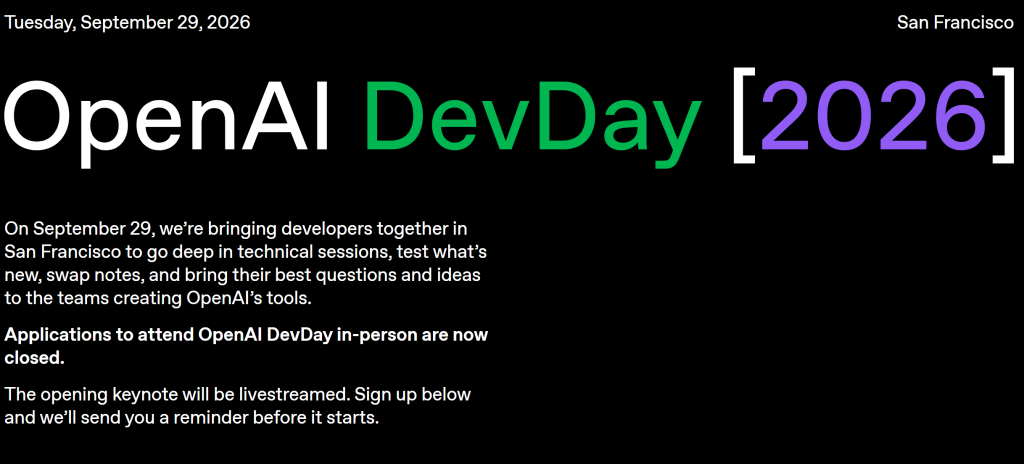
As the generative artificial intelligence landscape pivots decisively from reactive conversational chatbots toward proactive, autonomous “Agentic AI,” OpenAI is apparently preparing to reveal a significant strategic maneuver. According to confidential sources, the organization anticipates officially unveiling a revolutionary, persistent AI assistant—currently shrouded under the enigmatic codename “O.” This debut will reportedly occur at the highly anticipated OpenAI DevDay conference. The event is scheduled for September 29 in San Francisco.
Configuration Files Reveal Autonomous Capabilities
Recently, forensic scrutiny of ChatGPT’s internal configuration files has unearthed a substantial volume of string artifacts intrinsically linked to the solitary letter “O.” Analysts found explicit configurations setting the display moniker directly to “O.” Beyond that, they also discovered dedicated email configurations terminating with an exclusive “-o” suffix.
These crucial technical breadcrumbs strongly suggest that “O” will fundamentally diverge from conventional AI paradigms. It will not be restricted to isolated, user-initiated dialogues requiring active application engagement. Instead, “O” appears engineered as a sophisticated agent capable of “persistent, ambient operation.” This will occur entirely outside standard chat interfaces. Furthermore, it will likely possess an independent systemic identity and a dedicated email address. This would empower it to proactively intercept external triggers and autonomously advance multifaceted tasks deeply within the system background.
Project Aeon and the Rumored Donut Hardware
Intriguingly, the developmental trajectory of the “O” project is reportedly intimately intertwined with OpenAI’s highly secretive “Project Aeon.” Within industry circles, “Project Aeon” has long been conceptualized as OpenAI’s clandestine endeavor to architect a persistent entity. This entity would possess profound, long-term memory capabilities. Additionally, it would have a robust framework for executing rigidly scheduled tasks.
While the precise scope of initial permissions and the specific automated scheduling capabilities “O” will support remain shrouded in ambiguity, its overarching trajectory toward “Persistent Presence” is unequivocally established.
Furthermore, persistent rumors have circulated throughout the technological sphere indicating that OpenAI is collaborating with Jony Ive, Apple’s legendary former design chief, to forge a physical AI hardware device. Certain whispers even suggest prototypes exhibiting a distinct circular or “donut” morphology. Should this hardware project genuinely exist, the solitary codename “O” would transcend merely representing OpenAI. Additionally, it could serve as a brilliant, dual-purpose branding element. This element would perfectly mirror the device’s physical silhouette.
The Evolution from Chatboxes to Ambient Agents
Analyzing the recent strategic maneuvers of the dominant technological titans over the past several weeks reveals a profound industry-wide paradigm shift. Meta’s introduction of Muse and Google’s intensive beta testing of “Call For Me” and “Gemini 3.8 Live” on the imminent Pixel 11 further support this trend. Now, the tantalizing exposure of OpenAI’s “O” all points toward the same inevitable conclusion. The traditional chat interface is being rapidly relegated to a secondary role. As a result, the true, pivotal battleground has shifted to the realm of ambient, persistent agents.
Historically, artificial intelligence has remained stubbornly passive; models initiated inferential processes strictly upon user solicitation via keyboard input or voice command. Conversely, the persistent architecture epitomized by “O” is defined by its capacity to maintain an independent operational “heartbeat” and a discrete systemic “identity.” Only when an AI possesses a dedicated, virtualized background environment and autonomous communication channels (such as processing specific email receipts) does it change. Furthermore, the ability to silently track flights, coordinate complex schedules, or monitor server health while the user sleeps is required. Then, it genuinely transcends from a mere utility into an authentic “digital agent.”
OpenAI’s calculated decision to debut “O” at DevDay is likely a strategic maneuver to establish foundational standards for the emerging agentic AI ecosystem among developers. Simultaneously, it serves as a formidable defensive posture designed to thwart potential ecosystem erosion threatened by rival services like Meta Muse. Whether “O” ultimately debuts alongside physical hardware remains to be seen. However, the era of persistent, ambient AI inextricably woven into the fabric of daily digital existence has undeniably arrived.
Support Our Threat Intelligence
Find our tech and OS security coverage helpful? Support our work today and unlock a 100% ad-free reading experience!
 Buy Me a Coffee
