Operation FlutterBridge Malware Targets macOS Platforms with Backdoor Capabilities
 Do Son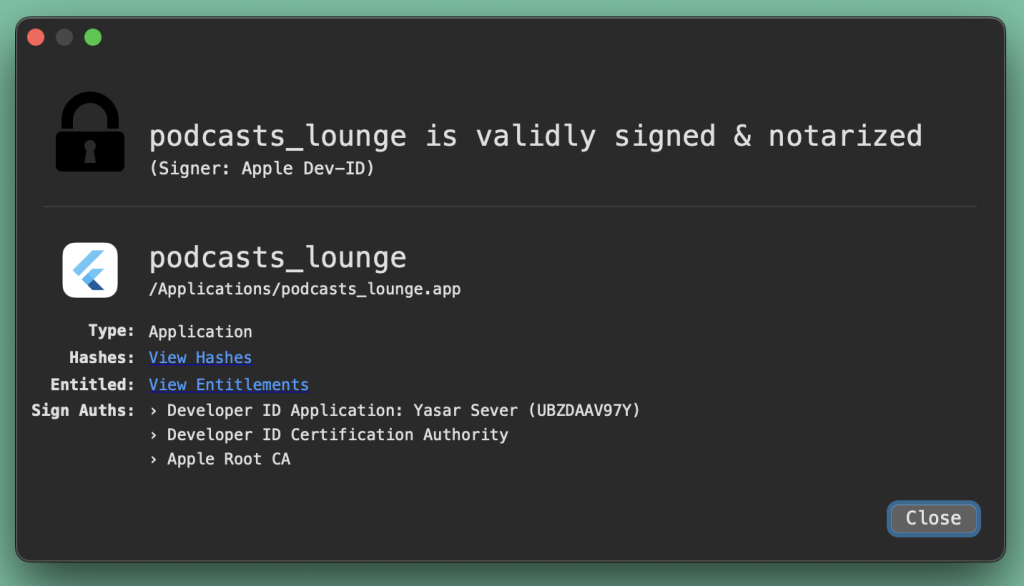
FlutterShell is signed with valid Apple Developer IDs and successfully passed notarization | Image: Unit 42
Widespread Adware Campaign Evolves into Dangerous Shell Threat
Security teams are tracking an increasingly widespread threat targeting Apple desktop ecosystems. The sophisticated Operation FlutterBridge malware represents a dangerous evolution in corporate cybercrime. This active operation follows a previous infection campaign known as JSCoreRunner. In recent months, the financially motivated threat actors transitioned from spreading basic adware to deploying full backdoor functionalities. Consequently, regular endpoint defenses fail to flag the malicious application packages during initial downloads.
Deceptive Vetting Bypasses via Shell Corporate Networks
To begin with, the distribution strategy relies on legitimate digital advertising spaces. The threat group orchestrates extensive promotions through Google and YouTube networks. Furthermore, the adversaries buy placement using verified corporate entities. For instance, records link the campaign to shell outfits named AdsParkPro LTD and Advantage Web Marketing LLC.
Additionally, the operators incorporate a long timeline delay before launching malicious ad spending. This maturation strategy allows the legal entity to age naturally. Therefore, the setup successfully evades fraud detection filters enforced by ad networks. Ultimately, hundreds of unverified advertisements funnel unsuspecting global users toward rogue deployment pages.
Masquerading as Functional Productivity Applications
Subsequently, the downloaded software hides its underlying purpose by mimicking harmless tools. Forensic analysts identified three variations of the threat package. The malware successfully poses as a podcast player called Podcasts Lounge. Alternatively, later iterations masquerade as helpful utilities named PDF-Brain and PDF-Ninja.
Interestingly, these desktop utilities remain fully functional to deceive the victim. Because the binaries are signed with valid Apple Developer IDs, they successfully pass automated security notarization checks. As a result, the applications displayed zero initial detections on VirusTotal.
Implementing an Advanced WebView Architecture
The JavaScript-to-Native Bridge
To achieve operational flexibility, the threat actors avoid embedding rigid code strings into the physical binary format. Instead, they rely on a dynamic layout built around web rendering components. The official technical summary outlines this modular design pattern directly. “FlutterShell’s authors implemented a WebView-based architecture that utilizes a JavaScript-to-native bridge.” Subsequently, a message channel named flutterinvoke coordinates data transactions between the web content and the local environment. The application translates JSON commands into native system actions seamlessly.
Real-Time Behavioral Modifications
Furthermore, keeping code resources on external endpoints grants the adversaries immense operational authority. The report documents this tactical separation clearly. “This design allows the attackers to host malicious logic on an external website, rather than hardcoding it into the binary.” Therefore, threat actors can alter system behaviors on the fly without redistributing new file variants. By modifying scripts located on remote servers, operators dynamically activate different backdoor features. Currently, these internal parameters facilitate arbitrary terminal command execution, data exfiltration, and local filesystem manipulation.
Weaponizing Artificial Intelligence Features for Data Theft
In addition, advanced versions of the implant incorporate modern technology trends to harvest confidential information. The software offers a seemingly legitimate artificial intelligence document summarization tool to corporate users. However, this utility functions primarily as a stealthy data collection pipeline.
The technical report details this interception method: “Instead of sending the file content directly to an AI Agent, FlutterShell forwards the content to the attackers’ C2 server, at the https://[attacker_domain]/summarize-text endpoint.” While the user eventually receives the expected summary text, the backend server quietly steals every processed document entirely.
Persistent Browser Hijacking Mechanisms
Concurrently, the primary payload focuses on widespread browser manipulation to generate rapid advertising revenue. Upon execution, the malware gathers unique machine identification parameters. Then, it alters the Google Chrome “Secure Preferences” file directly.
This attack replaces the default search and new tab parameters with a rogue destination tracking domain called sinterfumesco.com. Subsequently, the implant forcefully terminates the running browser process. It immediately restarts the application using custom arguments to suppress native crash restoration warnings. As a result, all web traffic moves through an ad-filled intermediary environment.
Tracking Cross-Platform Connections
Moreover, threat indicators establish a clear connection to separate Windows-based corporate cyber campaigns. By pivoting on infrastructure components, analysts linked the campaign directly to the RecipeLister and Calendaromatic malware strains. All of these variants participate in a single umbrella crime organization tracked as activity cluster CL-CRI-1089. Unit 42 summarizes this evolutionary milestone directly: “By transitioning to the Flutter framework and adopting a dynamic, WebView-based architecture, the attackers have effectively separated their malicious logic from the binary.”
Hardening Strategies for Corporate Networks
Ultimately, neutralizing the Operation FlutterBridge malware requires a multi-layered behavioral defense plan. Security teams should audit browser preference files for unapproved search configurations. Additionally, network managers must block outbound connection paths traveling to known rogue command domains. Finally, restricting the runtime operations of embedded web engines inside untrusted standalone apps will break the communication bridge entirely. Continuous vigilance is required to safeguard workplace endpoints from these adaptive malvertising campaigns.
Support Our Threat Intelligence
Find our threat intelligence and malware analysis helpful? Support our work today and unlock a 100% ad-free reading experience!
 Buy Me a Coffee
