
 Do Son
Google launches the Agent2Agent (A2A) protocol, an open-source standard for cross-platform AI agent interoperability, and enhances Agentspace with new development tools and an AI Agent Marketplace. Learn how this enables seamless multi-cloud AI collaboration.

Google launches Lyria, a text-to-music model on Vertex AI, alongside enhanced Veo 2, Imagen 3, and Chirp 3 tools. Discover how these advancements unify image, video, voice, and music generation in a single platform.

Google launches Workspace Flows for AI-powered workflow automation and integrates Gemini across Workspace with enhanced Docs, Sheets, and Meet features. Learn how these updates streamline productivity and collaboration.

Google introduces Gemini 2.5 Flash, a fast and cost-effective AI model on Vertex AI, designed for low latency and efficient performance in applications like virtual assistants and real-time summarization. Discover its dynamic reasoning and optimization tools.

Amazon introduces Nova Sonic, an advanced foundation model that unifies speech understanding and generation to deliver lifelike, emotionally aware AI conversations.

CISA has added critical vulnerabilities affecting Windows CLFS (CVE-2025-29824) and Gladinet CentreStack (CVE-2025-30406) to its Known Exploited Vulnerabilities Catalog. Learn about the threats and the urgent need to apply patches.Sources and related content

Microsoft reports active exploitation of a Windows CLFS zero-day (CVE-2025-29824) to escalate privileges and deploy ransomware. Learn about the attacks, the threat actors involved, and how to mitigate the risk.

Siemens ProductCERT issued a security advisory detailing critical vulnerabilities in the SENTRON 7KT PAC1260 Data Manager. The flaws could allow remote attackers to execute code, bypass authentication, and more.

A vulnerability (CVE-2024-12556) in Kibana allows code injection via prototype pollution, file upload, and path traversal. Upgrade to the latest version or disable the integration assistant to mitigate this high-severity security risk.
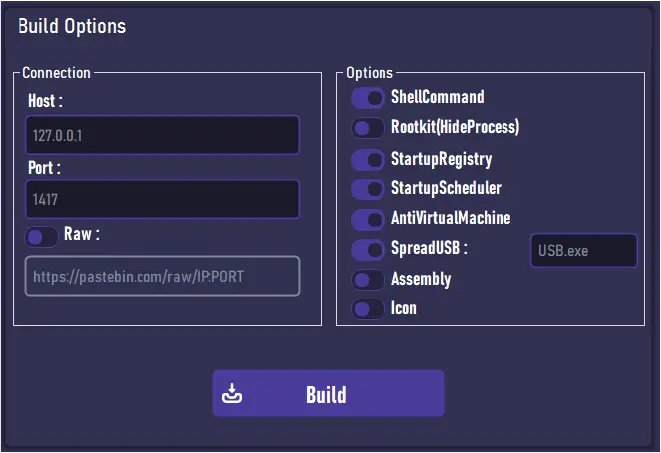
CYFIRMA researchers discovered Neptune RAT, an advanced Remote Access Trojan targeting Windows. Learn about its destructive features, evasion techniques, and distribution methods.

The latest Chrome update addresses a high-severity "use after free" vulnerability in Site Isolation (CVE-2025-3066). Learn about the security risk and the importance of updating your Chrome browser

Attackers are using "Rogue RDP" techniques, abusing RemoteApp and resource redirection to steal files and conduct espionage

Microsoft's April 2025 Patch Tuesday addresses 134 vulnerabilities, including a zero-day under active exploitation. This update covers critical RCE flaws in Windows, Office, and more

JPCERT/CC reports multiple vulnerabilities in Inaba Denki Sangyo Wi-Fi AP units, including command injection and authentication issues

Vidar Stealer malware is distributed by masquerading as BGInfo.exe, exploiting expired signatures and file discrepancies to evade detection

Attackers are using SourceForge to distribute malware, including a ClipBanker Trojan and a cryptocurrency miner, disguised as a Microsoft Office enhancement suite.

The Grandoreiro banking trojan is being spread through phishing campaigns. Learn about the attack methods and how to stay safe.

A security flaw in Apache's mod_auth_openidc module can expose protected web content to unauthenticated users. Patch or mitigate to secure your server

Ten popular Visual Studio Code extensions were found secretly installing XMRig miners, exploiting users’ CPUs for unauthorized cryptomining.

Fortinet has addressed a critical vulnerability (CVE-2024-48887) in FortiSwitch that allows unauthenticated attackers to change admin passwords. Upgrade to the latest version to secure your devices.

A Europol-supported operation dismantled a major criminal group producing counterfeit euro banknotes. The investigation spanned multiple countries and resulted in arrests and the seizure of fake currency and production facilities.

Siemens security advisories detail a critical authentication vulnerability (CVE-2024-54092) in Industrial Edge Devices, allowing for potential impersonation