
 Do Son
Ivanti has disclosed 13 vulnerabilities affecting its Endpoint Manager (EPM) platform, including two high-severity flaws that could...
Latest news

After previously being accused of using pirated books to train its artificial intelligence models, Apple now faces...

Microsoft’s AI-powered facial recognition feature in OneDrive is currently in limited preview, meaning not all users have...

The popular Nano Banana AI image editing tool, which has attracted considerable user attention, is now being...

After discovering that hackers were exploiting a zero-day vulnerability in the Chakra JavaScript engine used by Internet...

After confirming its partnerships with NVIDIA, AMD, and Oracle, OpenAI has now announced a collaboration with Broadcom...

Years ago, Google introduced website notifications to its Chrome browser, allowing sites to use an API to...

Apple employs various methods — including the collection of anonymized data — to detect potential security threats....

The CERT Coordination Center (CERT/CC) has issued a warning regarding a critical supply chain vulnerability — CVE-2025-11577...

Elastic has released urgent security updates for Elastic Cloud Enterprise (ECE) to patch a critical vulnerability (CVE-2025-37729)...

Happy New Year! Say goodbye to the old and welcome the new, 2024 has already begun! Your...

Identified as CVE-2024-20272, this vulnerability allows unauthenticated attackers could gain root privileges on unpatched devices.

Ivanti has revealed two critical zero-day vulnerabilities (CVE-2024-21887, CVE-2023-46805) in its Connect Secure and Policy Secure products

Cybercriminals can access users' Google accounts through a cookie vulnerability without knowing the password.

Growing your business requires getting new leads and transforming them into loyal customers. This is a challenge...

Businesses move in a digital environment where online visibility, effective communication, and interaction with potential customers have...

CVE-2023-49647 could be exploited to gain elevated rights, posing a serious threat to the confidentiality and integrity of Zoom sessions and user data

Rated 8.1 on the CVSS, CVE-2023-41056 is a serious threat that underscores the fragility of even the most secure systems

CVE-2024-20674 in Windows Kerberos could enable an unauthenticated attacker to execute a machine-in-the-middle (MitM) attack

This vulnerability, designated as CVE-2023-47211, carries a high-severity rating of 9.1 on the Common Vulnerability Scoring System scale

In the ever-evolving landscape of cyber threats, a new name has emerged with a notorious reputation –...

Victims of the Babuk Tortilla variant can now access the updated Avast Babuk decryptor through the NoMoreRansom website

CVE-2023-51409 was so critical that it received a Common Vulnerability Scoring System score of 10, indicating the highest level of severity.

CVE-2024-0193 is capable of being exploited by local adversaries to escalate privileges and execute arbitrary code
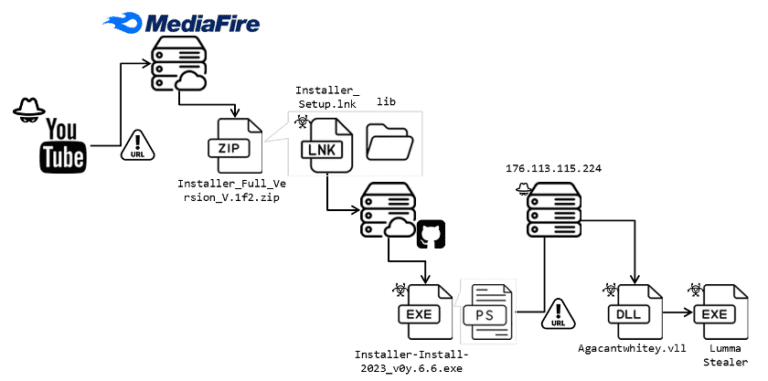
A cunning stratagem employed by a threat group, exploiting YouTube channels to disseminate a variant of the notorious Lumma Stealer malware.

SentinelOne, a security research organization, demonstrated this by creating a proof-of-concept attack using a maliciously crafted npm package

Revealing how malicious actors are using YouTube, a platform trusted for legitimate content, to distribute cryptocurrency miners.

The report is a comprehensive examination of the vulnerabilities inherent in AI and machine learning (ML) systems.
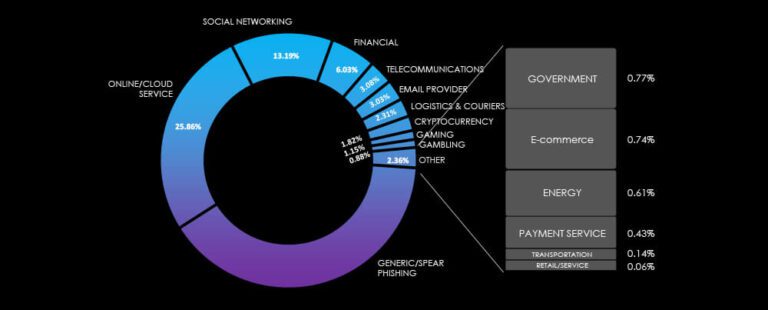
CYFIRMA Industries Report offers an illuminating look into the current state of cyber threats, in the professional goods & services industry

The vulnerability, identified as CVE-2024-21633 (CVSS 7.8), exists in the apktool, a component of the MobSF.

Dubbed 'Operation Japan,' this campaign unfolds against the backdrop of Japan's controversial decision to release treated water

QiAnXin Threat Intelligence Center's detailed analysis linked the binary involved in this operation to a North Korean APT