
 Do Son
Veeam Software has released patches addressing three newly disclosed vulnerabilities, including two critical Remote Code Execution (RCE)...
Latest news
DOJ Files Record $15 Billion Bitcoin Seizure Against Prince Group Chairman Over Pig Butchering Scams

DOJ Files Record $15 Billion Bitcoin Seizure Against Prince Group Chairman Over Pig Butchering Scams
The U.S. Department of Justice (DOJ) has unsealed an indictment against Chen Zhi, also known as Vincent,...

A new report from Cyble Research and Intelligence Labs (CRIL) has uncovered a sophisticated Android malware campaign...

Google has released a new Stable Channel Update for Desktop, rolling out gradually to Windows, macOS, and...

Microsoft’s October 2025 Patch Tuesday has arrived with one of the largest security updates of the year—193...

Sekoia Threat Detection & Response (TDR) researchers have published an in-depth technical analysis of the PolarEdge Backdoor,...

Proofpoint has identified a new and highly self-reliant cybercriminal threat actor, tracked as TA585, which operates with...

Rockwell Automation has released a series of security advisories addressing vulnerabilities in several of its FactoryTalk and...

 cybernewswire
Torrance, United States, 14th October 2025, CyberNewsWire


Ransomware is malicious software that encrypts your access to your system or data. The attacker then demands...

Linux Kernel has been hit by a significant security vulnerability, CVE-2023-6040, with a CVSS score of 7.8, impacting its netfilter component

CVE-2024-21611 (CVSS 7.5): A memory leak and eventually an rpd crash, CVE-2024-21591 (CVSS 9.8): J-web allows a preAuth Remote Code Execution

By sending a specially crafted request, an attacker could exploit CVE-2024-0252 to execute arbitrary code on the system.

In a digital world where reality is increasingly difficult to discern, a new scam leveraging the power of AI deepfake technology has emerged

WorkersDevBackdoor malware has been impacting the business services industry with its cunning distribution and destructive capabilities.

A Linux-based malware family, DreamBus has been quietly evolving, honing its capabilities to exploit vulnerabilities in business applications

Unit 42 Incident Response Team's investigation into a Medusa ransomware incident has unveiled intricate tactics, tools, and procedures

GitLab has taken decisive steps to fortify its defenses against two critical flaws - CVE-2023-7028 (CVSS 10) & CVE-2023-5356 (CVSS 9.6)

Pictures are very important for sharing information. But turning the text in these pictures into editable words...

Unlike Mirai, which is aimed at DDoS attacks, this new worm, dubbed NoaBot, installs crypto miners, enabling attackers to exploit

Yesterday, the SEC's X account suddenly posted that it had approved at least one Bitcoin exchange-traded fund (ETF).

Forcepoint X-Labs, a vanguard in cybersecurity, has unveiled an intricate cyber-attack targeting business leaders during a pivotal general election period.
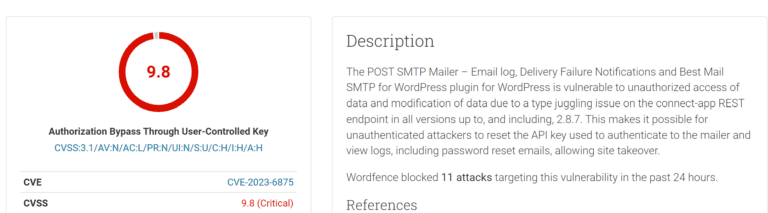
CVE-2023-6875, with a CVSS score of 9.8, exists in the Post SMTP landscape, exploiting a type juggling issue in the connect-app REST endpoint

Happy New Year! Say goodbye to the old and welcome the new, 2024 has already begun! Your...

Identified as CVE-2024-20272, this vulnerability allows unauthenticated attackers could gain root privileges on unpatched devices.

Ivanti has revealed two critical zero-day vulnerabilities (CVE-2024-21887, CVE-2023-46805) in its Connect Secure and Policy Secure products
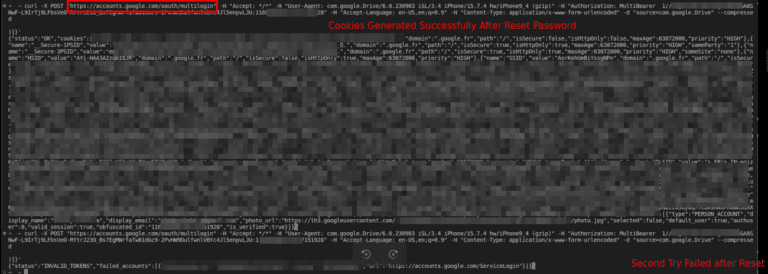
Cybercriminals can access users' Google accounts through a cookie vulnerability without knowing the password.

Growing your business requires getting new leads and transforming them into loyal customers. This is a challenge...

Businesses move in a digital environment where online visibility, effective communication, and interaction with potential customers have...

CVE-2023-49647 could be exploited to gain elevated rights, posing a serious threat to the confidentiality and integrity of Zoom sessions and user data

Rated 8.1 on the CVSS, CVE-2023-41056 is a serious threat that underscores the fragility of even the most secure systems