
 Do Son
With NVIDIA’s announcement of a $5 billion investment in Intel and confirmation that the two companies will...
Latest news

The popular gaming platform Steam has announced its support roadmap for 32-bit Windows 10, confirming that Steam...

According to a report by Nikkei Asia, Apple has recently informed its supply chain partners that shipments...

After the U.S. government became Intel’s largest shareholder with an $8.9 billion investment, NVIDIA announced that it...

Nokia has published a security advisory warning customers of two high-severity vulnerabilities affecting its CloudBand Infrastructure Software...

HubSpot has issued a security advisory regarding a critical flaw in its Jinjava template engine, which powers...

The Cybersecurity and Infrastructure Security Agency (CISA) has published a new Malware Analysis Report (MAR) detailing how...

The U.S. Department of Justice (DOJ) has unsealed a criminal complaint charging Thalha Jubair, a 19-year-old United...

A newly disclosed vulnerability in Fortra’s GoAnywhere Managed File Transfer (MFT) platform has been assigned CVE-2025-10035, carrying...

ShinyHunters, one of the most notorious financially motivated eCrime groups, is broadening its arsenal with AI-driven social...

This flaw, which has been assigned the identifier CVE-2023-24329, has a CVSS score of 7.5 and could be exploited to cause a variety of security problems

A data breach occurs whenever private, proprietary, or otherwise sensitive information is made public by an accident...

How to Disable a Home Security System Alarm When Power is Out Having a reliable home security...
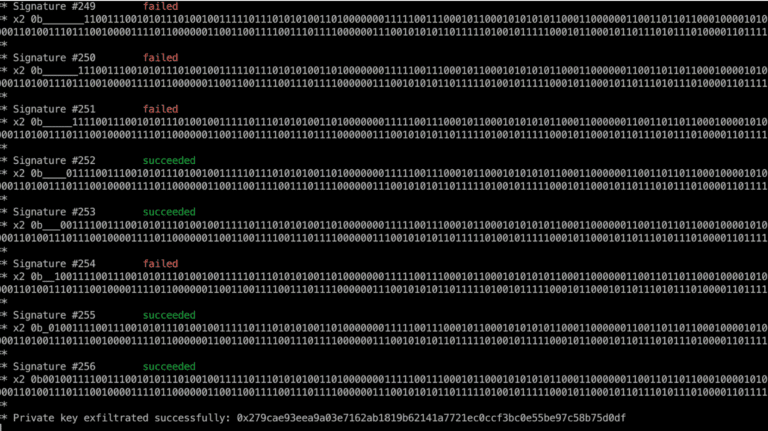
The attacker, assuming privileged access, can exploit the CVE-2023-33242 bug to exfiltrate the key after approximately 200 signature requests

due to prior cyberattacks, for security considerations, LetMeSpy will cease offering its services to anyone starting August 31, 2023.
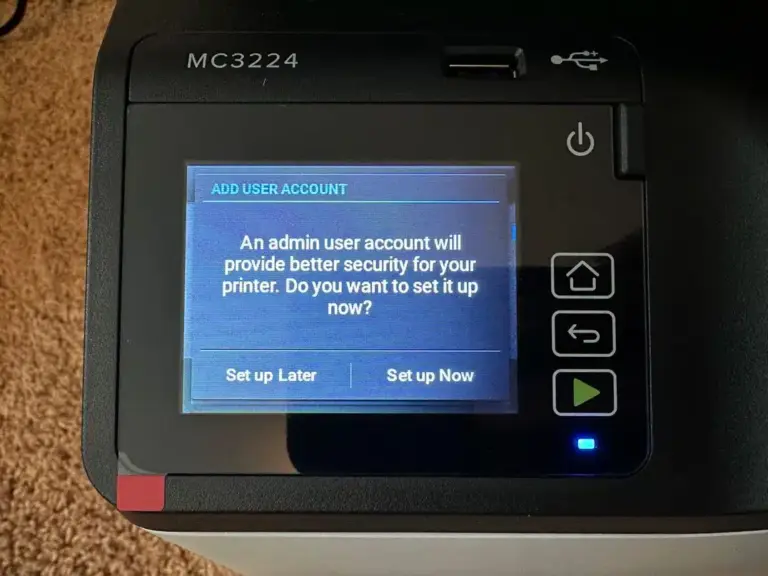
Horizon3 has gone a step further by publishing a Proof-of-Concept (PoC) code that demonstrates how to abuse the CVE-2023-26067 vulnerability
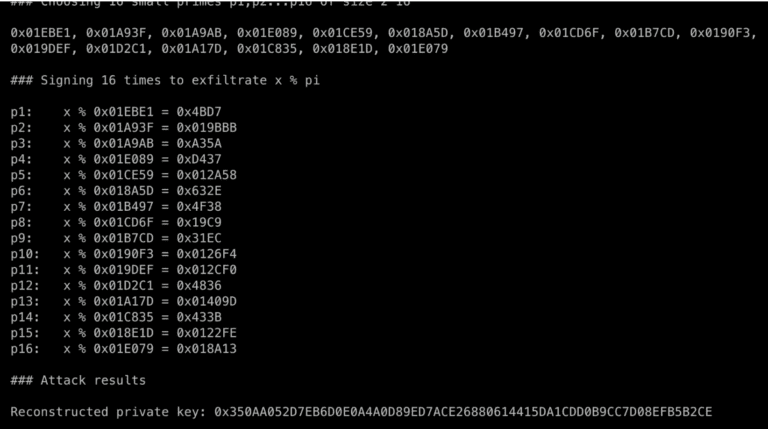
CVE-2023-33241 has recently been discovered in the popular multi-party computation (MPC) protocols GG18 and GG20

In today’s interconnected world, ensuring the security of sensitive data and online resources is of utmost importance....

Cybersecurity researchers have released guides and scripts to help users assess whether their VPN service is affected by the TunnelCrack flaw

CVE-2023-32002 vulnerability allows a remote attacker to bypass security restrictions by using the Module._load() function

The CVE-2023-33934 vulnerability is an equally troubling flaw that could allow an attacker to bypass security restrictions

they asserted that data could be stolen through the recording of keyboard keystrokes using a microphone, with an accuracy rate reaching 95%

it is entirely feasible to maliciously exploit the CVE-2022-40982 security vulnerability to steal other users' data and credentials

One of the most serious bugs, CVE-2023-39216, allows an unauthenticated attacker to enable an escalation of privilege via network access

The Inception attack, tracked as CVE-2023-20569 has exposed a flaw in a broad range of AMD Zen CPUs, including the most recent models.

CVE-2023-38180 is a denial of service vulnerability in the .NET and Visual Studio software development kits
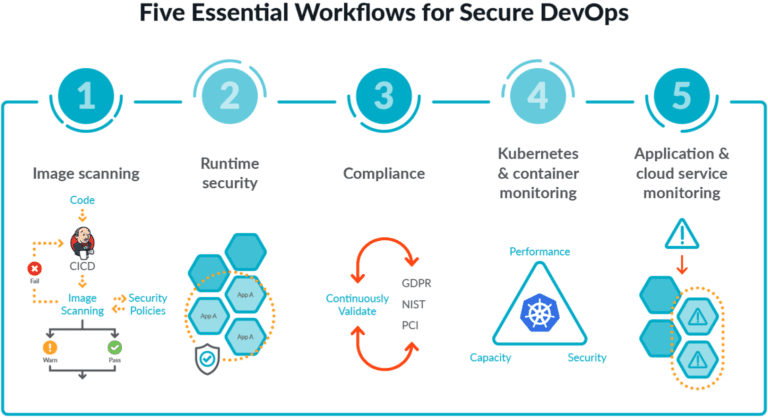
Introduction As organizations increasingly adopt containerization technology like Docker to enhance application deployment and scalability, it is...

Direct mail marketing is a prevalent form of marketing that involves sending physical materials through the mail...

CVE-2023-21273 could lead to remote (proximal/adjacent) code execution with no additional execution privileges needed

Successful exploitation of the CVE-2023-39526 flaw could enable an attacker to submit a specially crafted request
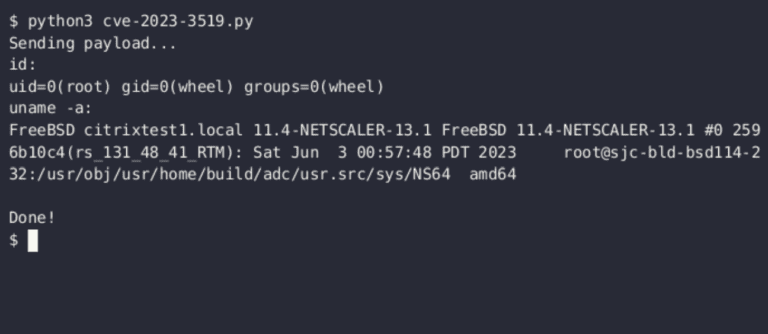
A proof-of-concept (PoC) for CVE-2023-3519, a critical vulnerability in Citrix ADC that allows remote code execution, has been published

CVE-2023-3824 is a buffer overflow vulnerability that could allow a remote attacker to execute arbitrary code on a PHP system