
 Do Son
Following a recent call between U.S. President Donald Trump and Chinese President Xi Jinping regarding the future...
Latest news

Elon Musk’s brain–computer interface company Neuralink has announced that in October it will begin a new phase...

The Cybersecurity and Infrastructure Security Agency (CISA) has issued a warning about multiple critical vulnerabilities in ProGauge...

Researchers at Jamf Threat Labs have uncovered two mobile applications leaking sensitive user data, including credentials and...

 cybernewswire
New York, New York, 19th September 2025, CyberNewsWire

The well-known American internet forum Reddit has previously struck licensing deals with AI developers such as Google...

Google has announced that Gemini, its intelligent assistant previously reserved for AI Pro and AI Ultra subscribers,...

Since August, numerous YouTube creators have reported a sharp decline in video view counts — with technology-focused...

China’s internet censorship system, the Great Firewall, has recently suffered the largest data breach in its history,...

With NVIDIA’s announcement of a $5 billion investment in Intel and confirmation that the two companies will...

CVE-2023-40068 is a stored XSS vulnerability specifically affecting ACF’s admin screens tied with post type and taxonomy labels

The CVE-2023-26359 vulnerability with a CVSS score of 9.8 is caused by the deserialization of untrusted data.

The business landscape is rapidly changing. Now, 61% of businesses use either one or multiple clouds in...

With a staggering CVSS score of 9.8, the CVE-2023-38035 vulnerability pertains to the MICS Admin Portal in Ivanti MobileIron Sentry

In the age of rapid technological advancements, high-tech neighborhoods have emerged as modern marvels where innovation and...

a flaw-CVE-2022-46751- in Ivy prior to version 2.5.2 could allow an attacker to inject malicious code into Ivy's processing of XML files

PoC exploit code will be released for a zero-day vulnerability (CVE-2023-36874) allowing privilege escalation in Microsoft Windows.

Customer Advocacy in B2B: Strategies for Building Strong Business Relationships In the realm of business-to-business (B2B) interactions,...

a staggering 120,000 computers were infected with information-stealing malware, leading to the exposure of approximately 100,000 hackers affiliated

The CVE-2023-40477 flaw opens the door for remote attackers to execute arbitrary code on systems where WinRAR is installed

Once this file undergoes scanning by ClamAV on a compromised device, CVE-2023-20212 can disrupt the ClamAV scanning process

CVE-2023-20564 could allow an attacker to send a specially crafted IOCTL request to AMD Ryzen Master that would cause the software to crash

An attacker could exploit CVE-2023-3160 by creating a specially crafted symbolic link that would allow them to gain elevated privileges

Interestingly, AMD's Zen 1 architecture was not impervious, being plagued by a vulnerability christened "Division by zero."

Success stories of large-scale enterprise-grade applications are rising, thanks to Kubernetes. Kubernetes is a container orchestration platform...

CVE-2023-39417 allows an attacker with database-level CREATE privilege to execute arbitrary code as the bootstrap superuser

The results indicated that English and Mandarin speakers had a comparable accuracy rate, with only a 73% probability of correctly identifying deepfakes

Prominent companies affected by the Lapsus$ hacking group include Microsoft, Cisco, Okta, Nvidia, T-Mobile, Samsung, Uber
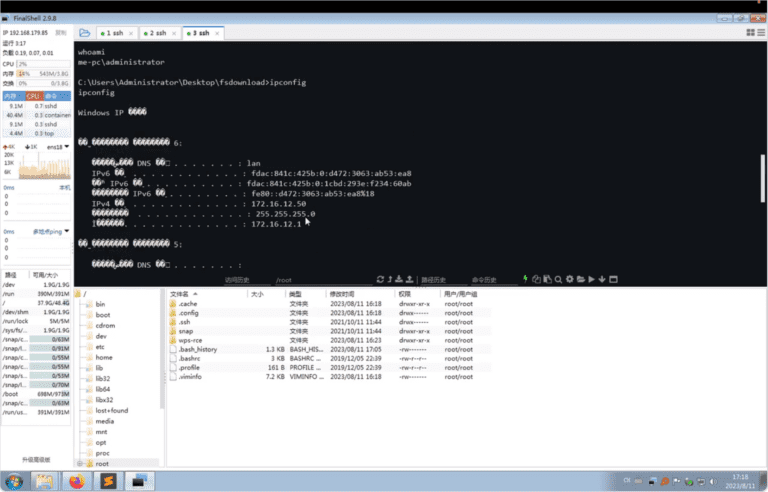
A security researcher unveiled the disturbing details of a critical vulnerability that can lead to Remote Code Execution (RCE) in WPS Office
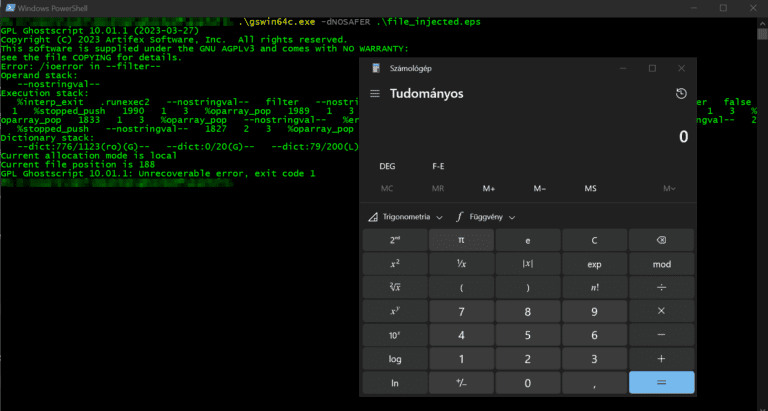
A proof-of-concept (PoC) exploit code has been made available for the recently disclosed critical security flaw, tracked as CVE-2023-36664
CVE-2022-41984 vulnerability may allow a privileged user to potentially enable denial of service via local access.

This flaw, which has been assigned the identifier CVE-2023-24329, has a CVSS score of 7.5 and could be exploited to cause a variety of security problems