The 3GB Compromise: Why Raspberry Pi is Raising Prices and Launching a New “Goldilocks” Model
 Do Son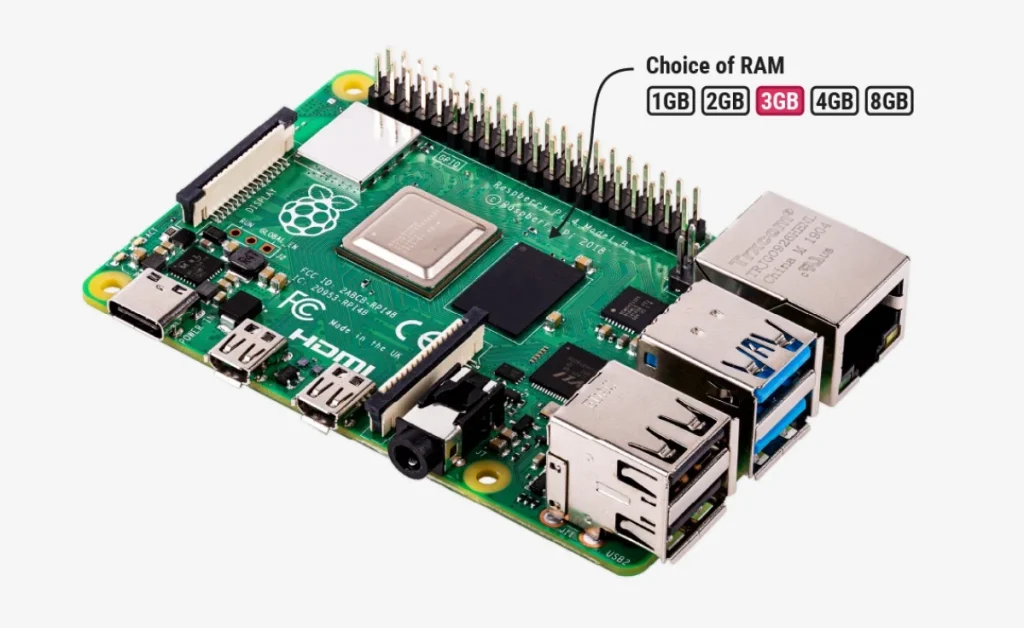
Driven by the profound volatility traversing global semiconductor markets and the precipitous escalation of memory tariffs, the UK-based Raspberry Pi Foundation decreed on April 1st an impending price ascension for a select cohort of its products adorned with exalted memory capacities. Endeavoring to forge a delicate equilibrium betwixt overarching cost and utilitarian pragmatism, the Foundation concurrently unveiled a nascent iteration of the “Raspberry Pi 4,” endowed with 3GB of memory, marshaled at a price point of $83.75. The Foundation explicitly underscored that this proclamation was unequivocally devoid of any April Fools’ jesting; rather, it stands as a reluctant capitulation to the prevailing, grim realities governing contemporary supply chains.
According to Raspberry Pi’s official statement, the preceding year has witnessed an astonishing sevenfold inflation in the cost of the LPDDR4 memory architecture utilized within its most contemporary iterations.
Confronted by this ferocious financial duress, the Foundation elected to orchestrate subtle recalibrations across its existing product lineage, inaugurating the aforementioned 3GB Raspberry Pi 4 for $83.75. The paramount objective of this stratagem is to provision consumers with an exquisitely calibrated hardware alternative—a “Goldilocks” option. This empowers project architects and makers whose endeavors do not mandate colossal memory reserves to evade the extortionate premium inextricably bound to superfluous specifications. The epicenter of this price shockwave primarily afflicts the “Raspberry Pi 4,” “Raspberry Pi 5,” and the “Compute Module” lineages that harbor memory capacities eclipsing the 4GB threshold.
- Staggering Escalations for Exalted Tiers: The 4GB iterations of both the Raspberry Pi 4 and 5 shall suffer a precipitous hike of $25. Concurrently, the sovereign of the hardware pyramid, the 16GB Raspberry Pi 5, shall endure an agonizing inflation of $100.
- A Valiant Defense of the Populist Price Vanguard: Notwithstanding the inflation ravaging the upper echelons, Raspberry Pi continues to fiercely defend the pricing sanctity of its introductory offerings. For instance, the Raspberry Pi 400—an integrated keyboard apparatus harboring 4GB of memory—resolutely maintains its $60 tariff. Furthermore, the 1GB and 2GB iterations of the Raspberry Pi 4 and 5 lineages remain steadfastly anchored within the $35 to $65 spectrum.
- Ancestral Epochs Remain Unscathed: Owing to their reliance upon the antiquated LPDDR2 architecture and the serendipity of abundant extant stockpiles, ancestral iterations, encompassing the Raspberry Pi Zero and Raspberry Pi 3, remain exempt from this inflationary edict for the foreseeable future.
Whilst the Raspberry Pi Foundation publicly characterizes the current memory inflation as a transient anomaly, pledging a reversion of tariffs the moment supply chains ameliorate and costs recede, this unprecedented and profound price hike has undeniably sent profound tremors throughout the developer community, a collective historically reliant upon accessible open-source hardware.
Historically, the quintessential spirit of Raspberry Pi was anchored in the vision of a “microcomputer affordable for all.” Yet, when the 16GB Raspberry Pi 5 suffers a $100 price augmentation driven by memory costs, its terminal retail valuation flirts with—and arguably eclipses—a segment of entry-level x86 Mini PCs currently saturating the market, particularly those marshaling the Intel N100 architecture. Within this elevated pricing paradigm, developers are inevitably compelled to reassess their calculus: Does their endeavor truly necessitate such exalted, yet undeniably exorbitant, Arm-based architecture?
Nevertheless, the Foundation’s foray into the profoundly unorthodox “3GB” memory stratum is a stroke of calculated brilliance. In a contemporary epoch where operating systems and applications demand ever-escalating computational tithes, 1GB and 2GB configurations frequently falter. With the 4GB iterations besieged by severe inflation, the 3GB configuration masterfully threads the needle, establishing the absolute minimum threshold for operational fluidity whilst preserving fiscal sanity. This ensures that makers, navigating the constrained budgets of 2026, retain a profoundly rational and fiscally prudent compromise for their developmental endeavors.
Support Our Threat Intelligence
Find our tech and OS security coverage helpful? Support our work today and unlock a 100% ad-free reading experience!
 Buy Me a Coffee
