
 Do Son
ASEC uncovers Kimsuky’s evolved LNK-to-Python chain abusing Dropbox for stealthy persistence. Learn how to detect this complex multi-stage backdoor.
ASEC

ASEC warns of Larva-25012 using fake Notepad++ installers for Proxyjacking. The malware disables Defender and sells your bandwidth. Check your tasks.

ASEC warns: Hackers abuse Syncro, SuperOps & NinjaOne RMM tools via fake PDF lures. Learn how this phishing campaign installs persistent backdoors.

ASEC warns of EtherRAT, a multi-stage crypto-stealer exploiting the React2Shell flaw. It uses Node.js and Ethereum for stealthy C2. Patch now!

ASEC exposed PrintMiner, a Monero cryptominer spreading via USB LNK files. It uses DLL Side-Loading (printui.exe) and "Smart Mining" to suspend activity when games or Task Manager are opened.

ASEC exposed a VPN supply chain attack deploying NKNShell, a Go-based backdoor that uses P2P NKN and MQTT for stealthy C2. The installer bypasses AMSI using AI-generated code and grants full remote access (MeshAgent, gs-netcat).
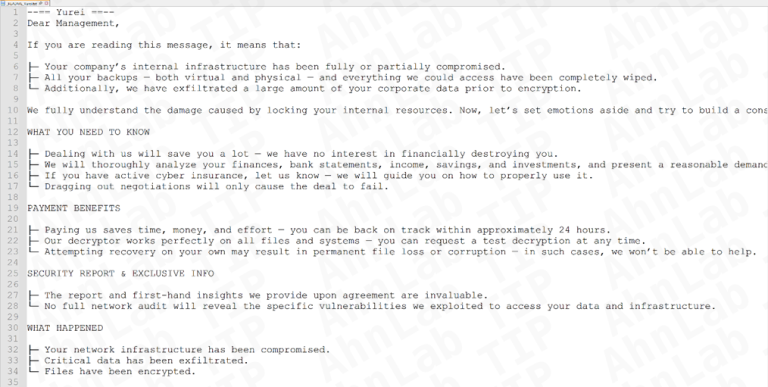
ASEC exposed Yurei, a new Go-based ransomware group using ChaCha20-Poly1305/ECIES for irreversible encryption. The stealthy RaaS operates with minimal initial setup and focuses on double extortion.

ASEC exposed PatoRAT, a Delphi RAT that hijacks LogMeIn Resolve and PDQ Connect RMM tools. Attackers use maliciously configured installers disguised as 7-Zip/Notepad++ to gain full system control.

ASEC exposed a flaw in Gunra Linux ransomware: its ChaCha20 keys are generated using an insecure time()/rand() seed, potentially allowing victims to brute-force decryption and recover files.

AhnLab exposed Beast ransomware (Monster evolution) as a new RaaS threat, with 16+ victims by August 2025. It uses ChaCha20 encryption, deletes Shadow Copies, and features a hidden GUI control panel.

AhnLab exposed Rhadamanthys Infostealer hiding in games built with the Ren'Py engine. It uses a fake 1M-second loading screen to distract victims while injecting malware via a malicious Python script.
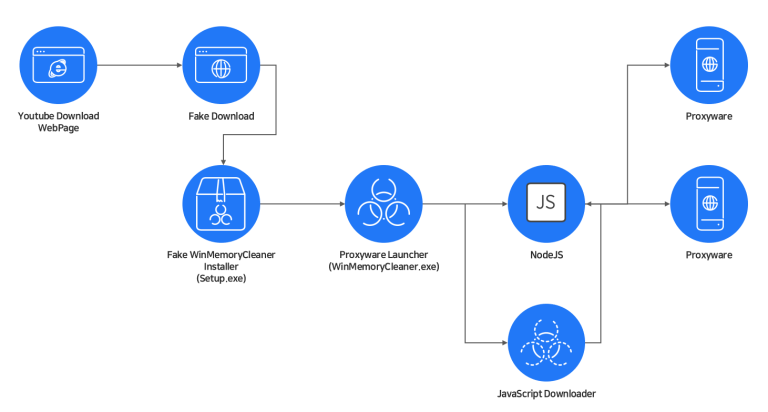
A new report reveals that malicious YouTube video downloader sites are tricking users into installing Proxyware, a type of malware that hijacks network bandwidth.

GeoServer's RCE flaw (CVE-2024-36401) is actively exploited to deploy NetCat reverse shells and XMRig CoinMiners on Windows/Linux, hijacking resources.

ASEC uncovers XwormRAT delivered via phishing emails using steganography, hiding sophisticated .NET malware within JPG images for stealthy execution and full system control.

ASEC uncovers attacks on Linux servers installing legitimate proxy software (TinyProxy, Sing-box) to hijack resources for covert operations, bypassing traditional malware detection.

ASEC uncovers sophisticated attacks targeting South Korean Windows IIS and Linux systems, deploying WogRAT, MeshAgent, and SuperShell for cyber-espionage and lateral movement.

Threat actors are actively compromising poorly managed MySQL servers, using UDFs to inject Gh0stRAT, XWorm, HpLoader, and legitimate Zoho agents for full system control and data theft.

Kimsuky APT is using HWP documents and stealthy AnyDesk backdoors in a new phishing campaign to infiltrate systems under the guise of academic collaboration.

ViperSoftX, a stealthy malware, is actively spreading via fake software to steal cryptocurrency and enable remote control, affecting users globally.

A sophisticated malware campaign targets Korean Internet cafés with Gh0st RAT and CoinMiner, hijacking systems for crypto mining. ASEC urges immediate action.

Atomic Stealer malware is targeting macOS users, disguised as a cracked Evernote download, stealing passwords and data.

A sophisticated campaign deployed malicious IIS modules on South Korean web servers, enabling traffic control and backdoor access. Suspected Chinese actor.