
 Do Son
Unlike Mirai, which is aimed at DDoS attacks, this new worm, dubbed NoaBot, installs crypto miners, enabling attackers to exploit
Linux

The Python community has recently faced a new threat: three new malicious PyPI packages that deploy CoinMiner on Linux devices

cybersecurity researcher Yordan also released a proof-of-concept (PoC) exploit demonstrating the CVE-2023-2598 flaw's impact.

Besides the PoC exploit code for the CVE-2023-4911 bug, researchers have also unveiled a video demonstration.

CVE-2023-4911 allows local attackers to gain root privileges by exploiting a buffer overflow weakness in the GNU C Library's ld.so
A Proof-of-Concept (PoC) for CVE-2023-32233 allows unprivileged local users to start a root shell on impacted systems.

Researcher Xkaneiki developed a PoC exploit for this vulnerability, demonstrating the potential risks posed by CVE-2023-0386

Due to the CVE-2023-26604 vulnerability, an attacker could potentially exploit the system to gain elevated privileges to execute commands

Tracked as CVE-2023-27320, the flaw exists in sudo's per-command chroot feature, which allows users to specify an alternate root directory

CVE-2023-22809 was discovered by researchers Matthieu Barjole and Victor Cutillas of Synacktiv in the sudoedit function for Linux

Linux kernel maintainers issued a risk notice for the Linux Kernel privilege escalation flaw, the vulnerability number is CVE-2022-32250
While Linux proves itself to be the best OS for modifying your desktop settings, the story becomes...
Every day, businesses and political organizations understand more about the advantages of analyzing data. Increasingly, the more...

OpenWrt/LEDE is a highly extensible GNU/Linux distribution for embedded devices (typically wireless routers).
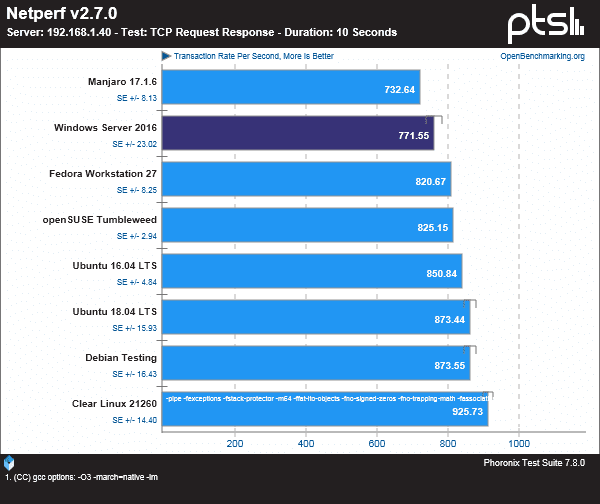
I believe many developers are interested in the difference in network performance between Windows Server and Linux. The...
Recently, Canonical announced that Skype’s snap installation package of the world’s leading VoIP client, Skype, has come...
Canonical released a new Linux kernel security update for all supported Ubuntu operating systems, addressing a total of nine...
Look for the process of listening on the specified port, for the system administrator, is an eternal...
Linux Linux is a Unix-like computer operating system assembled under the model of free and open-source software development and distribution. The defining...

Linux Directory Structure,File System Structure

Installation & Configuration JDK8 on Ubuntu/Linux Mint

Subgraph OS Subgraph OS is a Debian-based Linux distribution that is designed for superior security and offers...