
 Do Son
Trustwave exposed Eternidade Stealer, a sophisticated Brazilian Trojan. The Python WhatsApp worm steals contact lists and uses IMAP email for covert C2 retrieval to launch banking overlays.
Python

A Critical DoS flaw (CVE-2025-65015) in joserfc allows unauthenticated attackers to overwhelm log/SIEM systems by injecting massive JWT payloads into exception messages.

Django released urgent patches (v5.2.8+) for a Critical SQL Injection flaw (CVE-2025-64459) affecting QuerySet methods via the _connector keyword, risking remote database compromise.

AhnLab exposed Rhadamanthys Infostealer hiding in games built with the Ren'Py engine. It uses a fake 1M-second loading screen to distract victims while injecting malware via a malicious Python script.

The Python Software Foundation (PSF) declined a $1.5M federal grant for security, citing US government stipulations that banned promoting DEI programs.

The Django team released urgent updates (v5.2.7, 5.1.13, 4.2.25) to fix a High-severity SQL Injection flaw (CVE-2025-59681) affecting QuerySet methods in MySQL/MariaDB.

Apache Fory has a critical RCE vulnerability (CVE-2025-61622) in its pyfory module. An attacker can exploit an unguarded pickle fallback to execute arbitrary code.

A new supply chain attack on PyPI is delivering SilentSync, a Python RAT. The malware steals credentials and files from developers' systems.

CYFIRMA uncovers XillenStealer, a new Python-based, open-source malware on GitHub. Its built-in builder enables even novices to steal data and credentials.

A local privilege escalation flaw in PyInstaller (CVE-2025-59042) could let attackers execute code. Check if your apps are at risk.
A new report reveals a high-severity SQL injection flaw (CVE-2025-57833) in Django's FilteredRelation. A PoC is public with technical details. Patching is urgent.

A new report reveals a high-severity SQL injection flaw (CVE-2025-57833) in Django's FilteredRelation. The bug allows attackers to manipulate queries.

xAI has launched grok-code-fast-1, a new AI coding model optimized for speed and efficiency. Learn how it plans to challenge Microsoft and OpenAI.
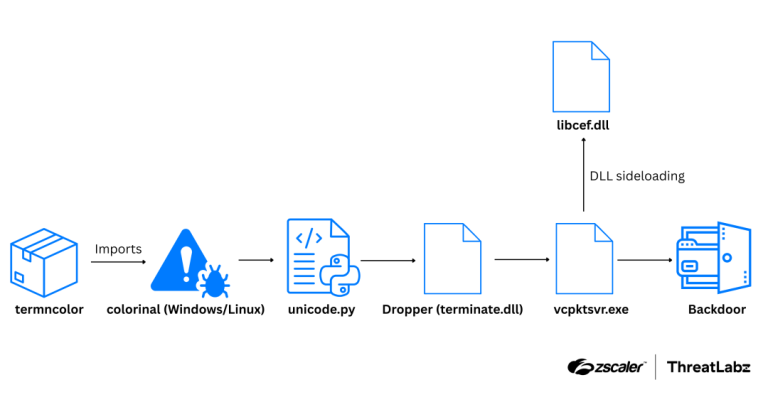
A new report reveals a malicious Python package on PyPI that uses a stealthy dependency and DLL sideloading to deliver a multi-stage malware.
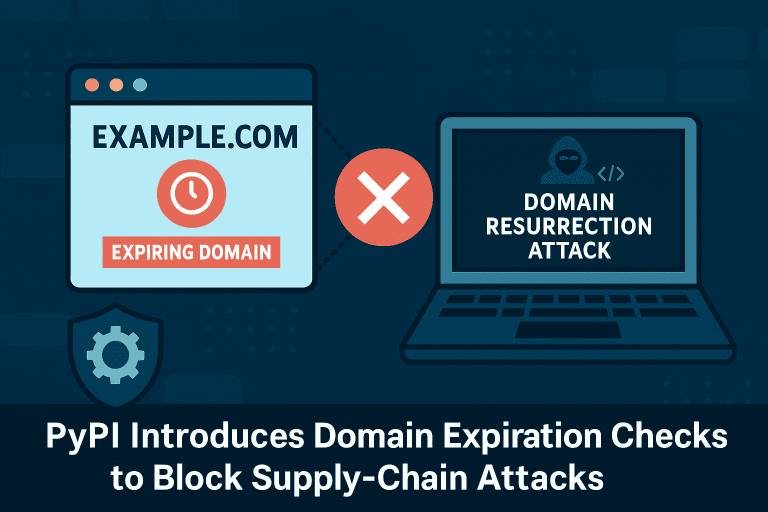
PyPI is now checking for expired domains to prevent "domain resurrection attacks," a major step in securing the Python Package Index from account takeovers.

PyPI is implementing new restrictions to reject problematic ZIP archives and protect against "parser confusion" attacks, which could bypass security checks and smuggle malicious files.

GitLab researchers uncovered a crypto scam on PyPI. Typosquatted Bittensor packages hijacked staking functions to silently drain users' crypto wallets.

A study reveals Python's ecosystem is a "labyrinth of dependencies" that propagates vulnerabilities. Over 145,000 packages are at risk, with urllib3 accounting for 41% of all exposures.

A vulnerability (CVE-2025-8194, CVSS 7.5) in Python's tarfile module allows attackers to cause infinite loops and DoS by processing maliciously crafted archives. Patch immediately!

AhnLab uncovers SVF Bot, a Python-based DDoS botnet abusing Discord as its C&C channel to target misconfigured Linux servers and launch HTTP/UDP floods.

Imperva uncovered a PyPI supply chain attack: "cloudscrapersafe" disguised as a legitimate Python library, stealing credit card data and exfiltrating it to a Telegram bot.

A malicious Python package, 'psslib,' typosquats the popular 'passlib' library, forcing immediate Windows system shutdowns, causing data loss for unsuspecting developers.