The “Helix” Horizon: Microsoft Transforms Windows 11 Into a Console With “Xbox Mode”
 Do Son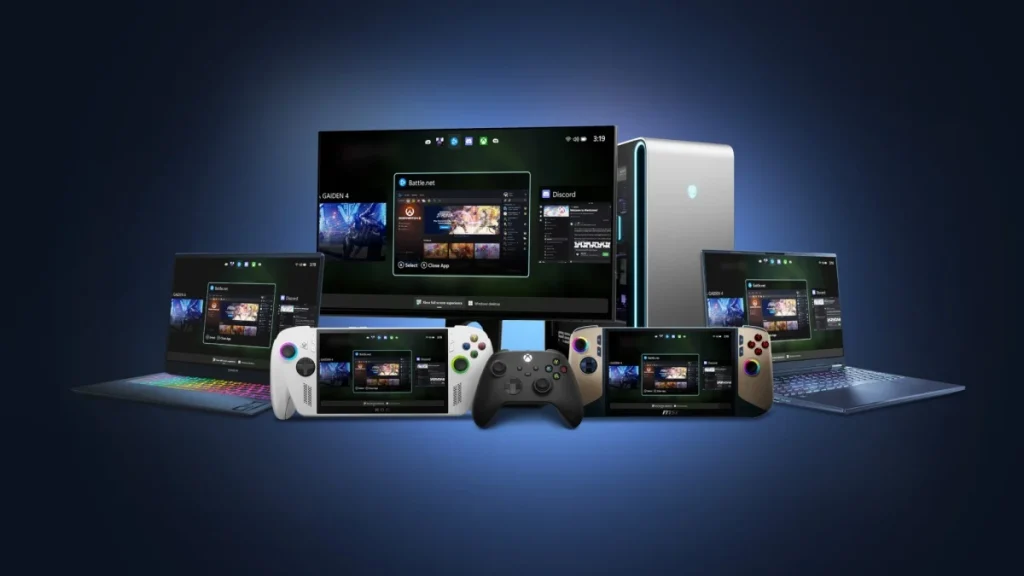
The immersive, full-screen Xbox gaming paradigm, which initially graced Windows handheld consoles such as the ROG Ally yesteryear, is at long last being universally bestowed upon the entire PC gaming constituency. At the 2026 Game Developers Conference (GDC), Microsoft proclaimed that this full-screen interface, intrinsically optimized for controller navigation, shall be formally christened “Xbox Mode.” Commencing this April, it is slated for a phased deployment across Windows 11 laptops and desktop architectures in select global markets. Beyond this profound leap in software interfacing, the technological leviathan has unleashed an arsenal of low-level developer armaments. Prominent among these is the “Advanced Shader Delivery” (ASD) architecture—a technology engineered to categorically obliterate in-game stuttering, thereby bridging the experiential chasm that has long separated personal computers from traditional home consoles.
Nearly a decade and a half after Steam unveiled “Big Picture”—a mode meticulously tailored for living room expanses and gamepad wielding—Microsoft, commanding the definitive home-field advantage, has finally unveiled its sovereign, native solution for the Windows dominion. Microsoft initially birthed this interface to fiercely rival the Steam Deck, subsequently integrating it into Windows 11 handheld armaments like the ROG Ally. Today, this highly venerated ecosystem is mounting a formal, triumphant return to the orthodox PC platform.
The cardinal philosophy underpinning “Xbox Mode” is the provisioning of a “Windows 11 experience exquisitely optimized for the controller.” Upon invoking this paradigm, patrons may entirely discard the pedestrian mouse and keyboard. Armed solely with an Xbox gamepad, they can effortlessly navigate their ludic libraries, launch titles, summon the Game Bar, and even orchestrate rapid, seamless transitions between disparate games and applications via the natively embedded Task Switcher.
Concurrently, this software renaissance echoes the recent proclamations of Xbox vanguard Asha Sharma. It has been unequivocally confirmed that Microsoft’s next-generation console, presently veiled beneath the codename “Project Helix,” will possess the formidable capacity to “simultaneously execute both PC and native Xbox console titles.” Observing Xbox Mode as the vanguard paving the software trajectory, it becomes profoundly probable that “Project Helix” is, in its essence, a high-echelon esports PC shrouded in the Xbox livery and animated by the Windows operating system.
At the GDC 2026 convergence, Microsoft proffered not merely a player-facing facade, but profound, low-level technological panaceas addressing the most agonizing tribulations of game development. Notably, the “Advanced Shader Delivery” (ASD) architecture—hitherto the exclusive purview of the ROG Ally—shall be universally emancipated to all architects within the Xbox storefront.
In recent epochs, PC denizens navigating the latest AAA opuses have frequently been besieged by the agonizing affliction of “shader compilation stutter”—a consequence of the system being forced to calculate rendering pipelines in real-time amidst active gameplay. Through the artifice of ASD, developers are empowered to deliver “pre-compiled” shaders directly to the patron’s architecture. This signifies that players will be liberated from the excruciating purgatory of “compiling shaders” loading screens, whilst simultaneously averting the precipitous frame drops and stuttering born of real-time computational strain.
To further harness the blistering read velocities inherent to NVMe SSDs, Microsoft’s hallmark DirectStorage architecture has similarly undergone a monumental evolution.
- Zstandard Compression Support: DirectStorage will formally embrace the Zstandard (Zstd) compression algorithm. This sophisticated cipher achieves an exquisite equilibrium between formidable compression ratios and blistering decompression celerity, thereby further truncating the load times of in-game textures.
- Game Asset Conditional Library: This represents an entirely nascent suite of developmental instruments, meticulously engineered to assist gaming studios in effortlessly manipulating assets throughout the generation pipeline, whilst concurrently elevating overarching compression efficacy.
Furthermore, Microsoft has heralded its intent to illuminate developers on the implementation of next-generation Machine Learning paradigms within the DirectX gaming API. This is widely prophesied to intertwine with forthcoming AI-driven visual fidelity enhancements, potentially manifesting as the native integration of architectures akin to DLSS or FSR.
Support Our Threat Intelligence
Find our tech and OS security coverage helpful? Support our work today and unlock a 100% ad-free reading experience!
 Buy Me a Coffee
