The “Iron Man” Moment: Why Silicon Valley is Buying Out Mac Minis to Run Clawdbot
 Do Son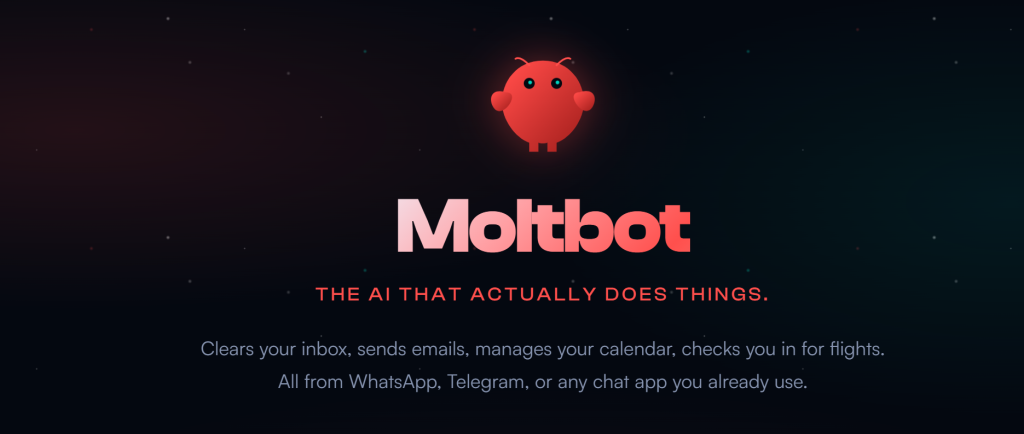
A burgeoning open-source phenomenon christened “Clawdbot” has recently emerged on GitHub, amassing over 24,000 stars in a remarkably brief interval. This project has captivated Silicon Valley engineers, even garnering a public endorsement from Logan Kilpatrick, the Product Lead at Google AI Studio. Celebrated as the “Open-Source Jarvis”—a nod to the ubiquitous AI assistant from the Iron Man franchise—this AI Agent transcends mere dialogue; it is capable of authoring code, managing correspondence, and even procuring groceries online. Intriguingly, the necessity of hosting an “AI employee” that remains operational around the clock has incited a frantic procurement of Mac mini hardware, sparking an unexpected surge in the consumer electronics market.
The philosophical core of Clawdbot diverges sharply from familiar interfaces like ChatGPT or Gemini. Rather than a mere conversational portal, it functions as a “Local-First” AI Gateway.
In essence, Clawdbot “resides” within your local hardware—be it a Mac, Windows PC, or Raspberry Pi—wielding system permissions analogous to those of a human user. It adopts sophisticated large language models, such as Anthropic Claude, Google Gemini, or OpenAI, as its cognitive “brain,” while receiving directives through ubiquitous messaging platforms like Slack, Discord, Telegram, or iMessage.
Crucially, Clawdbot is endowed with “Skills” and “Memory.” It can autonomously invoke terminals, execute Python scripts, navigate the web via a browser to conduct research, and internalize your long-term professional habits. The reason for the Mac mini’s sudden popularity as the preferred host for this software lies in its reputation as a stable, silent, and energy-efficient sentinel.
Compared to exorbitant cloud servers or clamorous desktop PCs, the Mac mini offers distinct strategic advantages:
-
Human-Centric Fingerprinting: When executing web automation—such as web scraping or automated purchasing—the Mac mini’s browser fingerprint closely mirrors that of a standard consumer, thereby circumventing sophisticated bot-detection mechanisms.
-
Optimal Price-to-Performance: Whether it is a refurbished M1 or a pristine M4 model, the Mac mini’s affordability and negligible power consumption make it the quintessential domestic AI server.
-
Ecosystem Integration: Utilizing tools like iMessage or Tailscale, the Mac mini integrates seamlessly into the Apple ecosystem, facilitating effortless remote control across multiple devices.
Reports have surfaced of developers procuring a dozen Mac minis to deploy a “digital legion,” where discrete agents are tasked with analyzing financial reports, drafting social media content, and triaging emails—essentially operating as a micro-automated corporation. The architect of Clawdbot, Peter Steinberger, is a figure of considerable pedigree; the founder of the renowned PDF SDK PSPDFKit, he orchestrated a €100 million exit in 2021. Seeking to alleviate the ennui of retirement, he returned to his craft to single-handedly engineer this globally acclaimed project.
The current applications of Clawdbot are as diverse as they are innovative: users are dispatching instructions from the gym to remediate software bugs at home, or allowing the AI to orchestrate meal plans and grocery orders based on meteorological forecasts. This meteoric rise signifies a profound transition in AI utility from mere “content generation” to “Agentic Workflow.” We have progressed from posing inquiries to an AI to commanding it to execute complex tasks.
This “Bring Your Own Device” (BYOD) AI hosting paradigm fractures the data monopoly held by cloud titans. Your dialogue history and operational logic remain localized within your Mac mini, ensuring both absolute privacy and bespoke flexibility. It is, in effect, a “digital mansion” for nurturing an AI employee.
However, one must exercise caution; Clawdbot’s prowess is predicated on the surrender of significant system privileges. It possesses the capacity to manipulate files and execute shell commands; should the system be compromised or a command misfire, the results could be catastrophic. It is advisable to isolate the agent on a dedicated Mac mini or within a virtual machine, rather than installing it on a primary workstation containing sensitive data.
Related Posts:
- Local-First & Secure: A New Open-Source Password Manager Enters the Scene
- “Silver Fox” Unmasked: Chinese APT Group Impersonates Indian Tax Officials in Targeted Cyber Campaign
- Iron Cybercrime Group use HackingTeam tools to spread ransomware
- Star Blizzard Shifts Tactics: Spear-Phishing Campaign Targets WhatsApp Accounts
Support Our Threat Intelligence
Find our tech and OS security coverage helpful? Support our work today and unlock a 100% ad-free reading experience!
 Buy Me a Coffee
