 Do Son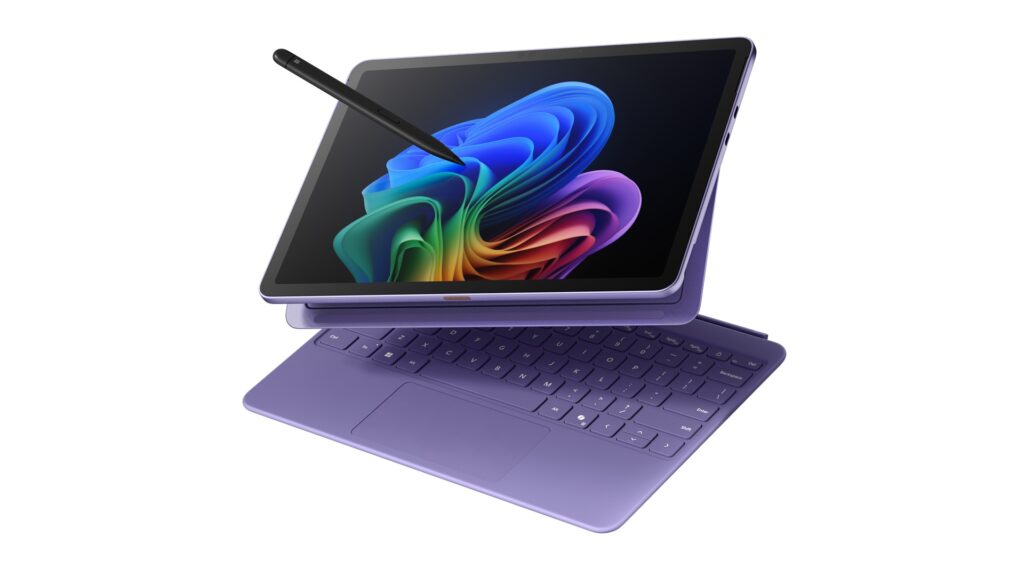
During the IFA 2026 exhibition, Mark Linton, Microsoft Corporate Vice President of Windows and Devices, revisited a classic promise. Forty years ago, founder Bill Gates vowed to put a computer on every desk and in every home. However, the generative AI explosion gives this vision an entirely new definition today. Microsoft’s ultimate goal now aims to bring “unmetered intelligence” to every desk and home. Furthermore, Microsoft revives Bill Gates’ PC on every desk promise for Windows 11, now it means AI.
This concept represents more than just a clever marketing slogan. Instead, Microsoft wants to transform Windows into a vital local infrastructure for running AI agents and large language models. This bold strategy will completely disrupt the current business model. Currently, the industry relies heavily on cloud inference and restrictive token economics.
Escaping Cloud Latency and Token Fees
What exactly does unmetered intelligence entail? Mark Linton explained that frontier models will still require massive cloud computing power. Nevertheless, users should not suffer network latency or pay per-token fees for daily AI tasks. Powerful local PCs can execute these models directly. Consequently, systems will only upload requests to the cloud for extremely complex problems.
This strategy of decentralizing AI infrastructure to personal devices perfectly aligns with CEO Satya Nadella’s prior objectives. Microsoft intends to shift AI away from a cloud subscription service. Ultimately, they want to make it an outright, accessible computing capability built directly into the operating system.
Rebuilding Hardware and Software Architectures
Microsoft must completely overhaul both hardware and software architectures to achieve this unmetered intelligence. On the hardware front, the RTX Spark platform stands out as a core highlight. Microsoft developed this system through a deep partnership with NVIDIA. The RTX Spark features up to 6144 Blackwell cores and a 20-core Arm CPU. It also supports up to 128GB of unified memory. Thus, it delivers one petaflop of AI computing power. This capacity easily loads giant models with over 100 billion parameters locally.
Currently, Microsoft offers the Surface RTX Spark Dev Box and the flagship Surface Laptop Ultra. Lenovo will also follow suit with the Yoga Pro 9n and Yoga 9n 2-in-1. Meanwhile, Asus, MSI, Acer, HP, and Dell will launch products featuring the RTX Spark platform soon.
Project Zenith and Software Upgrades
Additionally, Microsoft announced the developer-exclusive “Project Zenith” configuration on September 4th. This initiative directly raises the hardware threshold for local AI computing. It requires 64GB of unified memory and 250GB/s of memory bandwidth. Microsoft claims this setup allows developers to run models exceeding 30 billion parameters locally without limits.
On the software side, engineers rewrote the Windows scheduler and memory management mechanisms. These updates specifically target this unique heterogeneous computing architecture. Furthermore, the system allocates tasks across all 20 cores through Workload Profile Scheduling.
Ensuring Security for Autonomous Agents
Enterprises naturally worry about autonomous AI agents running amok on internal networks. To address this, Microsoft announced the launch of “Microsoft Execution Containers.” This built-in Windows security mechanism isolates AI agents within sandbox containers. It also strictly enforces corporate security policies and logs all activities. Currently, the system directly integrates NVIDIA’s OpenShell agent framework, alongside the Hermes Agent and OpenClaw.
The Reality of an M-Shaped Windows Experience
Microsoft paints a highly promising blueprint for the future. By combining the Windows Foundry model selector, AI subsystems, and containerized security, Windows could become the ultimate local AI platform. However, this grand vision faces a very harsh hardware divide today. On one hand, Microsoft aggressively pushes expensive hardware requiring 64GB or even 128GB of RAM for local AI.
On the other hand, Mark Linton reiterated a conflicting priority at IFA. Microsoft is also working hard to optimize basic performance for entry-level devices with only 8GB of RAM. These budget machines still dominate the current market. This situation implies the future Windows ecosystem will inevitably become highly polarized. Premium hardware users will enjoy seamless, unmetered local AI agent services. Conversely, the vast majority of mainstream 8GB users will remain stuck with traditional cloud calls and basic experiences.
Microsoft must figure out how to bridge this massive gap between the two extremes. Unmetered intelligence needs to reach every desk, just like Bill Gates’ original PC vision. Achieving this goal requires more than just underlying operating system optimizations. Ultimately, the entire semiconductor industry must achieve a significant breakthrough in memory costs.
Support Our Threat Intelligence
Find our tech and OS security coverage helpful? Support our work today and unlock a 100% ad-free reading experience!
 Buy Me a Coffee
