 Do Son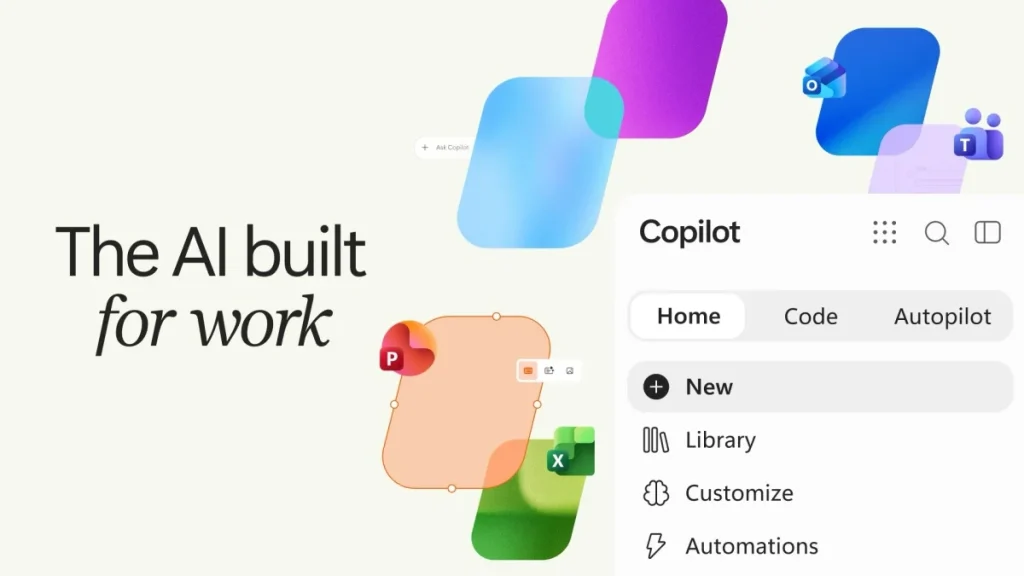
Microsoft recently unveiled a revolutionary Copilot experience engineered specifically for enterprise and professional environments. Just as Office fundamentally defined productivity during the personal computing era, Microsoft emphatically asserts that Copilot will comprehensively redefine how humanity works in the age of artificial intelligence. Recent telemetry indicates that user engagement with Copilot within Outlook and Teams has reached parity with traditional chat functionalities. Furthermore, the innovative Copilot Cowork experience currently boasts the highest new user retention rate of any Microsoft product launched to date.
To drastically optimize operational efficiency, Microsoft recently consolidated the consumer iteration of Copilot and Microsoft 365 Copilot into a singular, unified application simply branded as “Copilot.” This week, the corporation officially unveiled this highly evolved version, designed to empower users to effortlessly magnify their professional impact through the judicious application of artificial intelligence.
A Unified Gateway: Four Tabs for Every Professional Need
Within the completely reimagined Copilot interface, Microsoft introduces an intuitive, tab-based architecture to significantly expand AI operational modalities. This includes four distinct pillars: Home, Code, Autopilot, and Office.
The “Home” tab serves as the centralized genesis point, seamlessly integrating Chat and Cowork functionalities. Whether a user is drafting a comprehensive product launch strategy, architecting a complex budgetary model, or designing a compelling presentation, they can directly invoke the full, unadulterated power of Office applications like Word and PowerPoint. Notably, this is possible directly from within the Copilot experience.
Crucially, whether the content is meticulously edited by the user, collaboratively refined by a team, or autonomously generated by Copilot itself, the underlying files maintain perfect, real-time synchronization between Copilot and the native Office applications. Within these individual applications, Microsoft has profoundly enhanced multiple Copilot capabilities. For instance, PowerPoint presentations now automatically adhere to strict corporate brand visual guidelines. Excel data visualization and interpretation have become vastly more intuitive. Furthermore, Microsoft introduced a novel “Skills” feature. As a result, tedious, repetitive tasks can be transformed into highly personalized, infinitely reusable automated workflows.
Integrating Microsoft IQ: A Proactive AI Command Center
At its foundational architectural level, the new Copilot is deeply interwoven with “Microsoft IQ,” empowering the system to genuinely comprehend the practical, day-to-day operations of an enterprise organization. Users retain the autonomy to select the most appropriate AI model for their specific tasks. Meanwhile, Microsoft guarantees enterprise-grade security, robust identity authentication, and rigorous governance compliance.
Microsoft also teased the imminent arrival of a proactive, personalized command center designated “Today,” which will reside within the Home tab. This intelligent hub will seamlessly traverse emails, calendars, chat transcripts, meeting notes, and to-do lists. Additionally, it will proactively highlight critical impending tasks and assist users in preparing thoroughly in advance. Within Teams, the beating heart of corporate collaboration, Microsoft is rolling out the innovative “@Copilot” experience. This feature possesses complete contextual memory and precise permission awareness regarding specific channels, group conversations, and meetings. It ensures that all participants collaborate based on a synchronized foundation of knowledge, conversational context, and generated outputs. Thus, it permanently eliminates the arduous necessity of manually piecing together fragmented dialogue and tracking project progress.
A Paradigm Shift in Commercial Models: Dual-Track Billing
As enterprises aggressively adopt artificial intelligence, meticulously controlling associated budgets has emerged as a paramount priority for corporate leadership. Microsoft posits that AI within the professional sphere predominantly manifests in two distinct modalities; consequently, the corporation must provide two fundamentally divergent billing frameworks.
First is “Everyday AI,” designed to universally empower the entire workforce. Microsoft will provision this service via the “Copilot USL” (User Subscription License). This represents a fixed, highly predictable expenditure model, typically billed monthly per user. It encompasses Auto Mode, alongside the chat functionalities embedded within Word, Excel, PowerPoint, Outlook, and Teams. Crucially, it permits users to seamlessly toggle between new models and features during their daily routines.
The second billing modality addresses “Agentic Work.” These highly complex tasks necessitate the deployment of advanced, autonomous agent models. Therefore, Microsoft is introducing “Usage-Based Billing” (UBB). This paradigm grants enterprises absolute control over model selection, ensuring that financial expenditures perfectly align with the actual commercial value generated. Cutting-edge features including Cowork, Code, Autopilot, and vanguard models like Astra and Fable will all operate exclusively under this UBB architecture. Furthermore, later this year, Microsoft will extend this UBB subscription mechanism to individual Microsoft 365 subscribers. Thus, it will grant them access to advanced capabilities like Cowork and Code.
Mastering AI Cost Governance with Agent 365
To empower IT departments to effortlessly govern these fluctuating Copilot usage metrics, Microsoft has integrated a novel “FinOps for AI” functionality directly into Agent 365. This provides centralized expenditure control, policy-based model access permissions, and profound analytical insights. Importantly, these insights directly correlate AI utilization with tangible business value.
Microsoft emphatically stresses that in a rapidly mutating market, betting an entire enterprise strategy on a solitary model, a single laboratory, or a fleeting trend is an inherently perilous gamble. Enterprises desperately require a robust platform that seamlessly adapts to technological evolution. At the same time, it must maintain uncompromising governance, elasticity, and control. Through a unified application, diverse operational modes, and a continuously expanding roster of autonomous AI agents, Microsoft aspires to help enterprises forge a radically new paradigm of work in the AI era.
Support Our Threat Intelligence
Find our tech and OS security coverage helpful? Support our work today and unlock a 100% ad-free reading experience!
 Buy Me a Coffee
