The Vibe Coding Invasion: Why Your AI-Built App is Stuck in Apple’s “Review Purgatory”
 Do Son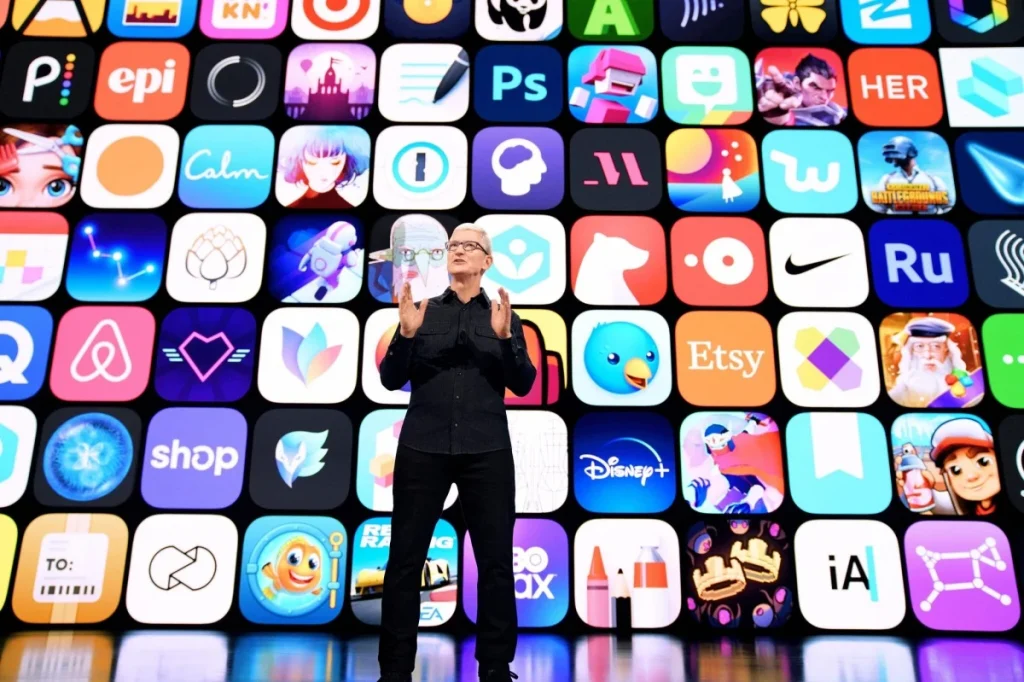
Following the ubiquitous proliferation of “Agentic coding” technology in 2025, a novel developmental paradigm christened “Vibe Coding” is sweeping across the software echelon. At present, armed with mere foundational concepts and buoyed by artificial intelligence, virtually anyone can effortlessly forge digital applications. However, this profound eruption of AI-driven productivity appears to be subjecting Apple’s App Store review vanguard to an unprecedented crucible of pressure.
Recently, a multitude of digital architects have voiced their grievances, lamenting that the overwhelming deluge of AI-generated applications has precipitously elongated the purgatory of the review process. This phenomenon has concurrently ignited widespread apprehension that Apple is poised to institute far more draconian evaluative criteria.
According to telemetry from the market intelligence vanguard Sensor Tower, since agentic coding ascended to mainstream prominence in 2025, the monthly genesis of nascent applications upon the App Store has manifested an explosive trajectory of growth.
- A Staggering Trajectory of Growth: Within the American bazaar, the promulgation of iOS applications this January swelled by a momentous 54.8% relative to the antecedent year, relentlessly ascending even after eclipsing a 56% zenith—the highest crest in a quadrennium—last December.
- Vibe Coding as the Nascent Orthodoxy: This developmental choreography—wherein architects commune with AI agents via natural language, relying upon sheer “intuition” to shepherd the genesis of code—has even metamorphosed into a burgeoning vocation. Illustratively, the prominent platform Lovable recently heralded an open requisition for a “Professional Vibe Coder.”
Whilst artificial intelligence has rendered the developmental odyssey unimaginably swift, the orthodox mechanisms of review have calcified into a formidable new bottleneck.
James Steinberg, a thirty-five-year-old New York pet custodian and concurrent Vibe Coder, articulated his conviction that the contemporary App Store is utterly “engorged by individuals, much like myself, who are submitting colossal volumes of applications.” He lamented that a solitary creation of his languished for nearly six weeks before triumphantly ascending to the storefront; furthermore, the adjudication of subsequent evolutionary updates exacts an agonizing toll spanning from two diurnal cycles to an entire week.
“At this juncture, the most glacial facet of the entire continuum is enduring the purgatory of the Apple App Store review—it is neither the architectural genesis of the application nor its commercial evangelism. It is truly profoundly absurd,” Steinberg declared. Within the crucibles of iOS developmental discourse upon the Reddit forums, a sprawling legion of digital architects echoes similar tales of catastrophic evaluative delays. Their overarching trepidation is that Apple, in a desperate bid to barricade the floodgates against a deluge of slipshod “AI digital detritus,” may invoke profoundly more draconian standards of scrutiny in the encroaching future.
Confronted by this chorus of exogenous skepticism, Apple’s sovereign heralds swiftly promulgated a clarification.
The conglomerate averred that, whilst certain instances of protracted scrutiny have undeniably surfaced of late, a resolute ninety percent of all submitted entreaties are successfully adjudicated within a span of forty-eight hours. Sovereign telemetry dictates that over the preceding twelve weeks, Apple has processed a staggering 200,000 application submissions weekly, sustaining a median evaluative duration of a mere 1.5 days. Concurrently, Apple emphatically underscored their profound delight in welcoming nascent architects to endlessly proffer their visionary digital creations.
This contemporary gridlock afflicting the App Store’s evaluative apparatus, catalyzed by the phenomenon of “Vibe Coding,” illuminates a profoundly subterranean structural tribulation within the industry: “When artificial intelligence drives the marginal toll of content genesis perilously close to the absolute void, the platform’s capacity for rigorous scrutiny and curatorial stewardship shall be subjected to an existential crucible.”
Dipanjan Chatterjee, an analytical savant at Forrester, postulates that Apple’s evaluative ethos will invariably pivot toward an overarching conservatism and draconian caution, electing to erroneously condemn the innocent rather than inadvertently sanctifying the profane. Albeit a more draconian crucible of scrutiny will inevitably ignite the ire of certain architects, it remains an indispensable, necessary evil at this juncture to stem the suffocating tide of sub-par “AI digital detritus.”
Nevertheless, Apple cannot eternally lean upon human toil or orthodox mechanisms to serve as its vanguard. As Dipanjan Chatterjee eloquently articulated: “This tribulation cannot be vanquished by Apple merely wielding the absolute veto of ‘rejection’; as artificial intelligence exponentially accelerates the genesis of applications, Apple must orchestrate a total metamorphosis—transcending ‘artisanal manual gatekeeping’ to embrace ‘omnipresent AI curation at scale’.”
For the digital architects of tomorrow, the battleground shall no longer be defined by “who possesses the mere capacity to forge an application,” but rather “whose creation harbors profound, authentic originality and a superlative user experience”—one potent enough to triumph over Apple’s draconian evaluative crucible and captivate the ultimate consumer amidst an endless sea of AI-generated machinations.
Support Our Threat Intelligence
Find our tech and OS security coverage helpful? Support our work today and unlock a 100% ad-free reading experience!
 Buy Me a Coffee
