 Do Son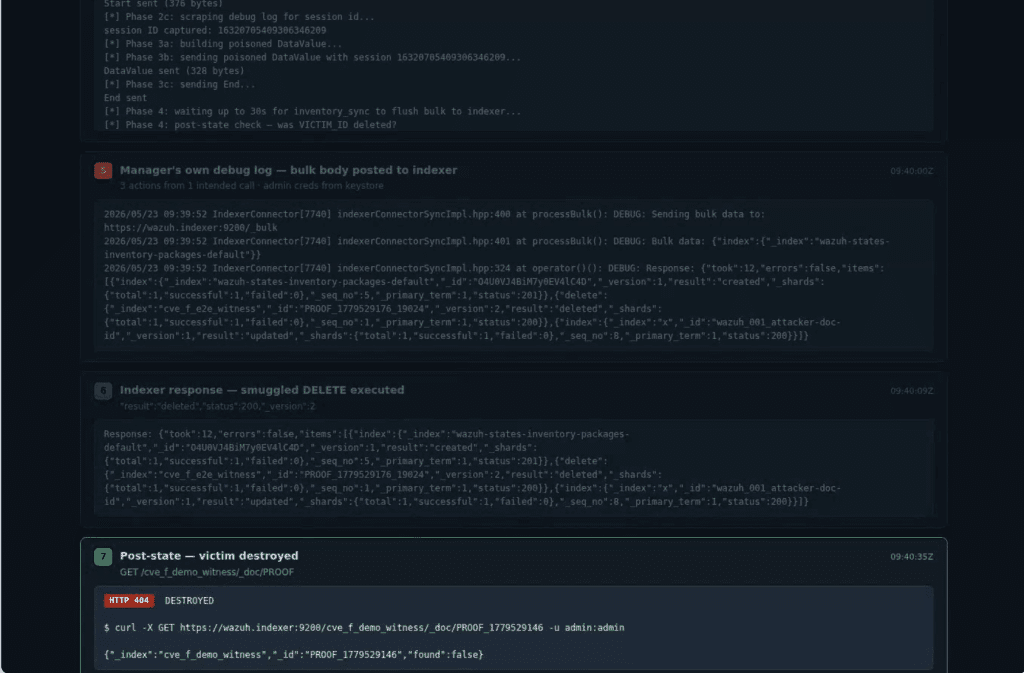
A critical security flaw has hit the open-source defensive security community. Recently, full technical details and functional proof-of-concept exploit code were published online. This severe Wazuh CVSS 10 vulnerability allows authenticated endpoints to manipulate central log storage systems directly. Therefore, any enterprise currently testing this next-generation platform must implement immediate remediation measures. Otherwise, they face devastating infrastructure tampering.
The Mechanics of the Injection Flaw
The root cause of this high-severity threat lies deep inside the platform’s asset telemetry pipeline. Specifically, the technical disclosure notes that ‘The Wazuh 5.0 inventory pipeline forwards an agent-supplied flatbuffer field (DataValue.index) directly into an OpenSearch_bulk NDJSON request body without escaping.’ Due to this unescaped handling, an adversary can easily embed malicious delimiters into that parameter. Consequently, rogue endpoints can seamlessly smuggle unauthorized OpenSearch bulk operations into backend database queries. These operations run under the manager high-privilege administrative credentials.
Severe Impact and Exploitation Risks
Exploiting this Wazuh CVSS 10 vulnerability brings severe consequences for enterprise environments. By executing smuggled commands, a malicious agent gains destructive database privileges. For example, threat actors can perform arbitrary document deletion across indices. This leads to deliberate alert tampering and post-compromise cleanup. Furthermore, malicious actors can inject persistent payloads into saved dashboard objects. Therefore, an attacker can effortlessly destroy forensic evidence. This effectively blinds security analysts during an active network breach response.
Keystore Credential Exposure
Additionally, the platform forwards requests under credentials stored in its local keystore. In default installations, these roles are mapped to admin profiles with all-access permissions. Consequently, the smuggled actions execute with maximum database authority.
Available Patches and Remediation
This software flaw specifically impacts wazuh-manager installations starting from version 5.0.0-beta1. However, the older 4.x branches remain completely unaffected. This is because the inventory sync path does not exist in that branch. Fortunately, the development team has officially released fixes in version 5.0.0-beta3. This version enforces proper character escaping. Network administrators should immediately review the newly disclosed technical data and reproduction code. This information is available inside the official Wazuh security advisory on GitHub. Ultimately, upgrading vulnerable managers is vital to prevent unauthorized OpenSearch bulk operations.
Support Our Threat Intelligence
Find our vulnerability reports and weekly recaps helpful? Support our work today and unlock a 100% ad-free reading experience!
 Buy Me a Coffee
