 Do Son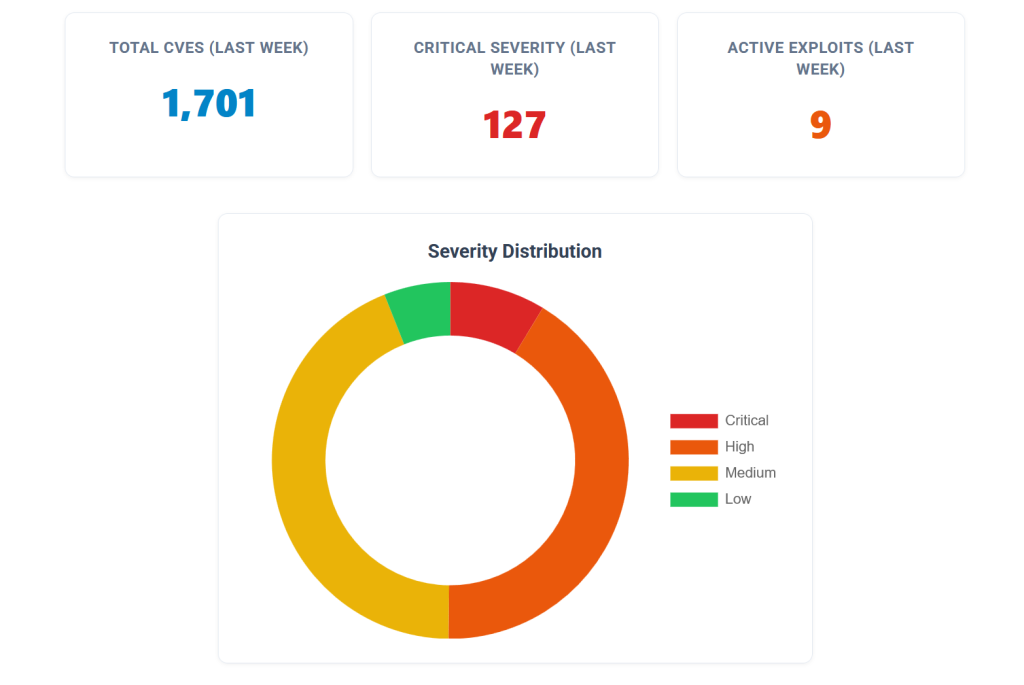
Welcome to your latest weekly threat intelligence briefing. The global cybersecurity landscape remains highly volatile as we enter June. Specifically, malicious threat actors are weaponizing new vulnerabilities at an alarming rate. Therefore, reviewing a comprehensive vulnerability management report is absolutely essential for your organizational defense strategy. Between June 1 and June 7, 2026, global security teams successfully identified 1,701 new vulnerabilities. Consequently, prioritizing software patches is now significantly more critical than ever before.
CISA KEV Additions and Enterprise Risk
The Cybersecurity and Infrastructure Security Agency (CISA) officially added five crucial flaws to its catalog. Interestingly, attackers are actively targeting legacy software and modern systems simultaneously. For instance, remote hackers are widely exploiting a Linux kernel privilege escalation flaw (CVE-2022-0492). Additionally, a severe administrative vulnerability in Oracle WebLogic Server (CVE-2024-21182) demands immediate mitigation. Furthermore, aggressive threat actors are repeatedly crashing SolarWinds Serv-U services using specially crafted POST requests (CVE-2026-28318). As a result, network administrators must urgently deploy necessary patches to prevent sudden corporate infrastructure outages.
Emerging Zero-Day Threats in the Wild
Our dedicated weekly threat intelligence radar also detected highly dangerous exploits actively circulating in the wild. Notably, the popular Kirki WordPress plugin currently harbors a critical privilege escalation bug (CVE-2026-8206-admin). Malicious attackers easily execute complete account takeovers on unpatched marketing websites. Moreover, the Cisco Catalyst SD-WAN Manager currently suffers from a severe local code execution vulnerability (CVE-2026-20245-admin). Therefore, enterprise security teams must thoroughly audit their internal routing environments immediately to prevent catastrophic internal breaches.
The CVSS 10.0 Danger Zone
Cybersecurity researchers officially disclosed 127 critical vulnerabilities this past week. Furthermore, several devastating flaws achieved a maximum CVSS severity score of 10.0. For example, Azure HorizonDB contains an unauthenticated bypass flaw (CVE-2026-48567) granting attackers elevated privileges directly over the network. Additionally, the DbGate JSON script runner allows total remote code execution via surprisingly simple code injection (CVE-2026-47668). Ultimately, this vulnerability management report clearly highlights the underlying fragility of modern cloud hosting environments. Consequently, network defenders must strongly prioritize identity verification and aggressive patching workflows to stop these relentless network attacks.
Support Our Threat Intelligence
Find our vulnerability reports and weekly recaps helpful? Support our work today and unlock a 100% ad-free reading experience!
 Buy Me a Coffee
