Microsoft Announces Driver Quality Initiative to Fix Windows 11 Sleep Battery Drain
 Do Son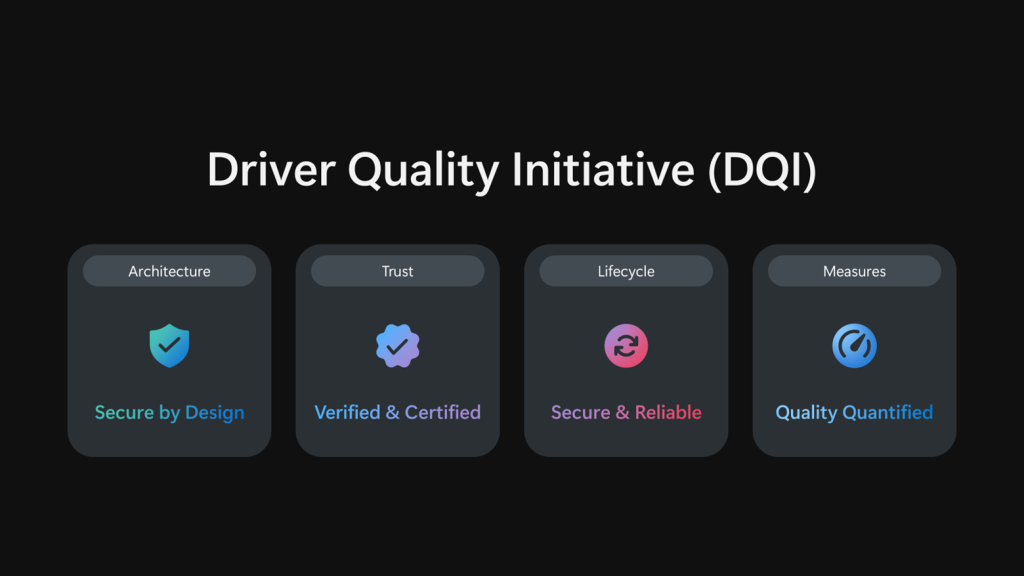
Patrons deploying Windows 10 or Windows 11 laptops have routinely encountered a vexing phenomenon wherein a device, tucked securely inside a backpack, continues to operate its cooling fans and experiences a pronounced thermal escalation. This anomaly precipitously depletes a pristine 100% battery capacity, often leaving the user with a completely enervated machine upon retrieval—a failure that stems from the operating system’s inability to seamlessly transition into its designated sleep architecture.
At the Windows Hardware Engineering Conference in 2026, Microsoft officially announced a fundamental restructuring of its third-party software evaluation methodology. Spearheaded by the new Driver Quality Initiative (DQI), the tech giant will expand its telemetry metrics to penalize peripheral drivers that precipitate systemic operational failures or degrade consumer satisfaction, thereby compelling Original Equipment Manufacturers (OEMs) to elevate the precision of their software distribution.
The Modern Standby framework within Windows 11 mirrors smartphone mechanics; rather than initiating a total shutdown, the system periodically arouses low-power infrastructure components in the background to fetch incoming correspondence or dispatch notices. However, should a storage controller or wireless adapter driver lack optimization, it may structurally impede the central processor from descending into its ultimate low-power state (C-state).
Under these conditions, the CPU sustains continuous operational cycles in the background, keeping disparate application layers active. Consequently, cooling fans maintain their revolutions—frequently within the unventilated confines of a carrying case—and accelerate as core temperatures surge. This unremitting computational cycle, paired with perpetual fan modulation, rapidly depletes the battery repository.
Historically, Microsoft relied exclusively on Windows Error Reporting (WER) telemetry and post-crash dump diagnostics to evaluate the integrity of OEM-supplied drivers. While this classical paradigm theoretically monitored systemic stability, it remained blind to scenarios where a driver merely obstructed low-power CPU transitions. Because the operating system technically preserved its runtime integrity during these events, no failure logs were ever dispatched to corporate repositories.
Consequently, Microsoft lacked the visibility necessary to quantify the operational efficiency of these drivers, remaining oblivious to the underlying issue from a portable computing perspective. Following years of persistent consumer friction, the corporation has instituted the DQI matrix to harvest granular behavioral metrics and ascertain whether driver executions meet contemporary expectations.
Specifically, Microsoft will deprecate legacy driver architectures that violate rigorous thermodynamic and power-consumption boundaries, while concurrently barring automated Windows Update pipelines from distributing unoptimized codebases. This regulatory shift will coerce OEMs to prioritize battery longevity and micro-architectural low-power states during firmware synthesis; deficient driver iterations face outright exclusion from Microsoft’s official software catalogs.
Nevertheless, the comprehensive execution of this initiative demands a protracted timeline. The systematic obsolescence of legacy drivers is contingent upon OEMs engineering high-fidelity, contemporary updates. For users relying on hardware end-of-life assets that have been abandoned by their manufacturers, the absence of newly minted firmware means they will be structurally compelled to navigate these power-state anomalies using legacy configurations.
Support Our Threat Intelligence
Find our tech and OS security coverage helpful? Support our work today and unlock a 100% ad-free reading experience!
 Buy Me a Coffee
