Notepad’s Metamorphosis: From Plain Text to Markdown-Powered Image Rendering in Windows 11
 Do Son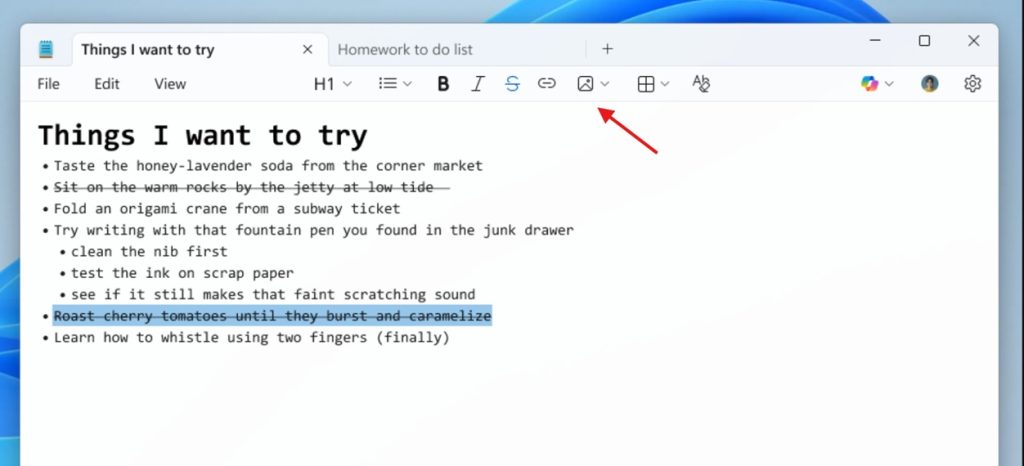
Historically, Notepad has been relegated to the role of a rudimentary text editor, customarily utilized for the ephemeral jotting of notes. Concurrently, certain developers, venerating its universal compatibility, elect to enshrine their release logs within software directories utilizing the quintessential TXT format.
Curiously, Microsoft once harbored intentions to utterly forsake this application; yet, a chorus of user opposition compelled its preservation. Subsequently, driven by an arcane rationale, the technology leviathan commenced a relentless cadence of iterations, endowing Notepad with an expanding repertoire of functionalities.
The contemporary iteration of Notepad boasts partial integration of the Markdown architecture, the capacity to wield Copilot AI for textual reimagining and summarization, alongside bespoke typographical configurations, automatic line wrapping, and a multifaceted tabbed interface. Yet, in a profoundly unanticipated development, Microsoft presently harbors designs to infuse this application with image-rendering capabilities. This heralded innovation aims to empower patrons to orchestrate profoundly richer editorial endeavors directly within Notepad’s confines.
Nevertheless, given that the orthodox TXT format is intrinsically constrained to mere character encoding, the insertion of imagery presumably predicates upon Markdown mechanics. This necessitates that patrons preemptively ascend their visual assets to a remote server, subsequently embedding them via hyperlinks.
Lamentably, the demonstrative visual captures promulgated by Microsoft remained conspicuously devoid of embedded imagery. Consequently, it remains shrouded in ambiguity whether Notepad possesses the fortitude to natively render visual elements. While the Markdown architecture intrinsically supports such rendering, its realization within this context hinges entirely upon Microsoft’s architectural provisions.
Naturally, should a patron elect to wield the Markdown format, the resulting artifact ceases to be a traditional TXT file. The MD format inherently possesses a formidable universality; thus, it is upon auxiliary, compatible platforms that these embedded visual hyperlinks shall ultimately manifest their true splendor.
Support Our Threat Intelligence
Find our tech and OS security coverage helpful? Support our work today and unlock a 100% ad-free reading experience!
 Buy Me a Coffee
