 Do Son
Technology publication Windows Latest recently uncovered an experimental utility inside an official code repository. Specifically, developers identified a modernized WinUI Registry Editor prototype within the experimental Microsoft.UI.Reactor project. The proof-of-concept replaces antiquated legacy controls with contemporary aesthetic elements. However, Microsoft clarified that the utility serves solely as an architectural code demonstration. Consequently, the application does not represent an imminent release for Windows 11.
Experimental Architecture Inside the Reactor Framework
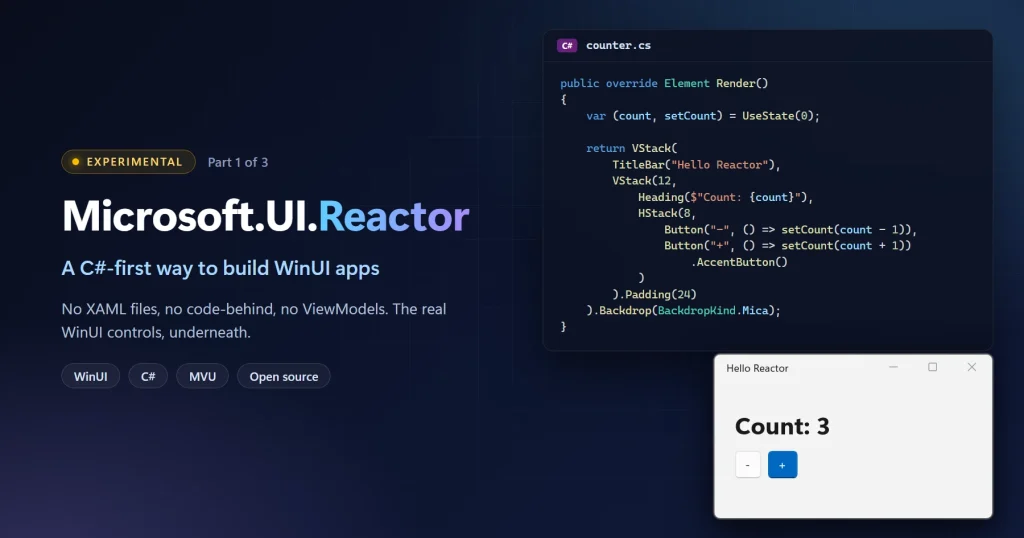
The experimental utility originated within Microsoft’s public repository for Project Reactor. Primarily, Reactor explores reactive programming patterns in C# for modern WinUI 3 applications. To illustrate framework capabilities, engineers packaged several demonstration tools inside the project tree. Alongside classic utilities like Minesweeper and chat interfaces, engineers included a redesigned registry management console.
Curious analysts compiled the open-source code and evaluated the application directly on desktop workstations. According to the hands-on report published by Windows Latest, the executable actively communicates with live system hives. Furthermore, the design discards vintage Windows 95 yellow folder icons entirely. Instead, the interface introduces fluid controls, updated navigation panels, and modern context menus.
Engineer Clarification and Roadmap Prioritization
Following significant online speculation, a Microsoft PowerToys engineer addressed community enthusiasm directly. Specifically, the engineer confirmed that he constructed the application purely as an illustrative proof of concept. Although operating system architects acknowledge visual disparities across legacy utilities, overhaul efforts face low developmental priority. Therefore, core engineering teams concentrate resources on critical system infrastructure projects.
Functional Incompleteness and Legacy Reliability
Moreover, the demonstration utility lacks the exhaustive operational capabilities of the standard administrative utility. Many interface buttons remain non-functional placeholders without underlying logic. Consequently, administrators cannot deploy the compiled sample as a dependable utility on production machines. The native regedit executable remains the sole supported solution for system key modifications. Ultimately, this lightweight experiment offers an intriguing glimpse into potential administrative modernization.
Support Our Threat Intelligence
Find our tech and OS security coverage helpful? Support our work today and unlock a 100% ad-free reading experience!
 Buy Me a Coffee
