Skip to content
November 7, 2026
  • Bluesky
  • Facebook
  • Linkedin
  • Mastodon
  • RSS
  • Twitter
  • Youtube

Daily CyberSecurity

Zero-hour alerts. Unmatched analysis.

Primary Menu
  • Home
  • CVE Data
    • CVE Watchtower
    • Top Exploited CVEs
    • CVE Stats by Vendor
    • Q2 2026 Report
    • CVE Alerts
    • CVE Alert Settings
    • Pricing
  • Cyber Criminals
  • Data Leak
  • Free Tools
    • CVSS 3.1 Calculator
    • Certificate Viewer
    • DNS Lookup
    • Encoder & Hash Generator
    • IP / Subnet Calculator
    • Whois Lookup
  • Linux
  • Malware
  • Vulnerability
  • Submit Press Release
Light/Dark Button
  • Home
  • News
  • Vulnerability Report
  • Poweradmin Host Header Injection Lets Attackers Hijack DNS Accounts
  • Vulnerability Report

Poweradmin Host Header Injection Lets Attackers Hijack DNS Accounts

Do Son July 2, 2026 2 minutes read
0
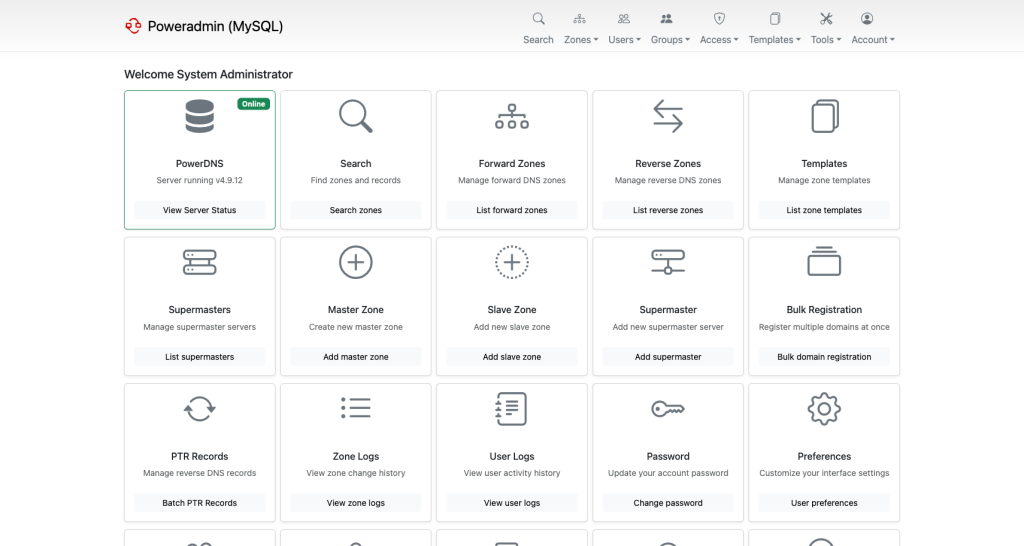
Poweradmin host header injection flaw CVE-2026-54588 enabling DNS admin account takeover
At a glance
  • CVE: CVE-2026-54588
  • CVSS: 9.6 (Critical · CVSSv3)
  • Product: poweradmin/poweradmin (composer)
  • Affected: < 4.2.4, >= 4.3.0, < 4.3.3
  • Impact: Poweradmin has Host Header Injection in OIDC redirect_uri, SAML ACS/SLO URL, and Logout Redirect Construction.
  • Status: No confirmed exploitation yet
  • Patched in: 4.2.4, 4.3.3
  • EPSS: 0.3% (30-day)
  • Action: Update to 4.2.4, 4.3.3 now
Running Infra, AppSec, and SOC teams? Tag CVE alerts by team automatically.
Try Team free for 14 days →

TL;DR

A critical flaw in Poweradmin lets attackers take over DNS administrator accounts. Tracked as CVE-2026-54588, it scores 9.6 on the CVSS scale. The bug comes from a Poweradmin host header injection in its login flows.

Why it matters

Poweradmin manages PowerDNS zones for many organizations. A stolen admin account hands attackers full DNS control. From there, they can hijack inbound email and intercept password-reset messages. They can also forge DKIM signatures or steal wildcard SSL certificates. Therefore, a single account takeover can expose an entire domain.

How the Poweradmin host header injection works

Poweradmin builds login callback URLs from the HTTP Host header. It trusts that header without validation. An attacker sends a request with a spoofed Host value. The app then passes a poisoned redirect_uri to the identity provider. As a result, the victim’s authorization code lands on an attacker-controlled server. Three flows are affected: OIDC, SAML, and logout. The attack needs no password. However, the victim must start a login for it to work.

Affected versions

The flaw hits Poweradmin versions below 4.2.4. It also affects the 4.3.x branch before 4.3.3. The project fixed both lines in releases 4.2.4 and 4.3.3.

Exploitation status

No public proof-of-concept exists yet. Researchers report no in-the-wild abuse so far. A security researcher disclosed the issue privately through GitHub.

Patch and mitigation

Update now to Poweradmin 4.2.4 or 4.3.3. You can grab the 4.2.4 release directly from GitHub. As a quick stopgap, set interface.base_url in config/settings.php. That setting forces a trusted base URL instead of the Host header.

Add Daily CyberSecurity as a preferred source on Google

Related coverage

  • Apache Camel Vulnerabilities Expose Routes to Header Injection and SSRF
  • Android Emergency: Critical DoS Flaw and 2 Exploited Zero-Days in Framework Require Immediate Patch
  • CISA Warns of Unpatched Avation & RISS Critical Flaws
  • Embargo Broken: Public PoC Released for “Dirty Frag” Linux Kernel Exploit Granting Instant Root Access
  • Yoast SEO Premium Flaw: Stored XSS Bug (CVE-2025-11241) Exposes Millions of WordPress Sites
  • Critical Roundcube Webmail Security Updates Fix Severe Flaws
Track all actively exploited CVEs →

Support Our Threat Intelligence

Find our vulnerability reports and weekly recaps helpful? Support our work today and unlock a 100% ad-free reading experience!

Buy Me a Coffee Logo Buy Me a Coffee
Select your plan
Free Pro Team

Hover over a plan to see its benefits.

Get Zero-Hour Vulnerability Alerts

Critical CVEs, CVSS scores, and PoC updates — straight to your inbox every week.

We respect your inbox. Unsubscribe anytime.

SHARE
Share on FacebookShare on XShare on LinkedInShare on TelegramShare on BlueskyShare on Mastodon
Written by
@DdoS · Security Researcher

Do Son

Do Son is the Founder and Editor of SecurityOnline.info. Working in cybersecurity since 2013, he reports on vulnerabilities, malware, and emerging threats, providing timely analysis to help organizations and individuals stay ahead of evolving risks.

Tags: Account Takeover CVE-2026-54588 DNS Security host header injection OIDC open redirect Poweradmin PowerDNS SAML

Leave a Reply Cancel reply

You must be logged in to post a comment.

Search

CVE ALERTS
📈

EPSS Spike Alerts
Catch risk spikes before they make headlines.

🎯

Custom EPSS/CVSS
Set score thresholds to effectively filter noise.

🛡️

Exploit Intel
Real-world exploit signals beyond the KEV catalog.

🐙

GitHub Issues
Auto-create alert tickets without duplication.

📬

Weekly Digest
Clean summaries, eliminating email spam.

🏷️

Watchlist Groups
Tag vulnerabilities by team (Infra/AppSec/SOC).

🔀

Smart Routing
Route chat channels based on severity levels.

🚨

RBP Tracker
Early warning detection and tracking system.

Subscribe – $7/mo or try free for 14 days →

🚨 Active Exploits in the Wild

  • CVE-2026-123158CVSS 8.1
    sshd in OpenSSH before 10.6p2 on Linux, when musl libc is used without PAM, lacks a workaround for...
    Admin intel📅 Updated: Nov 6, 2026
  • CVE-2026-19868CVSS 7.5
    An authentication enforcement vulnerability in SonicOS SSLVPN service may allow a user with valid credentials for an alternate...
    CISA KEV📅 Added to KEV: Nov 6, 2026
  • CVE-2026-120422CVSS 8.9
    Sogou Input Method for Windows contains a vulnerability in the configuration retrieval mechanism of its SGTool.exe component. The...
    Admin intel📅 Updated: Nov 5, 2026
  • CVE-2026-102895CVSS 9.8
    GPUStack is an open-source GPU cluster manager for AI model serving and GPU instance provisioning. Prior to 2.2.0,...
    Watchtower Verified📅 Updated: Nov 5, 2026
  • CVE-2026-115732CVSS 9.0
    Incorrect authorization in the certificate-name matching of trapperkeeper-authorization, as used by Puppet Server, in the affected products, allows...
    Admin intel📅 Updated: Nov 4, 2026
  • CVE-2026-98432CVSS 9.8
    In the Linux kernel, the following vulnerability has been resolved: ipv4: free inet_opt and ireq_opt after an RCU...
    Admin intel📅 Updated: Nov 4, 2026
  • CVE-2026-107441CVSS 8.8
    An out-of-bounds write vulnerability in the CGI program of Zyxel GS1900-24E firmware versions through 2.90(AAHK.2)C0 could allow an...
    Admin intel📅 Updated: Nov 4, 2026
  • CVE-2019-25779CVSS 7.5
    The Diarise theme for WordPress is vulnerable to Directory Traversal in all versions up to, and including, 1.5.9....
    Watchtower Verified📅 Updated: Nov 4, 2026
Powered by CVE Watchtower

Critical Vulnerabilities

  • CVE-2026-122041CVSS 9.1
    The Checkout Field Editor for WooCommerce (Pro) plugin for WordPress is vulnerable to unauthorized deletion of arbitrary attachments...
    📅 Updated: Nov 7, 2026
  • CVE-2026-119075CVSS 9.8
    The Registration Form for WooCommerce plugin for WordPress is vulnerable to privilege escalation due to a missing allow-list...
    📅 Updated: Nov 7, 2026
  • CVE-2026-118066CVSS 9.1
    The Appointment Booking Plugin – LatePoint | Calendar & Scheduling for WordPress plugin for WordPress is vulnerable to...
    📅 Updated: Nov 7, 2026
  • CVE-2026-104014CVSS 9.8
    The Naimur Email OTP Verification for WooCommerce plugin for WordPress is vulnerable to authentication bypass in versions up...
    📅 Updated: Nov 7, 2026
  • CVE-2023-3961CVSS 9.1
    A path traversal vulnerability was identified in Samba when processing client pipe names connecting to Unix domain sockets...
    📅 Updated: Nov 7, 2026
  • CVE-2026-123961CVSS 9.4
    A security vulnerability has been detected in TOTOLINK CA300-PoE 6.2c.884. This impacts the function setWiFiBasicConfig of the file...
    📅 Updated: Nov 7, 2026
  • CVE-2026-123960CVSS 9.4
    A weakness has been identified in TOTOLINK CA300-PoE 6.2c.884. This affects the function setWanConfig of the file /cgi-bin/cstecgi.cgi....
    📅 Updated: Nov 7, 2026
  • CVE-2026-123959CVSS 9.4
    A security flaw has been discovered in TOTOLINK CA300-PoE 6.2c.884. The impacted element is the function setLanguageCfg of...
    📅 Updated: Nov 7, 2026
Powered by CVE Watchtower

Daily CyberSecurity

  • About SecurityOnline.info
  • Advertise with us
  • Announcement
  • Contact
  • Contributor Register
  • Login
  • Disclaimer
  • DCMA
  • Privacy Policy
  • About SecurityOnline.info
  • Advertise on SecurityOnline.info
  • Contact Us

When you purchase through links on our site, we may earn an affiliate commission. Here’s how it works

  • CVE Watchtower
  • CVE Statistics by Vendor 2026
  • Q3 2026 Report
  • Top Exploited CVEs
  • Bluesky
  • Facebook
  • Linkedin
  • Mastodon
  • RSS
  • Twitter
  • Youtube
© 2017 - 2026 Daily CyberSecurity. All Rights Reserved.