The Death of Open Sideloading? Google’s New “Anti-Fraud Crucible” for Android APKs
 Do Son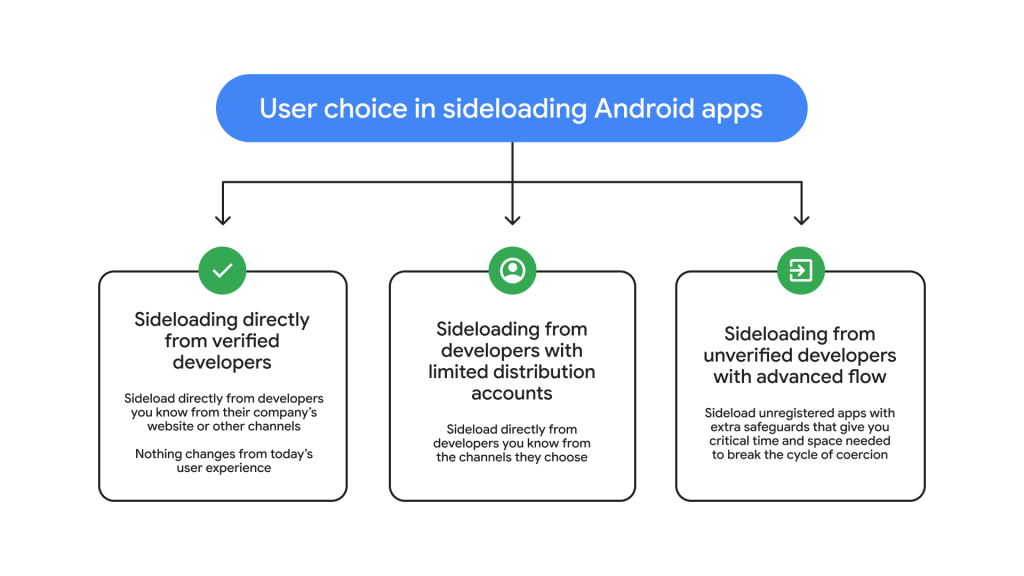
The once-venerated “sideloading” architecture of the Android ecosystem—a paradigm celebrated for its unfettered liberty in installing APKs—is poised to confront the most draconian thresholds in its history. In a resolute crusade against the burgeoning proliferation of malicious software and digital chicanery, Google promulgated an edict last year inaugurating a labyrinthine, “one-time, multi-echelon security validation” protocol governing the installation of applications birthed by unverified architects. Nevertheless, following a tempestuous backlash from the developer constituency in November of the preceding year, Google has temperately softened its posture. Concurrently, they have unveiled a provision for “Limited Distribution Accounts”—exempt from both credential mandates and fiscal tolls—tailored explicitly for students and amateur developers, attempting to forge a precarious equilibrium betwixt systemic inviolability and open-source liberty.
Google’s nascent stratagem harbored an uncompromising mandate: every sovereign developer launching software upon the Android architecture must submit to official verification. Yet, following fierce protestations mounted by digital rights syndicates and the developer vanguard, Google conceded a tactical retreat last November, preserving a conduit for the installation of unverified software, albeit elevating the threshold of entry to a monumental degree.
According to the granular details recently unsealed by Google, any pedestrian Android denizen harboring the desire to install an application forged by an unverified developer must henceforth traverse a multifaceted gauntlet, aptly characterized as an “anti-fraud crucible”:
- Ignition of Developer Mode: The patron must initially, manually awaken Developer Mode within the system’s labyrinthine settings.
- Anti-Coercion Affirmation: The architecture shall summon a stern admonition, demanding the patron affirm they are dismantling security bulwarks “absent the dictation or coercion of a nefarious third party.”
- Coercive Systemic Resurrection: By mandating a coercive reboot, the architecture possesses the brute force to instantly sever any insidious, ongoing telephonic manipulation orchestrated by fraudulent syndicates.
- A Twenty-Four-Hour Purgatory: Following the resurrection, immediate installation remains forbidden; the patron is condemned to a mandatory twenty-four-hour cooling-off epoch.
- Biometric Consecration: Upon the expiration of this purgatory, the patron must unequivocally confirm their identity via a fingerprint, facial geometry, or PIN code before the installation is finally consecrated.
Upon vanquishing this labyrinthine choreography, patrons are empowered to bestow either a “seven-day” or “perpetual” dispensation for the installation of unverified applications. However, Google emphatically underscores that even should the perpetual dispensation be granted, the architecture shall invariably summon an unverified warning prompt upon any future endeavor to install such software. This draconian paradigm shall undeniably inflict profound tribulations upon independent developers, scholars, or amateur enthusiasts merely seeking to provision their creations to kin for testing.
To ameliorate this profound friction, Google heralded the inauguration of complimentary “Limited Distribution Accounts.” Leveraging this conduit, developers are utterly absolved from the necessity of furnishing government-sanctioned credentials or remitting registration tolls, yet remain empowered to disseminate their sovereign applications across a maximum of twenty apparatuses. This mechanism secures a vital sanctuary for the non-commercial trial of software.
Google has analogized this nascent validation choreography to the “identity scrutiny at an aerodrome”—it merely corroborates the identity of the voyager (the developer), an endeavor entirely disparate from the rigorous inspection of their luggage (the auditing of software source code). The sovereign authority emphatically asserts that the entirety of this endeavor is architected solely to exponentially magnify the friction associated with installing perilous software.
Nevertheless, a faction of digital rights advocacy syndicates maintains a posture of profound skepticism. They posit that whilst Google ostensibly diminishes the revenue extortion within the Google Play Store and recalibrates its posture toward third-party application bazaars, it concurrently weaponizes the draconian mandate of “developer verification” to surreptitiously project its hegemonistic influence deep into the open-source dominions that exist far beyond the walls of its sovereign application store.
Presently, the developer vanguard may petition for embryonic access to test this validation choreography. The sideloading defensive mechanisms and Limited Distribution Accounts tailored for the pedestrian populace are slated for a formal dawn in August of the current annum (2026). The specific architectures of the “coercive systemic resurrection” and the “twenty-four-hour purgatory” are unequivocally engineered to combat the rampant scourge of “social engineering chicanery.” A vast multitude of elderly denizens, profoundly unfamiliar with the digital arts, are frequently manipulated via unbroken telephonic dictation from fraudulent syndicates, systematically dismantling systemic bulwarks step-by-step and unwittingly downloading venomous APKs.
By leveraging the coercive reboot to violently sever the fraudulent telephonic tether, and subsequently imposing a twenty-four-hour epoch empowering the victim to temper their visceral emotions and seek verification from kin, Google practically intercepts an astronomical proportion of trojan horse installations.
Whilst this paradigm inflicts profound agony upon the Android “Power User,” in an epoch where Android commands such colossal market hegemony—and where “liberty” has tragically mutated into a porous portal for hacker ingress—a measured migration toward the “nanny-state” security architectures characteristic of iOS is perhaps an unavoidable capitulation that Google is compelled to endure.
Support Our Threat Intelligence
Find our tech and OS security coverage helpful? Support our work today and unlock a 100% ad-free reading experience!
 Buy Me a Coffee
