Apache StreamPark Flaw Risks Data Decryption & Token Forgery via Hard-Coded Key and AES ECB Mode
 Do Son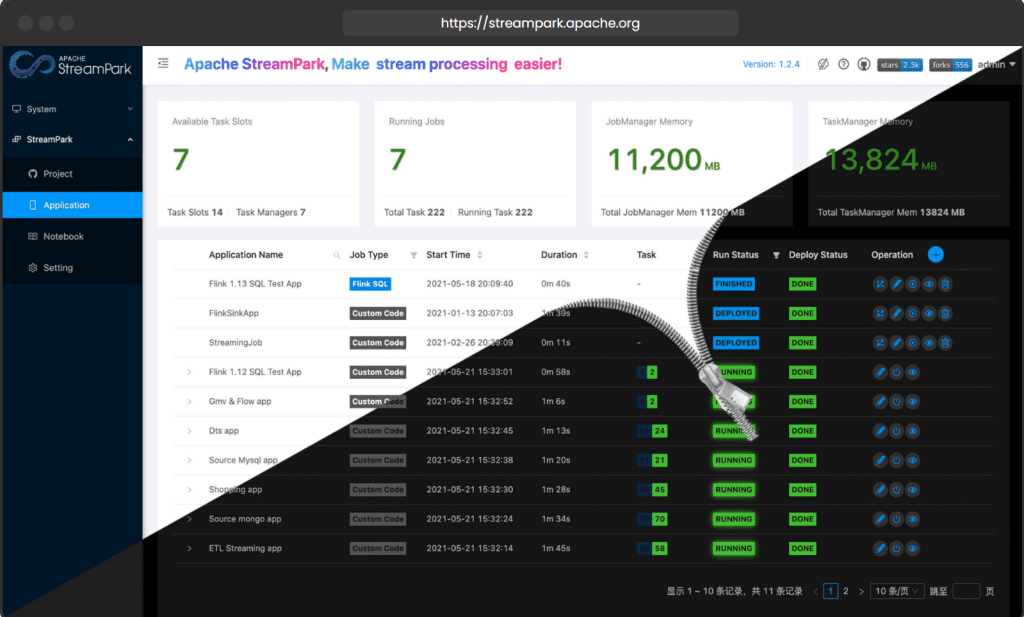
The maintainers of Apache StreamPark, a popular framework for developing streaming applications, have issued a critical security advisory after discovering fundamental flaws in how the platform handles encryption. The vulnerabilities, which range from the use of static, hard-coded keys to obsolete encryption modes, could allow attackers to forge authentication tokens and decrypt sensitive user data.
The most glaring issue, tracked as CVE-2025-54947, involves a violation of basic cryptographic hygiene: the use of a hard-coded encryption key. In affected versions, the system relies on a pre-set key baked into the software rather than generating a unique one for each installation.
“This vulnerability occurs because the system uses a fixed, immutable key for encryption instead of dynamically generating or securely configuring the key.”
This oversight turns the encryption into a “lock with a master key” that anyone can find. If an attacker downloads the software and finds this key, they can potentially unravel the security of any standard installation. The advisory warns that “attackers may obtain this key through reverse engineering or code analysis, potentially decrypting sensitive data or forging encrypted information”.
A second vulnerability, CVE-2025-54981, highlights the dangers of using outdated encryption modes. The platform was found to be using the AES cipher in ECB (Electronic Codebook) mode, a method notoriously insecure because it preserves patterns in the data, making it easier to break.
Combined with a weak random number generator, this flaw puts critical authentication mechanisms at risk. “The use of an AES cipher in ECB mode and a weak random number generator for encrypting sensitive data, including JWT tokens, may have risked exposing sensitive authentication data”.
These vulnerabilities affect Apache StreamPark versions 2.0.0 through 2.1.7. Given that Apache StreamPark is a user-friendly streaming application development framework and one-stop cloud-native real-time computing platform, these flaws could have ripple effects across cloud environments using the tool.
Administrators are being urged to upgrade to version 2.1.7 immediately to secure their environments.
Related Posts:
- Cybersecurity in Focus: ECB Stress Test Exposes Banks’ Vulnerabilities
- Western Digital ‘My Cloud’ Storage Devices exist secret hard-coded backdoor
- Apache Syncope Flaw (CVE-2025-65998) Exposes Encrypted User Passwords Due to Hard-Coded AES Key
- New Cephalus Ransomware Uses Fake AES Keys and GoLang to Thwart Analysis
Support Our Threat Intelligence
Find our vulnerability reports and weekly recaps helpful? Support our work today and unlock a 100% ad-free reading experience!
 Buy Me a Coffee
