
 Do Son
Recognizing the depth of this security flaw, Google has assigned a fresh identity: CVE-2023-5129, alongside a daunting 10/10 severity rating
Do Son
Do Son is the Founder and Editor of Daily CyberSecurity. Working in cybersecurity since 2013, he reports on vulnerabilities, malware, and emerging threats, providing timely analysis to help organizations and individuals stay ahead of evolving risks.

Unlock the power of data labeling in machine learning with our comprehensive guide. Learn how to navigate the world of labeled data, from its significance to its real-world applications.

CVE-2023-41993 provided the opening gambit, allowing RCE in Safari. CVE-2023-41991 facilitated the bypass of signature validation.

The CVE-2023-0625 vulnerability enables RCE, granting unauthorized parties potential full control over the victim's system.

JetBrains acted promptly. In the subsequent release, TeamCity version 2023.05.4, the CVE-2023-42793 vulnerability was patched

CVE-2023-42810 is a critical command injection bug in systeminformation, a popular Node.js library for retrieving system information

A closer examination of the affected versions reveals that Linux kernel versions 6.1, 5.15, and 5.10 are vulnerable to CVE-2023-42753

Researcher, @nguyendt016, announced the development of a proof-of-concept (PoC) exploit for the CVE-2023-41892 vulnerability.

An attacker could exploit the CVE-2023-3341 vulnerability by sending a specially crafted message to a vulnerable server, causing it to crash

The technical detail and proof-of-concept (PoC) exploit code has been published for a Chrome zero-day vulnerability tracked as CVE-2023-4863

The CVE-2023-23363 vulnerability could be exploited by attackers to execute malicious code on affected devices.

CVE-2023-42660 could serve as a backdoor for authenticated malefactors to sneak into the MOVEit Transfer database

WebKit powers Apple's Safari browser. CVE-2023-41993 allowed cyber attackers to execute arbitrary codes through maliciously crafted web pages

CVE-2023-43495 allows attackers to inject malicious JavaScript code into Jenkins build logs, which can then be executed by users viewing those logs
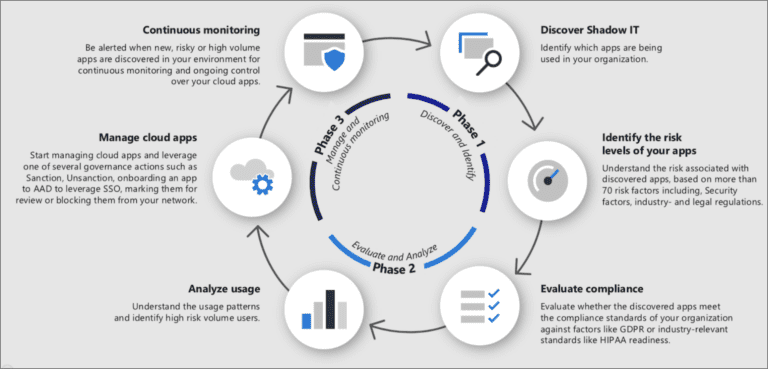
Cloud computing has become a key component of today’s modern IT infrastructure. Cloud computing offers businesses a...

Dubbed with the CVE-2023-22513 tag and boasting a CVSS score of a whopping 8.5, this high-severity Remote Code Execution (RCE) vulnerability

Researchers have discovered four vulnerabilities in widely used network management products from Nagios XI

The vulnerability tracked as CVE-2023-28434 has a CVSS score of 8.8 and allows an attacker to bypass metadata bucket name checking

CVE-2023-4998, with a CVSS v3.1 score of 9.6, affects both GitLab Community Edition (CE) and Enterprise Edition (EE) spanning versions

If an attacker is able to exploit the CVE-2023-42442 vulnerability, they could download session replays that contain sensitive information

The matter is further intensified by reports from Trend Micro Incorporated confirming observations of attacks exploiting CVE-2023-41179

It was discerned that Microsoft's AI researchers inadvertently exposed a repository on Azure, spanning a staggering 38 terabytes