
 Do Son
The first vulnerability (CVE-2023-40029, CVSS score of 9.9) allows an attacker to view the full contents of a cluster secret.
Do Son
Do Son is the Founder and Editor of Daily CyberSecurity. Working in cybersecurity since 2013, he reports on vulnerabilities, malware, and emerging threats, providing timely analysis to help organizations and individuals stay ahead of evolving risks.

The vulnerabilities, tracked as CVE-2023-41064 and CVE-2023-41061, were found in the ImageIO and Wallet frameworks

The CVE-2023-20269 vulnerability lies within the remote access VPN feature of Cisco’s renowned ASA and FTD software

A series of vulnerabilities, ripe for exploitation, have surfaced in Apache Superset. These span from remote code execution risks

The vulnerability, known as CVE-2023-20238, is an authentication bypass vulnerability, with a maximum CVSS score of 10

To exploit the CVE-2023-4498 vulnerability, an attacker would need to send a specially crafted web request to the router.

Remote attackers, even without privileges, can exploit the CVE-2023-39238 flaw to execute remote code, perform arbitrary actions on the device

Web accessibility is not just a mere checklist to complete – it’s about extending the power of...

It’s no secret that regulatory compliance and security requirements add complexity to IT processes, but configuration and...

CVE-2023-28562 (CVSS score of 9.8) allows malicious actors to execute arbitrary code on a staggering range of Qualcomm chipsets

CVE-2023-40031 (CVSS score of 7.8): heap buffer write overflow in `Utf8_16_Read::convert`. This issue may lead to arbitrary code execution
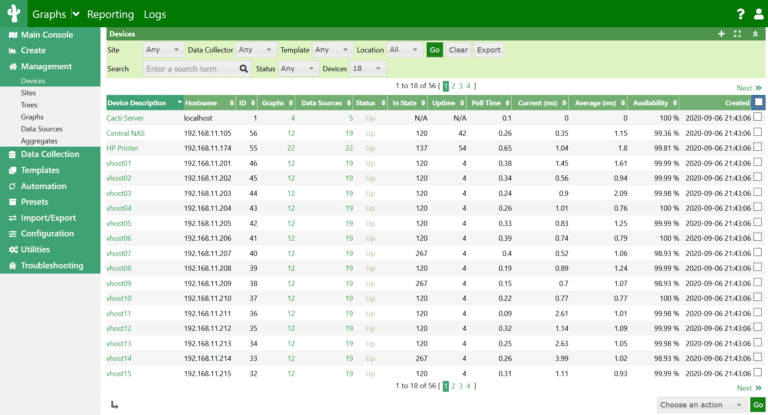
This vulnerability, designated as CVE-2023-39361, is a grave SQL injection bug, sporting a worrisome CVSS score of 9.8.
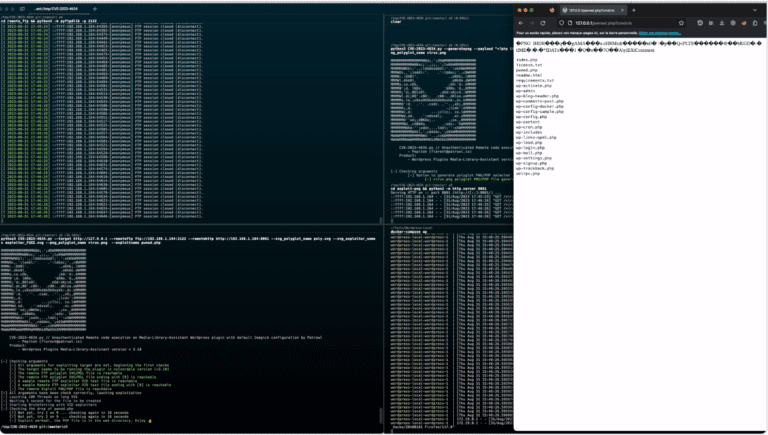
CVE-2023-4634 is an unauthenticated RCE vulnerability affecting the Media-Library-Assistant plugin – a tool with over 70,000 installations

CVE-2023-35674 could significantly elevate local privileges, all without the need for any user interaction or additional execution privileges

Are you always having trouble keeping track of where and how your company is spending its money?...

In today’s rapidly evolving business landscape, leveraging the full potential of the software at your company’s disposal...

A vulnerability (CVE-2023-28072) with a CVSS score of 7.8 was identified in versions of Dell Alienware Command Center prior to 5.5.51.0

A cybersecurity researcher has released the details, and a proof-of-concept (PoC) exploit for a high-severity vulnerability (CVE-2023-28229)

Anonymous Sudan, previously known for launching multiple DDoS attacks against Microsoft, recently targeted 'X' (formerly Twitter)
A cybersecurity researcher has released the details, and a PoC exploit for a critical severity vulnerability (CVE-2023-34039)

CVE‑2023‑25528 (CVSS: 8.8) - A web server plugin flaw could cause a stack overflow, potentially leading to arbitrary code execution

The landscape of technology in law enforcement has undergone transformations in police organizations worldwide. These changes have...