 Do Son
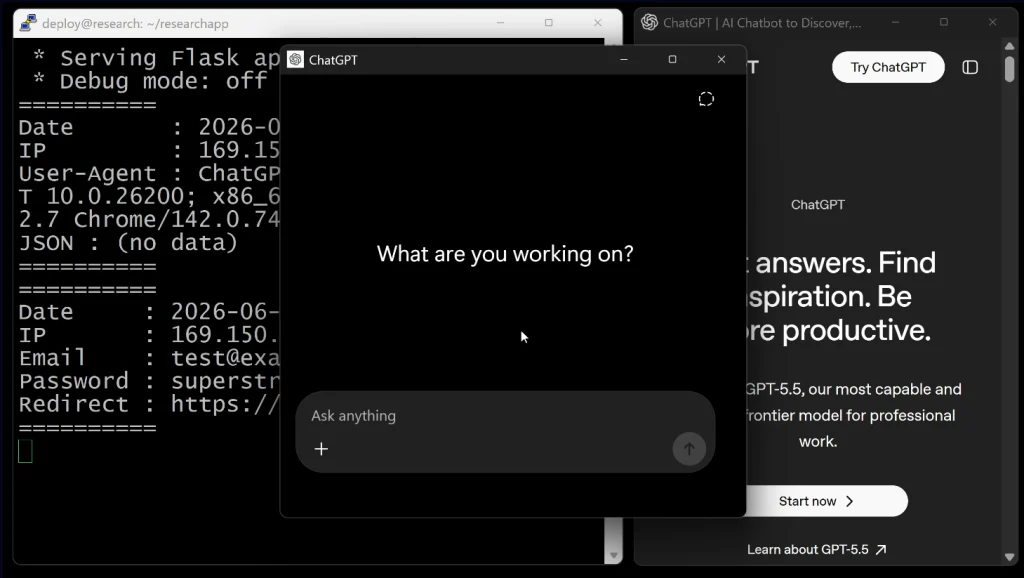
Credential theft | Image: Check Point
Cybersecurity firm Check Point Research recently uncovered a significant vulnerability within ChatGPT. Specifically, the flaw resides in the platform’s HTML page preview feature. This defect successfully circumvents OpenAI’s protective Lockdown Mode. Consequently, malicious actors could covertly exfiltrate confidential conversational records. Check Point promptly notified OpenAI regarding the weakness. Subsequently, OpenAI resolved the security loophole in September 2026 before public disclosures appeared.
Escaping Sandboxed HTML Previews
ChatGPT natively allows subscribers to preview rendered HTML pages inside code blocks. To protect user privacy, the application isolates rendered content within nested iframe sandboxes. Furthermore, system rules actively restrict external network calls and unauthorized popup interactions. However, researchers discovered that permissive sandbox tokens undermined these defenses. Specifically, the configuration enabled tokens allowing popups to escape the sandbox environment.
Although OpenAI intercepted direct attempts to call window opening functions, the underlying restriction proved bypassable. To accomplish this, researchers generated an auxiliary nested iframe inside the sandboxed document. They then invoked window creation routines through the newly formed iframe. Consequently, this simple maneuver spawned unrestricted popup windows. Furthermore, these rogue windows loaded arbitrary attacker-controlled content directly.
Zero-Click Exploitation in Desktop Clients
The security ramifications escalated dramatically within the desktop environment. In the legacy Electron-based client, the exploit required zero user interaction. For instance, interacting normally with a weaponized custom GPT triggered the malicious workflow automatically. Behind the scenes, the malicious script transmitted complete chat logs to attacker-controlled infrastructure.
Additionally, adversaries could manipulate window titles and interface aesthetics freely. Threat actors could even display authentic application icons within the forged popup. As detailed in the Check Point Research on the ChatGPT Lockdown Mode bypass, attackers could craft deceptive credential harvesting forms. Consequently, victims might unknowingly surrender account credentials on convincing spoofed login prompts. Furthermore, fake update notices could dupe users into downloading malware payloads.
Defensive Remediation and Lockdown Mode
Fortunately, OpenAI moved rapidly to eliminate the security vulnerability across all distributions. Security teams updated the outer sandbox iframe configurations to strip problematic popup permissions. Afterwards, Check Point validated that the proof-of-concept exploits failed completely.
Despite this isolated vulnerability, security-conscious individuals should still activate Lockdown Mode. This optional setting significantly limits automated internet retrieval and untrusted data processing. Ultimately, multi-layered isolation policies remain crucial as modern artificial intelligence platforms evolve.
Support Our Threat Intelligence
Find our vulnerability reports and weekly recaps helpful? Support our work today and unlock a 100% ad-free reading experience!
 Buy Me a Coffee
