 Do Son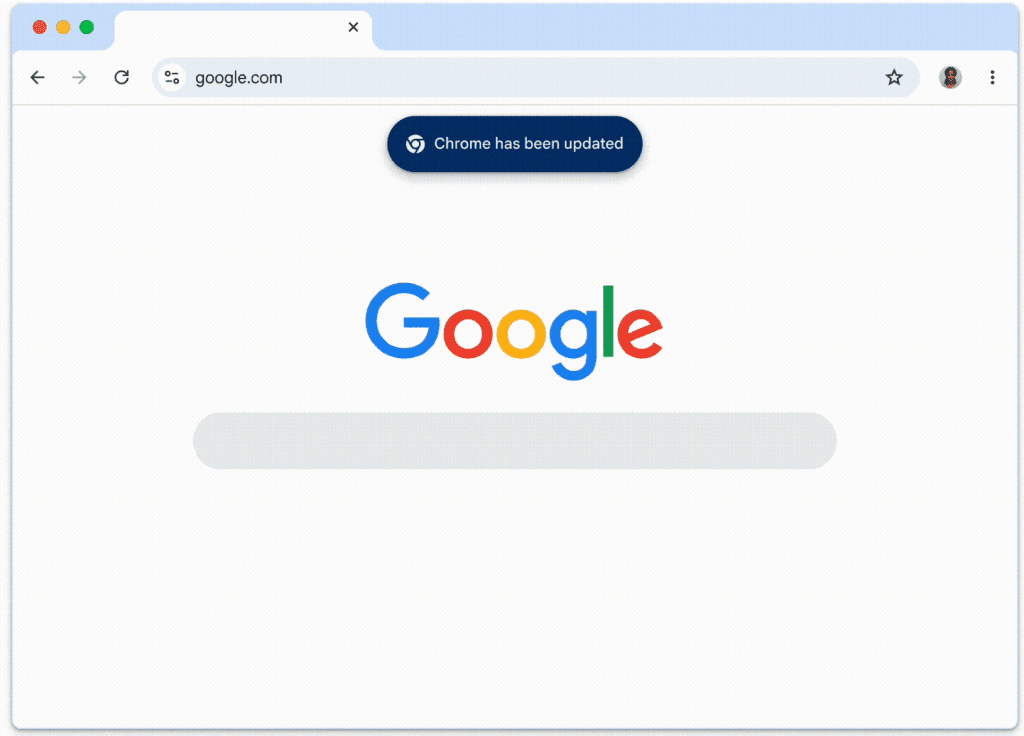
In a recent blog post covering Chrome’s latest security updates, Google revealed something extra. It is investing in a dynamic patching technology that can apply updates automatically, without requiring a full browser restart. The security blog post explains the motivation plainly: many users cannot, or simply do not want to, quit the browser entirely just to install a patch.
How Dynamic Patching Works
Chrome already runs a background updater and keeps resident processes alive even after every window closes. Those background services can receive push notifications from websites and handle other tasks.
Dynamic patching builds on that foundation. It swaps background sub-process files, such as the renderer and GPU processes, for their updated versions. The replacement happens without interrupting the user’s session.
For now, Google has deployed dynamic patching only on Chrome for Mac. The choice reflects a macOS trait: applications typically stay running in the background even after all their windows close. That behaviour creates a natural window for the update to land.
A Gap Between Promise and Practice
The description sounds promising, yet a contradiction lurks inside it. According to Google’s own account, the dynamic update runs only after every browser window has closed, while the app still lingers in the background.
For a power user with dozens of tabs open, that limitation largely misses the point. If you have already closed every window, you could just as easily visit the settings page, check for updates, and restart manually.
What heavy users actually want is an update that lands while tabs and windows remain open, with no closure step at all. Google’s current approach still requires that final close.
Restoring windows after a restart is not especially difficult. A quick Ctrl+Shift+T on Windows or Command+Shift+T on macOS brings them back in bulk. In practice, though, every tab reloads from scratch, so any unsaved data is at risk. Therefore, users must save their work before restarting, a friction the dynamic-patching promise was supposed to eliminate.
Support Our Threat Intelligence
Find our tech and OS security coverage helpful? Support our work today and unlock a 100% ad-free reading experience!
 Buy Me a Coffee
