 Do Son
The Evolution of Volume Licensing
The Key Management Service (KMS) stands as Microsoft’s primary volume activation technology. It is specifically designed for enterprises and large-scale organizations. Consequently, this technology significantly simplifies the complex process of activating numerous corporate systems. Furthermore, within cloud computing environments, Windows Server virtual machines can utilize KMS for dynamic, on-demand activation. For instance, a server instance can rapidly acquire a KMS license upon initialization and automatically revoke that authorization upon termination.
For everyday users, establishing a personal KMS activation server remains remarkably straightforward. Numerous open-source repositories exist online, allowing users to effortlessly deploy activation servers on virtually any host machine. In fact, certain router firmwares natively feature KMS plugins. This capability enables swift activation of all compatible devices residing within a local area network.
Microsoft Implements Rigorous KMS Hardware Security
Recently, Microsoft announced a strategic initiative to significantly fortify the KMS activation verification mechanism. The tech giant aims to enhance volume activation security through a novel, hardware-backed trust model. This crucial enhancement, officially termed KMS Hardware Security, relies heavily on authentication mechanisms grounded in Trusted Platform Module (TPM) technology. Crucially, before a KMS server can activate any downstream systems, Microsoft will proactively verify that the activation server operates upon trusted, uncompromised hardware.
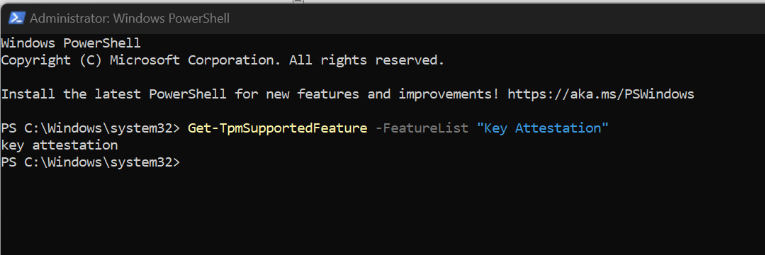
Microsoft emphasizes that this new KMS Hardware Security feature targets the severe compliance and security risks posed by forged or cloned KMS servers. Historically, malicious actors have ruthlessly exploited these counterfeit servers to bypass licensing controls. By strictly mandating TPM verification, Microsoft guarantees that only authenticated KMS servers running on pristine hardware can issue valid licenses to downstream client systems.
Understanding the New Verification Architecture
The updated verification workflow operates sequentially. Under the new activation paradigm, the KMS server initially utilizes TPM-backed authentication to definitively establish its cryptographic hardware identity. Subsequently, Microsoft’s remote servers conduct an independent, rigorous security validation of this submitted identity. Only upon successfully passing this validation can the KMS server legally issue activation licenses to its downstream endpoints. Furthermore, the TPM actively confirms the platform’s holistic integrity. Should the activation server suffer any tampering, it will categorically fail the verification process.
Currently, Microsoft actively encourages enterprises currently utilizing KMS servers to begin evaluating their production environments prior to the mandatory transition. Regarding virtualized KMS servers, which often lack physical TPM modules, Microsoft plans to publish specialized technical guidance shortly. This documentation will assist IT administrators in completing the necessary operational preparations and seamless migrations.
TPM Verification Testing Commences in August
According to the official roadmap, Microsoft will inaugurate TPM verification testing starting in August 2026, launching initially on Windows Server 2025. At that juncture, IT administrators can deploy the KMS service upon this operating system and precisely verify whether their server infrastructure satisfies the new hardware prerequisites.
Following deployment, administrators can execute the slmgr -dlv command to inspect the system status. Compliant devices will proudly display: “This device is eligible to be used as a KMS host with hardware-based security features.” Conversely, non-compliant hardware will sternly warn: “This device does not meet the requirements to be used as a KMS host with hardware-based security features.”
Microsoft also disclosed that subsequent releases of the Windows Server Long-Term Servicing Channel (LTSC) will strictly mandate TPM verification for all KMS servers. The next iteration is highly anticipated to be Windows Server 2028. Therefore, corporate IT departments must proactively prepare for this transition to avert catastrophic volume activation failures in the future.
Implications for the Average Consumer
In the immediate short term, Microsoft’s enhancement will not impose any discernible impact on average consumers. The comprehensive rollout of hardware verification demands substantial time. Consequently, individuals who independently operate private KMS servers will experience no immediate disruption. Furthermore, various third-party activation tools that construct localized KMS servers directly on the host machine will remain temporarily unaffected.
Looking ahead, the unchecked proliferation of arbitrary KMS servers will undoubtedly face severe restrictions. Eventually, casual users may lose the ability to deploy KMS servers effortlessly. However, the resilient open-source community will likely engineer novel methodologies to bypass Microsoft’s restrictions, potentially providing alternative authentication pathways that circumvent the stringent TPM module requirement.
Support Our Threat Intelligence
Find our tech and OS security coverage helpful? Support our work today and unlock a 100% ad-free reading experience!
 Buy Me a Coffee
