Chrome for iOS Levels Up: New Features Enhance Data Separation for Work and Personal Accounts
 Do Son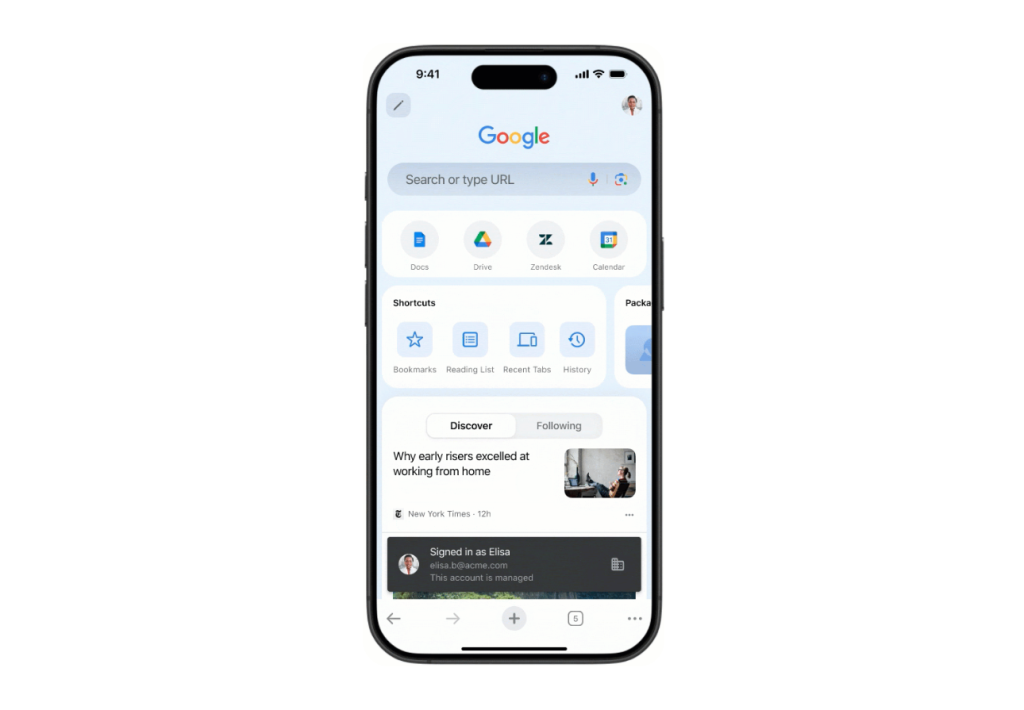
As more enterprises embrace the BYOD (Bring Your Own Device) model, Google has recently introduced a suite of new features for the iOS version of its Chrome browser, aimed at enhancing data separation between personal and work accounts while simultaneously reinforcing corporate cybersecurity measures.
With this update, Chrome for iOS now supports the same account switching and data segregation capabilities available on Android and desktop platforms. Users can log into both personal and work-related Google accounts on a single device, and the browser will automatically compartmentalize data—such as tabs, browsing history, and passwords—based on account type, thereby safeguarding corporate information from becoming entangled with personal activities.
From an enterprise management perspective, the update brings several enhancements to Chrome Enterprise controls. For example, IT administrators can now enforce URL filtering for work accounts on iOS devices, restricting access to unauthorized websites.
Additionally, security teams can stream user activity logs from both iOS and Android devices directly into the Google Admin Console or integrate them into any SIEM (Security Information and Event Management) system. These capabilities, long available on the desktop version of Chrome, are now being extended to mobile platforms.
To ensure transparency and user awareness, Google has also introduced an onboarding experience. When a user first signs in or selects a work account, the system will guide them through a brief overview highlighting the distinction between personal and managed profiles, along with a concise explanation of how corporate data is handled. Each time a user switches to their work account, Chrome will display a clear prompt indicating that they are entering a “managed browsing experience.”
Google emphasizes that this update empowers organizations to enforce robust data protection and cybersecurity policies without compromising the flexibility and convenience of mobile work environments.
This feature is now fully available on all iOS devices managed via Chrome Enterprise.
Related Posts:
- Phishing Scam targets iOS user in India
- Google Advanced Protection Program now supports iOS applications
- Chrome will no longer flag HTTPS pages as secure sites
Support Our Threat Intelligence
Find our tech and OS security coverage helpful? Support our work today and unlock a 100% ad-free reading experience!
 Buy Me a Coffee
