 Do Son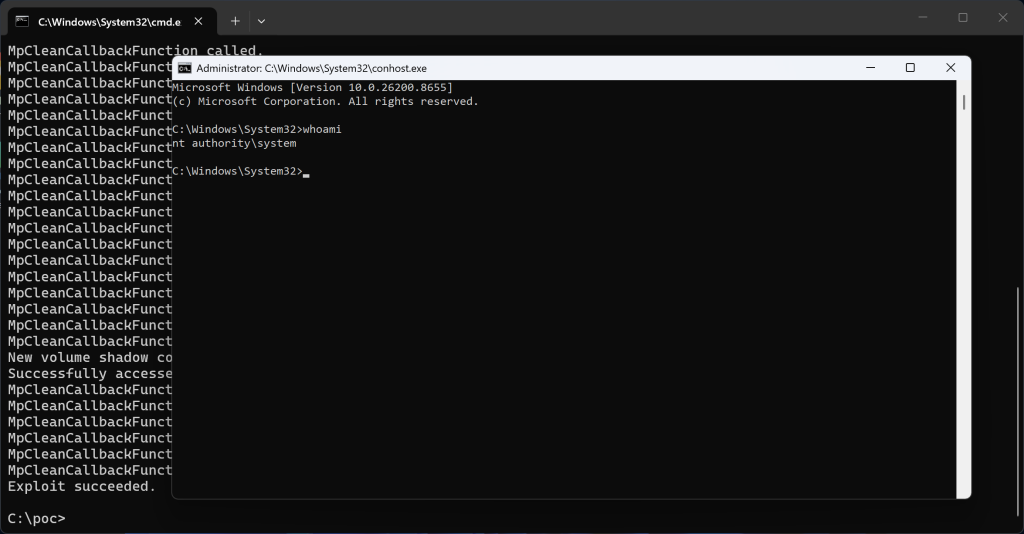
Image: Nightmare Eclipse
Researcher Discloses RoguePlanet Flaw Amidst Ongoing Bug Bounty Dispute
A prominent security researcher, Nightmare Eclipse, recently released a highly controversial administrative tool bypass online. Specifically, a new Microsoft Defender zero day exploit named RoguePlanet targets fully patched consumer systems. This public disclosure arrived just hours after the monthly technology patch updates concluded. Because the tool allows immediate shell command entry, enterprise protection teams face an immediate challenge. Consequently, defenders are rushing to inspect localized behavioral telemetry data across workplace endpoints.
Exploit Logic Leverages Local Race Conditions
To begin with, the underlying software bug relies on unstable background application timings. The malicious program weaponizes a specific race condition vulnerability inside the native anti-malware service. If successful, this process grants a local attacker complete control over system functions. The author shared a public summary regarding the operational reliability of this tool. “The exploit is a race condition, so it’s a hit or miss. I have managed to get a 100% success rate on some machines while it struggled to work on others.”
Affected Systems and Architectural Constraints
Furthermore, the current proof-of-concept payload impacts mainstream operating systems differently. Extensive testing validates that the tool runs effectively on fully patched Windows 10 and Windows 11 clients. However, the current package fails to execute properly on server infrastructures. The author explained: “The PoC however does not work in Windows Server since standard users cannot mount an ISO image”. Nevertheless, the developer believes that server distributions remain fundamentally vulnerable if an attacker modifies the initialization script.
Escalating Conflicts Over Vulnerability Disclosures
Subsequently, the sudden release forms part of a larger structural disagreement regarding disclosure rules. The researcher, known as Nightmare Eclipse, has distributed multiple zero-day disclosures over recent months. These previous items targeted Windows BitLocker configurations and peripheral storage components.
Ultimately, neutralizing this Defender zero day exploit requires continuous monitoring of administrative endpoint tokens. Technology teams must audit suspicious script calls originating from mounted ISO images immediately. Finally, verifying localized execution states ensures that enterprise perimeters remain resilient against automated exploitation attempts.
Support Our Threat Intelligence
Find our vulnerability reports and weekly recaps helpful? Support our work today and unlock a 100% ad-free reading experience!
 Buy Me a Coffee
