 Do Son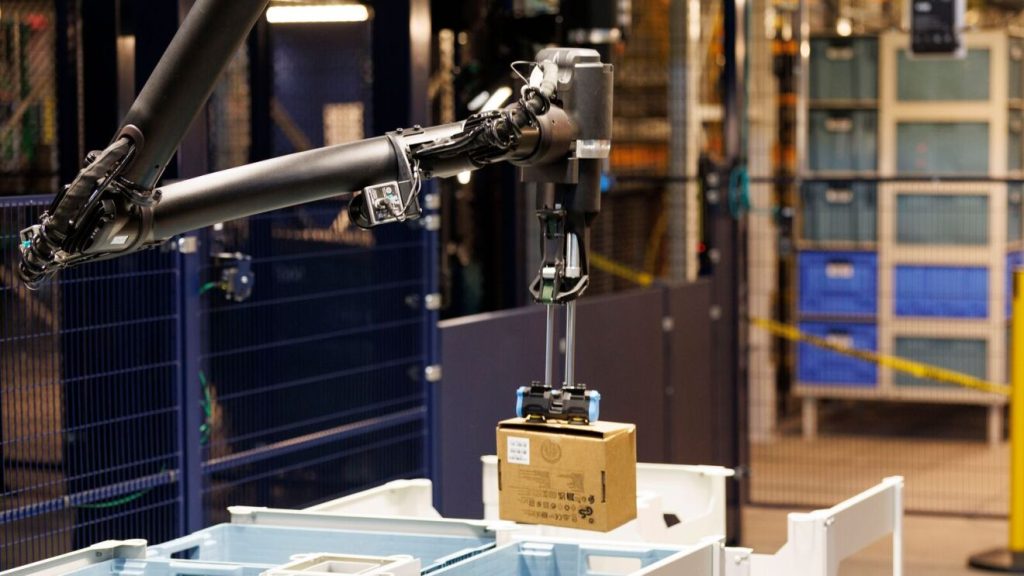
Amazon recently unveiled two cutting-edge innovations designed for its operations network—the “Blue Jay” multi-arm robotic collaboration system and “Project Eluna,” an agent-based AI model. The company emphasized that these technologies aim to reduce repetitive tasks for frontline employees, enhance workplace safety, boost productivity, and accelerate package delivery times.
The Blue Jay system, described as an “extra set of hands” for warehouse associates, is engineered to assist with repetitive lifting and reaching tasks. It represents a new generation of robotics capable of coordinating multiple robotic arms to perform various functions simultaneously—combining three previously separate workstations—pick, stow, and consolidate—into a single, streamlined workspace.
Amazon likens Blue Jay’s performance to that of a “juggler who never drops a ball,” except it handles tens of thousands of fast-moving items. It also functions like a conductor, orchestrating each motion in perfect harmony. This design not only provides additional support for employees but also achieves greater efficiency within a smaller physical footprint.
Remarkably, Blue Jay progressed from concept to production in just over a year—far faster than the company’s usual three-year development cycle. It is currently undergoing production testing at an Amazon facility in South Carolina, where it already handles approximately 75% of all inventory types. In the near future, Blue Jay is expected to become a core technology within Amazon’s Same-Day Delivery stations, helping further reduce customer delivery times.
Meanwhile, Project Eluna serves as an intelligent AI assistant designed to ease the cognitive load of operations managers. Traditionally, managers must monitor dozens of dashboards, troubleshoot technical issues, reallocate resources, and make rapid decisions. Eluna introduces a level of autonomy and reasoning, capable of analyzing complex operational conditions and providing data-driven action recommendations.
By integrating historical and real-time facility data, Eluna predicts potential bottlenecks and helps maintain smooth operations. The system will undergo initial testing this holiday season at an Amazon logistics center in Tennessee, focusing on sortation optimization. Operators can query Eluna with questions such as “Where should we reassign workers to prevent bottlenecks?”, receiving clear, data-backed insights in response. The ultimate goal is to enable managers to move from reactive firefighting to proactive planning.
Amazon emphasized that both Blue Jay and Eluna share a common mission: to reduce highly repetitive work, improve ergonomics (helping employees maintain optimal working posture), and support career growth by freeing staff to take on more meaningful responsibilities. Eluna also allows leaders to devote more time to mentoring teams rather than chasing metrics.
These innovations build upon Amazon’s broader ecosystem of AI and automation advancements, including “Vulcan”, a tactile robot developed for ergonomically demanding tasks, and “DeepFleet”, a foundational AI model coordinating vast fleets of mobile robots across multiple facilities.
Related Posts:
- Researcher Demonstrates Local Privilege Escalation in Legacy Windows Modem Driver Exploited in the Wild
- Meta is Building an “Android of Robotics” to Power the Next Generation of Humanoid AI
- MIT & Toyota Unveil Steerable Scene Generation: AI Tool Uses MCTS to Create Realistic 3D Training Worlds for Robots
Support Our Threat Intelligence
Find our tech and OS security coverage helpful? Support our work today and unlock a 100% ad-free reading experience!
 Buy Me a Coffee
