 Do Son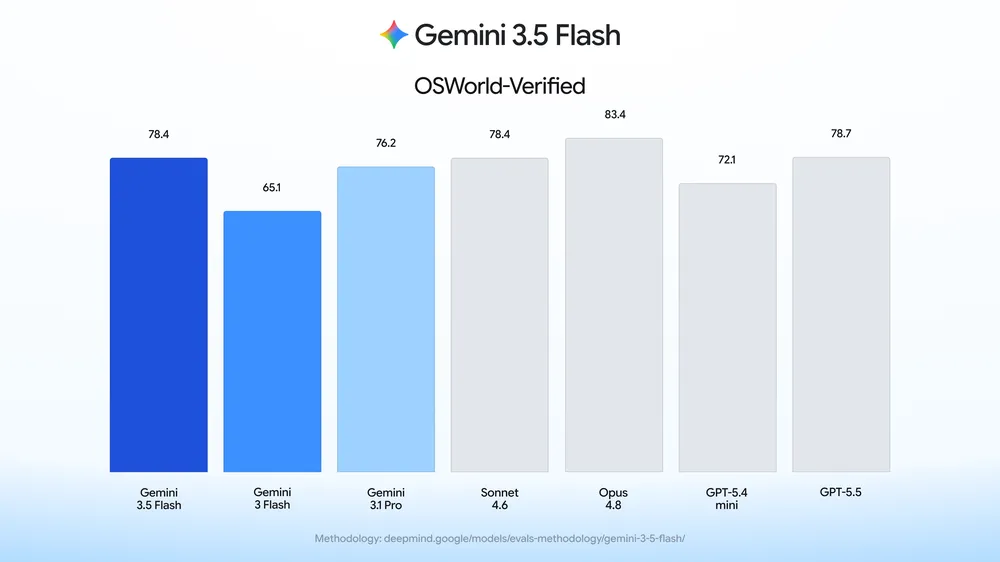
Google announced a major breakthrough in its latest technical brief. The company has integrated a native “Computer Use” tool directly into its newly released Gemini 3.5 Flash model. This advanced feature empowers the artificial intelligence to meticulously analyze complex assignments. It can subsequently manipulate graphical user interfaces across browser, mobile, and desktop environments. While this operational paradigm mirrors existing code execution models, Google’s implementation targets software developers specifically.
Advanced GUI Manipulation: Mouse Control, Scrolling, and Screenshots
The newly minted Computer Use capability enables the artificial intelligence to systematically inspect dynamically captured screenshots. It then returns precise execution coordinates for mouse clicks, scroll maneuvers, and keyboard inputs. Crucially, this functionality bypasses everyday consumer facing interfaces. Instead, it serves as a robust engine for software engineers. Developers can build specialized applications that execute automated commands, harvest the resulting screen telemetry, and route that data back to the model framework. This feedback loop continues persistently until the model achieves the target objective.
Google provided several concrete examples detailing how engineers can weave this technology into repetitive workflows. These scenarios include the automated execution of tedious form submissions, rigorous application regression testing, and cross-platform research. The tool functions seamlessly across web browsers, mobile operating systems, and full desktop configurations. While legacy models offered restricted browser interactions, the Gemini 3.5 Flash architecture elevates this concept to encompass comprehensive system wide control.
Addressing Perilous Safety and Infiltration Concerns
Granting an artificial intelligence model autonomous control over a local workstation naturally introduces severe safety liabilities and malicious attack surfaces. To aggressively mitigate these real world execution threats, Google subjected Gemini 3.5 Flash to rigorous, computer use specific adversarial training regimens. Consequently, the model will automatically terminate operations the exact moment it detects potential security anomalies. Furthermore, the system strictly mandates explicit human verification before initiating any high risk or irreversible actions.
Enterprise Security Architecture
For large organizations, Google provides a multi-layered, optional security subsystem designed to safeguard sensitive infrastructure. This architecture enforces the following restrictions:
- Explicit Authorization: The model halts and demands authenticated human consent before executing any destructive or unalterable command parameters.
- Injection Defense: The execution loop terminates immediately if the network telemetry detects indirect prompt injection vectors or hidden malicious directives.
Google strongly encourages software engineers to couple these native features with robust local security sandboxes. Organizations should also employ persistent human-in-the-loop validation frameworks and granular access control parameters to maximize operational security boundaries.
Exclusive Availability via the Gemini API Platform
As previously emphasized, the Computer Use suite within Gemini 3.5 Flash avoids standard public access channels entirely. Instead, enterprise engineers can leverage this automation engine strictly through the Gemini API platform. Corporate clients can choose to interface with the technology via standard API endpoints or deploy it within specialized enterprise agent frameworks. For specific details regarding usage restrictions and platform subscription tiers, developers should visit the official documentation portal.
Support Our Threat Intelligence
Find our tech and OS security coverage helpful? Support our work today and unlock a 100% ad-free reading experience!
 Buy Me a Coffee
