 Do Son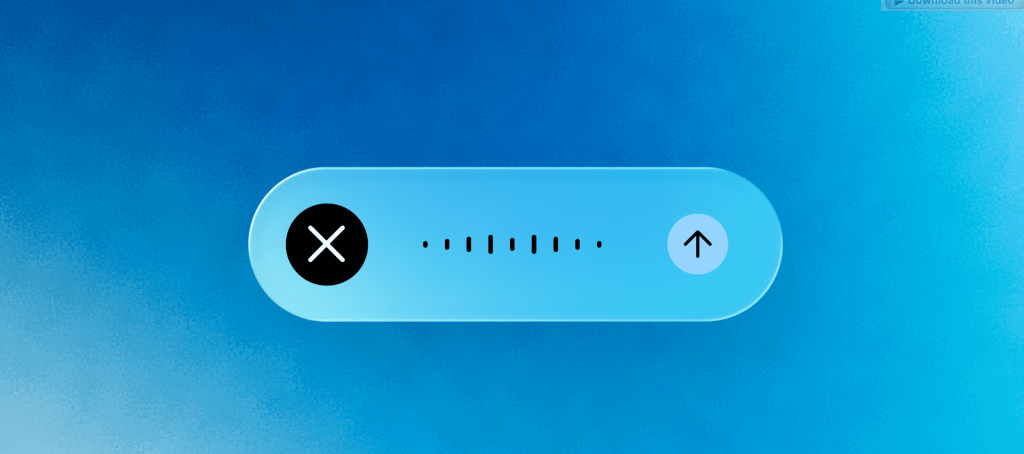
Google has officially unveiled an upgrade for its native Gemini application on the macOS platform. Effective immediately, Mac users can seamlessly summon Gemini across any window interface. Simply long-press the “fn” key located in the bottom-left corner of the keyboard. This allows users to converse via voice, issue commands, or request on-screen content analysis.
This update dramatically lowers the operational threshold for invoking desktop artificial intelligence. It also signifies a pivotal stride in Google’s ambition. Google aims to embed its AI agent capabilities deeply into daily operating system workflows.
Real-Time Transcription at the Cursor
One core functionality introduced in this update is a highly pragmatic voice transcription feature. Users can long-press the “fn” key within any text input field or wherever the cursor rests. Begin dictating to prompt Gemini to instantly transcribe spoken words into text. This functionality empowers users to swiftly capture fleeting inspirations while reading or brainstorming.
Notably, Google has specifically integrated an auditory refinement mechanism. While generating verbatim transcripts, Gemini autonomously filters out common conversational stumbles. It removes meaningless filler words like “um” or “ah”. The system directly outputs pristine, polished prose that flows with semantic coherence.
Fusing Screen Awareness with Gemini Spark
Users may also elect to enable screen-aware reasoning. This allows Gemini to comprehend active applications and documents displayed on the screen. Consequently, the AI can execute significantly more complex operations.
- Document Summarization: Select a specific paragraph within an open PDF document. Then, long-press the “fn” key and verbally instruct Gemini. The AI will generate a concise summary of that exact section.
- Cross-System Email Drafting: Highlight text within a note-taking application. Issue a voice command instructing Gemini to synthesize this information. It utilizes the Gemini Spark Agentic AI capabilities introduced in June. The AI will autonomously invoke relevant data and draft an email. It can even create entirely new spreadsheets and documents.
- Visual Image Generation: Users can verbally describe a desired scene. Alternatively, permit Gemini to directly observe open visual inspiration galleries. The AI will consequently generate entirely novel imagery based on that context.
System-Level Integration and Global Rollout
Reflecting upon Google’s desktop strategy, the company launched the native macOS application in April. This release trailed the Windows iteration by a mere day. Subsequently, Google infused it with Gemini Spark AI agent capabilities in June. Now, Google announces how users can speak naturally to the Gemini app on macOS.
The newly announced “fn” key shortcut and screen awareness features are rolling out immediately. This global release targets all macOS Gemini users. Although currently restricted to English, Google promises to incorporate multi-language support later this year.
A Preemptive System-Level Maneuver
Google’s strategic intent behind this macOS upgrade is unmistakably clear. The company aims to directly seize the frontline physical interaction portal of the operating system. Microsoft opted to introduce a dedicated Copilot key on new PC keyboards. Conversely, Google has demonstrated a more astute and aggressive approach.
It directly commandeered the underutilized “fn” key on Mac keyboards. Google transformed it into a physical trigger to awaken Gemini. This zero-friction interactive experience requires no window switching or browser launching. It does not even require cursor movement. Such convenience will substantially enhance user stickiness regarding Gemini on Mac.
Even more noteworthy is the synergy between screen awareness and the Gemini Spark AI agent. This epitomizes the on-screen contextual understanding that Apple has repeatedly emphasized. However, Apple Intelligence has progressed rather sluggishly in delivering this functionality.
Leveraging its formidable native desktop application, Google has preemptively realized a comprehensive usage cycle. The AI comprehends the screen, seamlessly links applications, and autonomously executes tasks. The battleground for AI entry points is shifting from cloud-based web portals. It is moving toward the foundational layers of operating systems. The entity that most effortlessly integrates into daily workflows will ultimately command true authority.
Support Our Threat Intelligence
Find our tech and OS security coverage helpful? Support our work today and unlock a 100% ad-free reading experience!
 Buy Me a Coffee
