 Do Son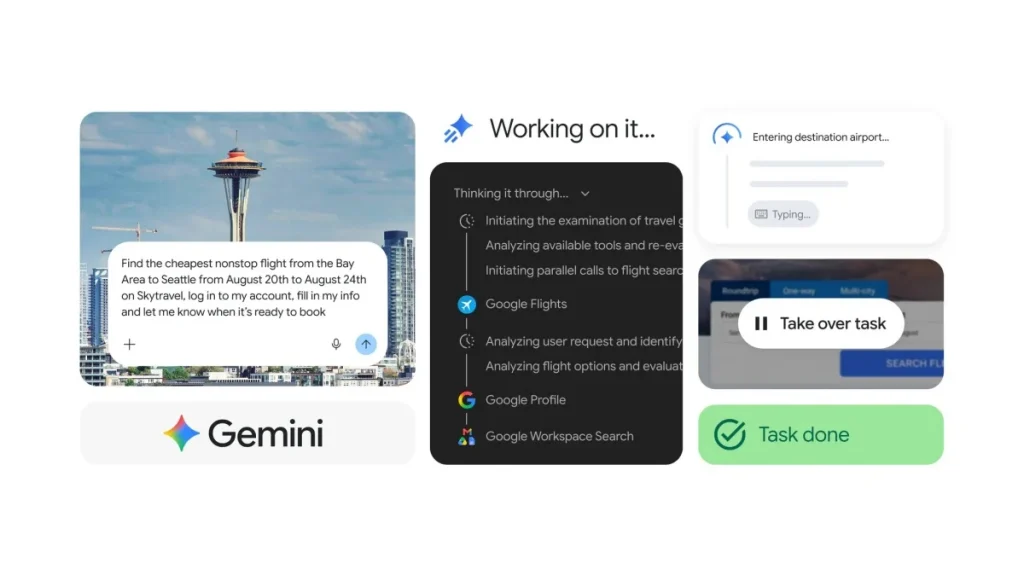
Google has announced that its agentic AI assistant, Gemini Spark, is now deeply integrated with the Chrome browser, introducing an innovative “Auto Browse” feature. Upon receiving explicit user authorization, Gemini Spark can seamlessly utilize the credentials logged into Chrome to effortlessly manage tedious web-based errands.
Beyond Inquiries: Your Autonomous Web Surrogate
According to official documentation, this novel capability elevates Gemini’s role within Chrome from a mere conversational assistant to an autonomous agent capable of executing complex, multi-step tasks.
For instance, orchestrating a journey previously necessitated manually navigating Google Flights, comparing itineraries, and inputting passenger details. Now, users can simply delegate this endeavor to Gemini Spark. Through the Auto Browse function, it autonomously scours flight alternatives and even initiates the booking procedure on your behalf.
Beyond securing air travel, Google highlights another compelling scenario: orchestrating property viewings from a curated list of rentals. Furthermore, by harmonizing the Google ecosystem (encompassing Workspace, YouTube, and Maps) with third-party applications like Instacart, OpenTable, and Zillow, Google asserts that Gemini Spark seamlessly traverses diverse platforms. It adeptly manages intricate workflows, ranging from digital commerce and online reservations to meticulous calendar management.
Entrusting AI with Credentials: Security Architecture
Naturally, granting an artificial intelligence access to personal login states and passwords inevitably provokes profound cybersecurity apprehensions. What transpires if adversaries conceal malicious directives within webpages – such as prompt injection attacks – tricking the AI agent into exfiltrating sensitive data or executing unauthorized financial transfers?
In response, Google affirms the deployment of a multi-layered defense mechanism encompassing both deterministic and probabilistic safeguards to counter such threats. This rigorous defense drastically elevates the barrier and cost for potential attackers. While official channels withhold granular technical specifics, they have established an unequivocal security boundary: Gemini Spark will absolutely never finalize financial transactions or execute highly sensitive ultimate operations autonomously.
Whenever the automated workflow progresses to a juncture demanding login authentication, explicit authorization, or financial transactions, the system mandates a compulsory pause. It relinquishes control back to the user, ensuring that a human performs the final scrutiny and definitive confirmation.
Market Availability and Subscription Prerequisites
This formidable Chrome Auto Browse functionality is presently accessible exclusively as an initial preview for users possessing Google AI Pro or Ultra subscriptions within the United States market.
Nevertheless, Google simultaneously announced a massive expansion of Gemini Spark’s foundational agentic access to premium subscribers across more than 160 countries globally. They further pledged to progressively introduce the Auto Browse feature to broader regions in the foreseeable future.
Author’s Perspective
Transitioning from merely generating content to executing tasks – the realm of Agentic AI – has emerged as the ultimate aspiration for the entire artificial intelligence industry this year. Google’s maneuver to directly anchor this battleground within its overwhelmingly dominant Chrome browser undeniably constitutes a profoundly disruptive market strategy.
The future paradigm of web browsing may evolve from humans manually clicking links to humans supervising AI as it clicks links on our behalf. However, striking a delicate equilibrium between the sheer convenience of automation and the profound user trepidation surrounding the surrender of credential control will undoubtedly represent Google’s most formidable impending challenge.
Support Our Threat Intelligence
Find our tech and OS security coverage helpful? Support our work today and unlock a 100% ad-free reading experience!
 Buy Me a Coffee
