 Do Son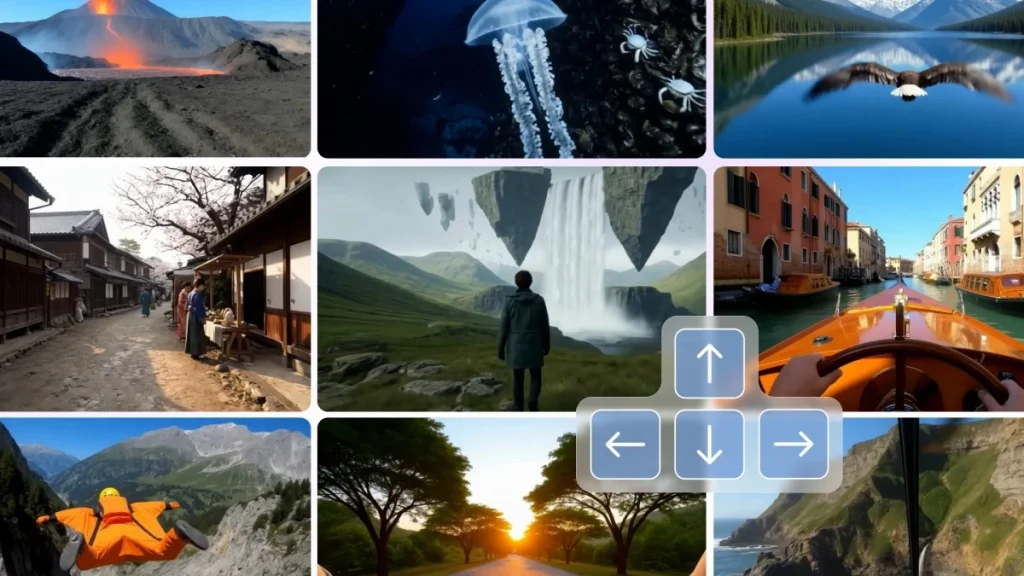
Following the unveiling of Genie 2 late last year—a groundbreaking AI model by Google DeepMind capable of interacting with 3D environments through mouse and keyboard inputs and generating such scenes from a single image—the company has now introduced an enhanced iteration: Genie 3. Building upon the foundation of its predecessor, Genie 3 significantly improves environmental interactivity and simulation stability, while introducing a compelling new feature known as “Promptable World Events,” which allows users to dynamically alter scenes via natural language commands. This advancement promises to render AI model training more adaptive and aligned with real-world needs.
The Genie series belongs to a class of “world models,” designed to simulate immersive virtual environments in which AI agents can interact, learn, and develop capabilities for responding to real-world scenarios. Since the launch of Genie 1 in 2023, Google DeepMind has consistently advanced the potential of generative modeling. With the release of Genie 2, support for 3D environments and scene memory was introduced—enabling the world state to persist even after the user leaves a given area, thus greatly enhancing simulation coherence.
Although Genie 3 may not represent the same generational leap as its predecessor, Google DeepMind researchers Shlomi Fruchter and Jack Parker-Holder emphasize its critical role in the long-term evolution of Artificial General Intelligence (AGI). One of the major improvements is the upgrade in output resolution—from 360p to 720p—resulting in clearer visuals and significantly enhanced simulation stability. While Genie 2 was theoretically capable of running 60-second simulations, practical use often revealed visual artifacts and breakdowns within seconds. In contrast, Genie 3 now maintains stable, continuous output for several minutes, extending the effective window for AI training.
A particularly noteworthy feature is the introduction of “Promptable World Events,” enabling users to alter the virtual environment in real time through textual prompts. In a demonstration, the team issued the command “add a herd of deer” during a skiing scene, and the system promptly generated a group of deer within the environment—showcasing Genie 3’s semantic comprehension and its potential for dynamic interaction.
Google DeepMind underscores the importance of this capability for training reactive AI systems such as autonomous vehicles and robotics. The model can simulate sudden, unpredictable events—such as a pedestrian stepping into the road—allowing AI agents to develop appropriate response mechanisms for rare scenarios that are difficult to capture through real-world data.
Nevertheless, the research team acknowledges that Genie 3 is still subject to several limitations. It cannot yet faithfully replicate real-world landscapes, accurately render textual elements, or sustain long-term simulations. To serve as a truly valuable training platform, future iterations will need to support stable simulations lasting several hours.
At present, Genie 3 is not publicly available and is being provided exclusively to select testing partners. Google DeepMind has stated that wider access will be granted in the future, alongside continued refinements to simulation fidelity and interaction capabilities, as the project progresses toward broader AI applications. As Jack Parker-Holder remarked, “This won’t be the only training environment, but it helps us identify what AI should not do—and that, in itself, is profoundly important.”
Related Posts:
- CVE-2024-4701 (CVSS 9.9): Major RCE Risk in Netflix’s Genie Platform
- AsukaStealer Malware Targets Browsers and Crypto Wallets for $80 a Month
- FunkSec: The Rising Ransomware Group Blurring the Lines Between Cybercrime and Hacktivism
- Gemini 2.0 Unleashed: Pro, Flash-Lite, & More
Support Our Threat Intelligence
Find our tech and OS security coverage helpful? Support our work today and unlock a 100% ad-free reading experience!
 Buy Me a Coffee
