 Do Son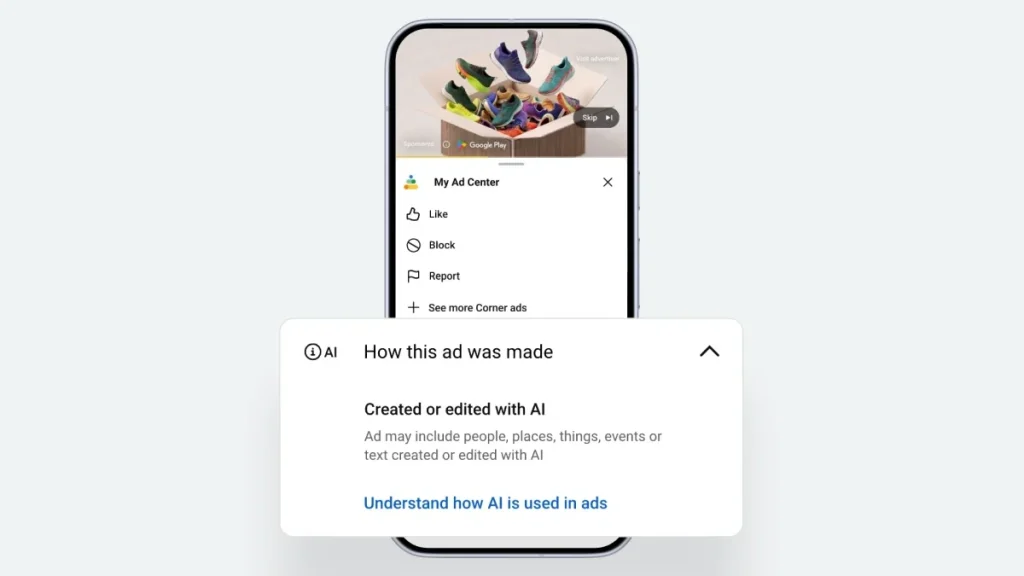
Generative AI continues to disrupt the digital marketing industry rapidly. Consequently, consumers increasingly struggle to distinguish between authentic product videos and AI-fabricated content. To effectively mitigate this brewing crisis of trust, Google announced a crucial update. They will soon introduce more robust Google Ads AI transparency tools for artificially generated content.
In the near future, this transparency feature will roll out globally. Users navigating Google Search, YouTube, and the Discover platform will experience this firsthand. Specifically, they can access the “My Ad Center” to verify if an advertisement utilizes AI-generated or altered elements.
My Ad Center Update: How Was This Ad Made?
According to the latest information published by Google, they will integrate this new mechanism seamlessly. It will reside within the existing “My Ad Center” dashboard. Furthermore, Google will introduce a dedicated section explicitly titled “How this ad was made.”
Regarding the specific identification and labeling mechanism, Google adopted a dual-track approach:
- Official Google AI Tools (Automatic Labeling): If advertisers utilize Google’s internal generative AI tools, the system reacts immediately. It will automatically force an AI-generated disclosure label into the dashboard.
- Third-Party AI Tools (Manual Declaration): Conversely, advertisers might use external generative AI tools like Midjourney or Sora. In these instances, brands will receive a manual control option within their advertising backend. This allows them to self-report their use of generative AI tools.
However, analyzing Google’s current official phrasing reveals a potential concern. The declaration protocol for third-party tools heavily leans toward a voluntary, opt-in honor system. It currently lacks the rigorous enforcement of mandatory compliance.
Adapting to Local Regulations with Direct Labels
In their official blog post, Google emphasized their primary objective clearly. They stated they want to help people understand the ads they see more transparently. Simultaneously, they aim to equip advertisers with intuitive tools to navigate evolving industry standards.
Clearly indicating whether media assets contain altered or AI-generated elements remains vital for modern commercial advertising. This transparency ensures potential buyers maintain accurate expectations regarding their intended purchases. Ultimately, it prevents frustrating consumer disputes stemming from misleading representations.
Google also provided a very crucial supplementary detail regarding regional compliance. In certain specific regions, local legal requirements might necessitate stricter visibility. If an advertiser enables the AI usage indicator there, the system might react differently. It could display the AI-generated label directly on the advertisement itself, rather than hiding it within the settings panel.
The Vulnerability of Voluntary Declaration
Undeniably, this recent update represents a positive step in the correct direction. However, it also exposes the inherent limitations platforms face when policing massive volumes of AI content.
Naturally, when advertisers utilize Google’s proprietary AI generation tools, tracking is effortless. The platform can easily harvest the underlying data and enforce mandatory labeling. Yet, dealing with images generated by third-party tools presents a significant challenge. Currently, Google clearly relies entirely on the honor system, hoping brands manually check the appropriate boxes.
Major multinational brands that value their reputation will likely comply with these new regulations willingly. However, YouTube and ad networks currently host many low-quality advertisers. These bad actors frequently utilize AI to fabricate exaggerated product claims or execute scams. Unsurprisingly, they will never proactively declare their use of AI technologies.
This reality highlights a critical gap before cross-platform AI watermark detection technology, like C2PA, becomes ubiquitous. Until then, this transparency mechanism functions mostly as a deterrent for honest participants. To make this system genuinely binding, it will likely require the threat of punitive regional regulations. For example, the European Union’s AI Act could force advertisers to honestly declare their asset origins to avoid massive financial penalties.
Support Our Threat Intelligence
Find our tech and OS security coverage helpful? Support our work today and unlock a 100% ad-free reading experience!
 Buy Me a Coffee
