 Do Son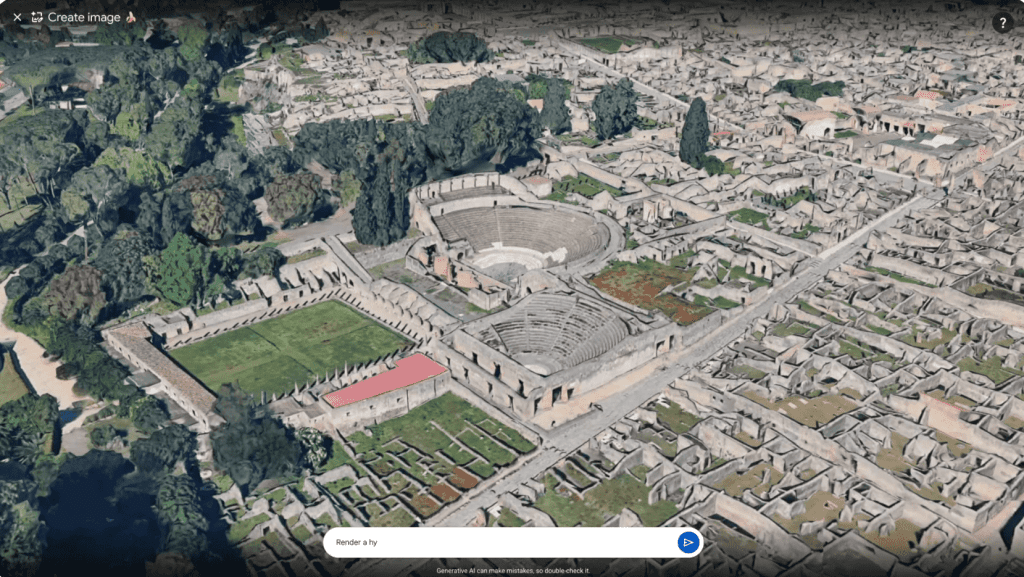
On 30 July, Google announced with fanfare that it had integrated an AI image generation tool called Nano Banana into Google Earth. Less than a day later, on 31 July, the company pulled the feature entirely.
The reason was stark. The tool made fabricating realistic fake satellite imagery effortless, and it instantly became a breeding ground for misinformation.
Fabricating the Real World Proved Too Easy
The crisis was ignited by a hands-on test from 404 Media. Reporter Joseph Cox demonstrated how easily the built-in AI tool could produce highly misleading satellite imagery.
In his test, Cox casually generated a convincing overhead view showing a massive explosion crater in downtown Los Angeles. He then conjured a crowd of protesters outside Google’s own headquarters in Mountain View, California, none of whom existed.
When pressed about the misinformation risk, Google’s initial response came across as dismissive. The company stressed that every image generated by Nano Banana carried a SynthID digital watermark. It also pointed to built-in safeguards against harmful themes. Should anyone doubt a picture’s authenticity, Google said, they could simply use the Gemini app or Google Lens to check whether the image was AI-generated.
The Watermark Defence Misses How Misinformation Spreads
Google’s suggestion that users bear the verification burden drew immediate criticism.
Cox responded on the social platform Bluesky. He said Google’s claim that watermarks solve the problem reveals a complete lack of understanding of how misinformation actually works online.
The critique rings true. When a shocking disaster satellite image tears across social media, almost no one pauses to save the file and run it through Google Lens to check for a watermark. The dynamic mirrors the viral AI-generated “peacock chick” photos that circulated years ago. Most people shared the images as fact without ever verifying them.
Google Retreats and Acknowledges the Trust Problem
Under mounting pressure, Google relented and withdrew the AI generation feature from Google Earth entirely. In a statement posted on X, the company acknowledged the core issue. It recognised that people place a unique trust in Google Earth, regarding it as a reliable window on the world. At the same time, it admitted it had seen users sharing generated images that appeared to violate its policies.
Google promised to reintroduce the feature in future, but only after implementing stronger safety measures.
Commentary: Trust Collapses When AI Is Added for Its Own Sake
This short-lived launch exposes a blind spot in how tech giants push AI adoption. Google Earth’s core value rests on objective, faithful records of the planet’s surface. Embedding a generative tool that can fabricate buildings, terrain, and events out of thin air inside a platform built on realism undermines the most basic trust users place in it.
Perhaps the more honest question for Google is whether ordinary users truly need to paint a fake crater onto a real city inside Google Earth. Some products are worth more when they preserve their authentic nature, rather than having unnecessary AI bolted on.
Support Our Threat Intelligence
Find our tech and OS security coverage helpful? Support our work today and unlock a 100% ad-free reading experience!
 Buy Me a Coffee
