Google Images Turns 25: AI Personalization and Nano Banana Generation Arrive in Search
 Do Son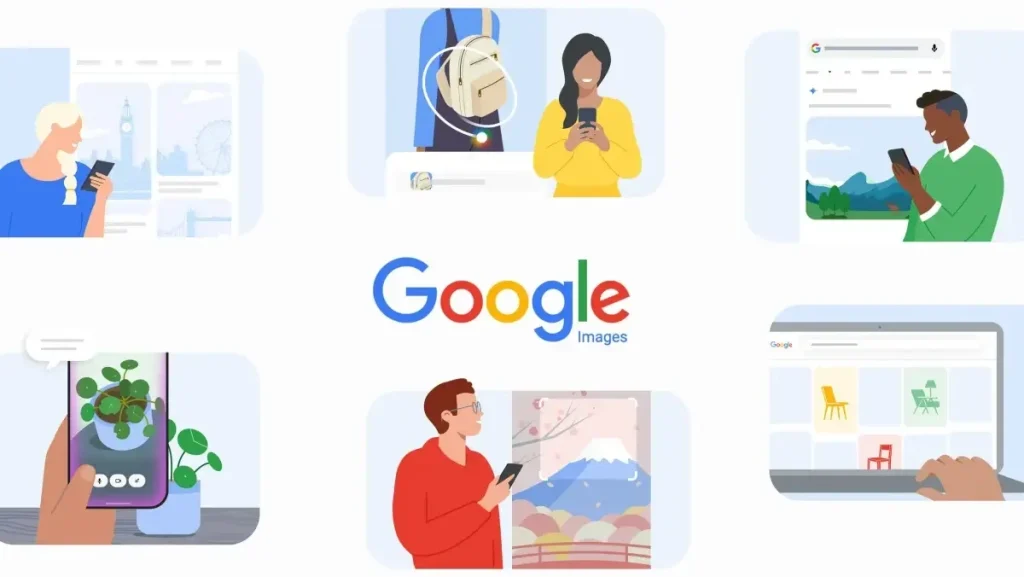
Google Images, born in July 2001, has officially reached its 25th anniversary. To celebrate the milestone, Google announced a sweeping refresh of the service that changed how humanity browses the web. The redesign pairs a new look with powerful AI algorithms under the hood. As a result, users now receive real-time, personalized results tailored to their unique interests. Moreover, Google is embedding its latest Nano Banana image generation model directly into AI Overviews on the search page. Users can therefore generate images from text with one click, without ever leaving search.
A Familiar Look, a Smarter Core: Real-Time Updates and Smart Collections
Visually, the anniversary redesign keeps the grid layout users already know. Underneath, however, the search and presentation logic has gone fully AI-driven.
The new image results now support real-time updates. In addition, Google intelligently tailors the image arrangement based on each signed-in account’s daily browsing habits and click preferences. Consequently, two users searching the same query may see very different galleries.
The updated interface also streamlines how people save and organize images:
Multi-Tab Collections
After clicking a specific image, users can save it through the options menu in the top-right corner. Each saved series then appears as a tab directly above the main gallery. This makes it easy to jump between different inspiration sets while continuing to search.
A Redesigned Collections Page
The top of the collections page is now split into two clear tabs: personal collections and all image results. Accordingly, users can switch between their private library and public search results with a single click. Google plans to roll this out first to signed-in users of the English desktop interface in the United States over the coming weeks.
Nano Banana Lands in AI Overviews, Ushering in Search-Native Image Generation
Beyond image search improvements, Google is extending its reach into generative imagery. Over the next few weeks, the company will deeply integrate its newest Nano Banana image generation model into the AI Overviews block at the top of search results.
Going forward, users in regions with AI Mode support can type a text prompt directly into the search box. AI Overviews will then generate high-quality images natively on the page. In effect, this erases the boundary between searching for existing images and generating new ones. For users who dislike an AI-dominated results page, Google still offers a setting to manually disable AI Overviews.
A Classic Origin Story: The Versace Dress That Sparked a Tech Revolution
In the anniversary announcement, Google also took fans on a nostalgic trip back to its founding lore.
In early 2000, pop superstar Jennifer Lopez attended the 42nd Grammy Awards in a daring green Versace jungle-print gown. The look instantly ignited a global search frenzy. At the time, however, Google could only serve up traditional pages of blue text links. That limitation made the team realize the ceiling of conventional search.
People did not merely want to read about the dress, Google recalled; they wanted to see it with their own eyes. That intense visual craving drove Google engineers to work around the clock. Ultimately, they launched Google Images in July 2001 and reshaped the face of the internet.
The milestones kept coming afterward. Google introduced Similar Images in 2009, then added search-by-image in 2011. In 2018, the company combined smartphone cameras with search to create Google Lens. Multisearch arrived in Lens in 2022, followed by Circle to Search in 2024. More recently, Google added AI Mode to Lens and launched Search Live in 2025, which enables real-time searching through a phone camera.
Personalization Plus Generative AI: The SEO Shake-Up Is Only Beginning
Behind the celebration, the 25th anniversary carries a heavy message for the industry. Websites that depend on image search referrals are about to face even tighter constraints.
In the past, content sites and e-commerce platforms could reliably harvest substantial outbound traffic from Google Images. They simply needed solid alt-tag optimization and high-quality visuals. However, once Google Images customizes results in real time around personal interests, that one-size-fits-all SEO playbook starts to break down. Ranking uncertainty for images will therefore rise sharply.
Even more disruptive is the placement of Nano Banana inside AI Overviews. When users want an illustration, a stock-style asset, or a product concept image, they no longer need to visit image libraries or blogs. Instead, Google generates the picture for them right on the first results page. This is zero-click search taken to its extreme, and it tightens the floodgates on referral traffic yet again.
The pattern is consistent. Google recently pushed Gemini into the Chrome sidebar, and now it has pushed Nano Banana onto the search homepage. In other words, the company is leveraging its dominant gateway position to lock user attention and behavior inside its own ecosystem.
For website operators and creators worldwide, the challenge is now clear. They must produce hardcore original content that AI cannot replace and that users cannot ignore. That will be the harshest survival test of the next 25 years.
Support Our Threat Intelligence
Find our tech and OS security coverage helpful? Support our work today and unlock a 100% ad-free reading experience!
 Buy Me a Coffee
